
Free Pre-Start Checklist (Thicknesser) Template
Download our free Pre-Start Checklist (Thicknesser) Template (DOCX & PDF). This structured checklist helps formalise daily equipment safety checks.
Free Pre-Start Checklist (Thicknesser) Template
DOCX • 125 KB + PDF
Updated Oct 2026
No signup required
Purpose of the Free Pre-Start Checklist (Thicknesser) Template
A wood thicknesser, or planer, is a powerful piece of machinery essential in many workshops, but it also presents significant risks, including blade contact, kickback, and dust exposure. This Free Pre-Start Checklist (Thicknesser) Template provides a structured framework for operators to conduct consistent, thorough safety inspections before each use.
Formalising this process helps identify defects or damage early, preventing equipment failure and reducing the likelihood of workplace incidents. Using a documented checklist is a practical way to demonstrate due diligence and integrate proactive safety measures into your daily operations.
Implementing pre-start checks is a fundamental component of managing high-risk plant and equipment. These documented inspections form part of the evidence that supports your broader robust WHS management systems, ensuring safety is a planned and verifiable activity, not an afterthought.
For other common workshop tools, you might also find a pre-start checklist for a bench grinder useful in standardising your safety procedures across all equipment.
Video walkthrough
How to use the Free Pre-Start Checklist (Thicknesser) Template
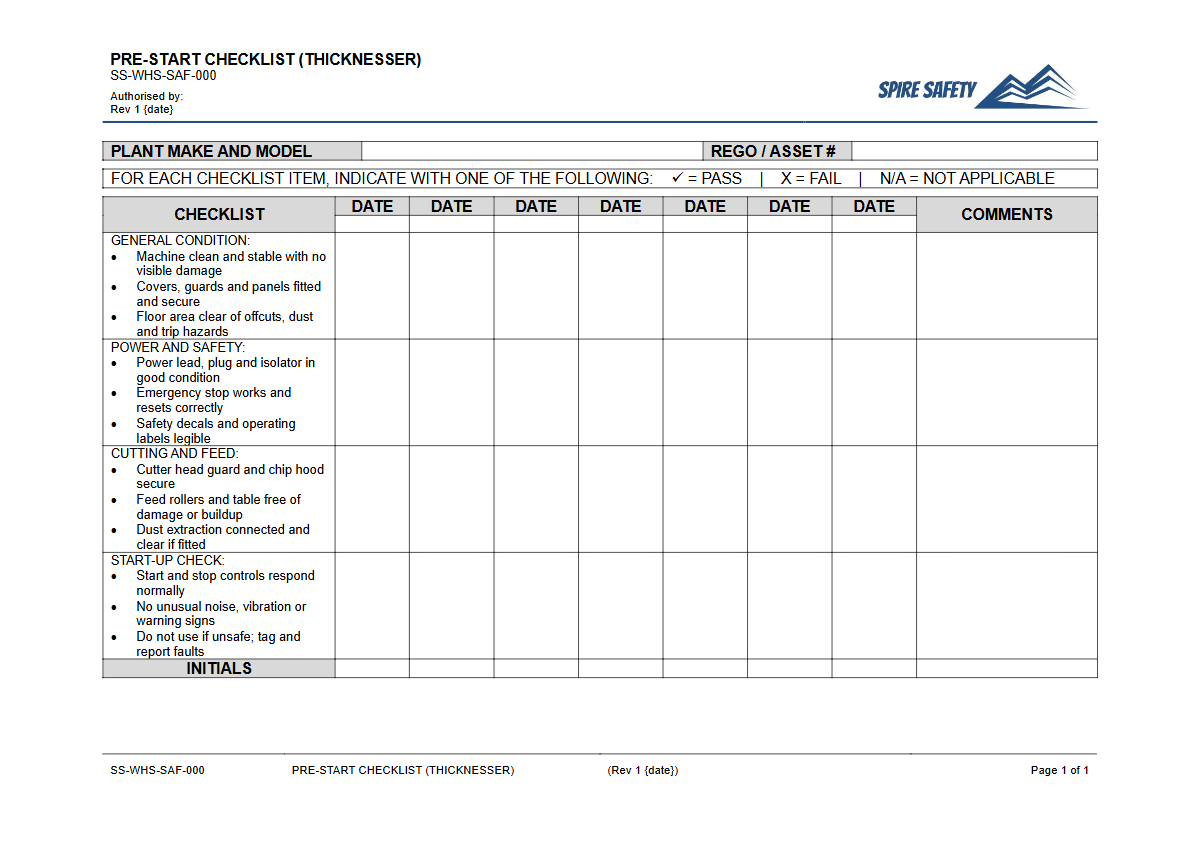
This resource is available for download as a DOCX file, which you can easily edit in Microsoft Word or other compatible software, and as a PDF for straightforward printing. The template is designed as a comprehensive starting point for workshop safety, covering key inspection points for a standard thicknesser.
It guides the operator through a logical sequence of checks before any timber is processed.
Sections include:
- Operational Details: Fields for the operator's name, date, and machine identifier.
- Visual & Physical Checks: Inspection points for guards, emergency stop functionality, anti-kickback fingers, cutterhead condition, and feed rollers.
- Work Area Assessment: Checks to ensure the surrounding area is clear of obstructions and trip hazards.
- Dust Extraction: Verification that the dust extraction system is connected and functioning correctly.
- Action & Sign-off: A section to record any defects found, note corrective actions taken, and formally sign off that the machine is fit for use.
Please note: This document is a template. We have designed it as a starting point, and you must customise it to reflect the specific make and model of your thicknesser, your operational environment, and your organisation's unique safe work procedures.
Regular reviews of your customised checklists, often as part of routine WHS compliance audits, ensure they remain relevant and effective.
When to use it
A pre-start checklist for a thicknesser should be completed before the machine is used for the first time each day or at the beginning of each shift. This frequency ensures that any damage that may have occurred overnight, or any unauthorised adjustments made by a previous user, are identified before operation begins.
It creates a clear point of accountability for the state of the equipment at the start of work.
For tasks involving other hazards like airborne contaminants, the principle of pre-use checks remains the same. Similar documented inspections, such as specific checks for fume cabinets, help ensure all safety-critical equipment is functioning as intended before work commences.
Who should use it
The pre-start checklist should be completed by the person operating the thicknesser. This must be a worker who has been properly trained and deemed competent in the machine's safe operation, including its specific risks and controls.
Their training should cover not only how to use the machine but also how to conduct the pre-start inspection correctly.
Supervisors and managers also have a role. They are responsible for ensuring the checklists are being completed correctly and consistently by their team.
They should also review completed checklists, especially those where defects are noted, to ensure appropriate corrective actions are taken in a timely manner. The process is similar for other high-risk cutting equipment, where operators must verify safety before use, such as with pre-start checks for a floor saw.
By standardising your approach to equipment safety, you create a more predictable and controlled work environment. For more tools to help build your safety framework, explore our complete free WHS resources library.
Common mistakes
Common mistakes to avoid
- Ignoring 'minor' defects like a worn anti-kickback pawl, which can lead to major incidents.
- Failing to isolate the machine from power before checking, cleaning, or adjusting blades.
- Treating the checklist as a 'tick-and-flick' exercise without performing the actual physical checks.
- Using a generic checklist that doesn't match the specific make, model, and features of the thicknesser in use.
Legal references
Legal considerations
The following legal requirements may be relevant to this type of work.
- Work Health and Safety Act (Harmonised) — Provides the primary duties for protecting workers and other people from work health and safety risks.
- Work Health and Safety Regulations (Harmonised) — Sets out requirements supporting the management of workplace hazards and risks.
The following codes may be relevant to this type of work.
- Managing WHS Risks Code of Practice — Provides practical guidance on identifying hazards, assessing risks and applying effective controls.
- Work Health and Safety Consultation, Cooperation and Coordination Code of Practice — Provides practical guidance on consulting workers and coordinating with other duty holders.
- Managing the Work Environment and Facilities Code of Practice — Provides practical guidance on safe work environments, workplace facilities and related controls.
Did you know
Kickback Dangers
A thicknesser's anti-kickback fingers are a critical safety feature. They prevent the workpiece from being violently ejected back towards the operator, a common cause of serious injury in woodworking.
Wood Dust Hazards
Wood dust is classified as a hazardous substance. Effective dust extraction, verified during a pre-start check, is not just for cleanliness but is a vital health control measure to prevent long-term respiratory diseases.
FAQ
Frequently asked questions
01What is a thicknesser pre-start checklist?
02Is using a pre-start checklist a legal requirement in Australia?
03What should be checked on a thicknesser before use?
04Who is responsible for completing the thicknesser checklist?
Share this resource
Free Pre-Start Checklist (Thicknesser) Template
Browse Categories
How To Use It
- 1Download and open in Word or PDF.
- 2Replace the placeholders with your business details.
- 3Get it reviewed by a WHS specialist before rollout.
Need it customised?
Our WHS consultants can adapt this template to your site, run a gap analysis, or audit what you already have in place.
Book a Free Consultation WHS consulting servicesor call 1300 156 382