
Free Pre-Start Checklist (Tilt Rotator) Template
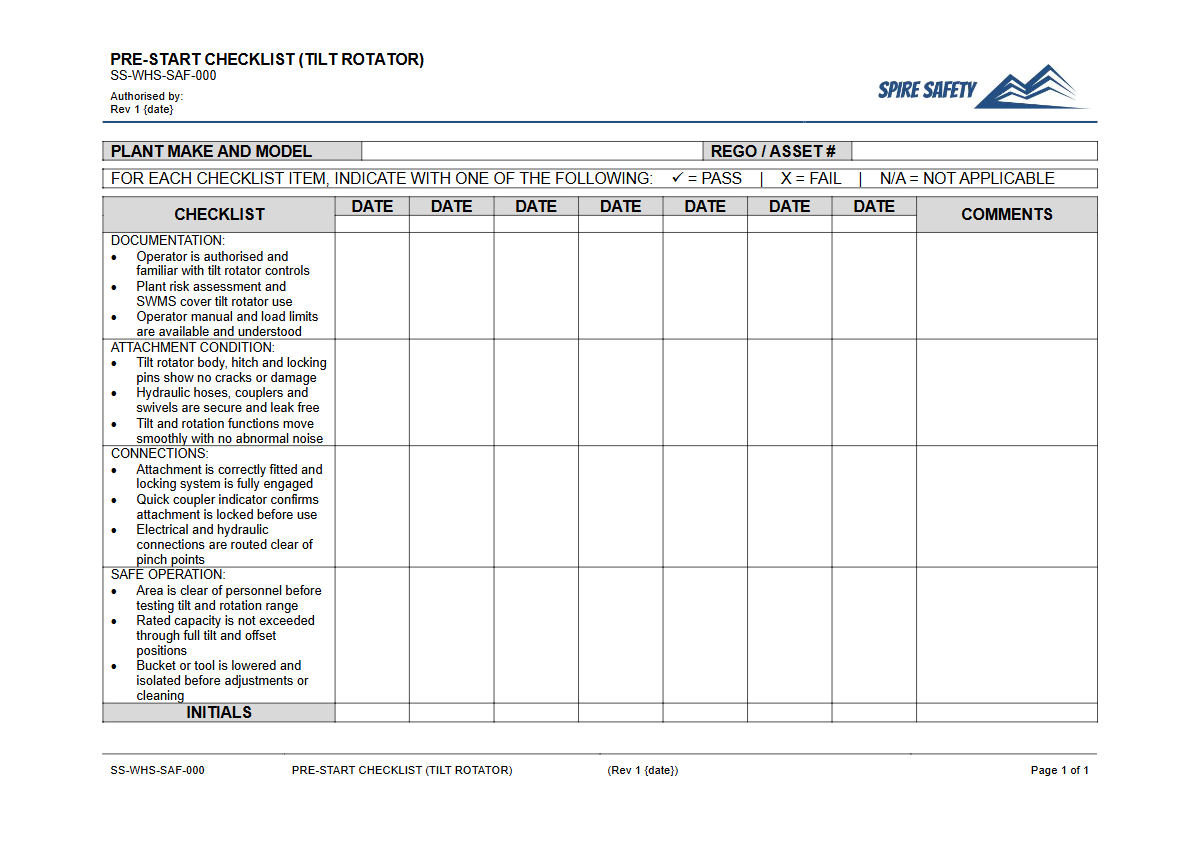
Download our free Pre-Start Checklist (Tilt Rotator) Template. This structured DOCX & PDF resource helps operators identify hazards before use. Download now.
Free Pre-Start Checklist (Tilt Rotator) Template
DOCX • 125 KB + PDF
Updated Oct 2026
No signup required
Purpose of the Free Pre-Start Checklist (Tilt Rotator) Template
Systematic equipment inspections are fundamental to maintaining a safe work environment. This free Pre-Start Checklist (Tilt Rotator) Template provides a structured starting point for operators to conduct thorough daily checks on this complex attachment.
By formalising the inspection process, your organisation can better identify potential hazards before they lead to incidents, equipment damage, or costly downtime. Using a dedicated checklist ensures that no critical component is overlooked, from the hydraulic system to the locking pins of the quick coupler.
This document is designed to be a practical tool, helping you build a more robust safety culture on site.
The primary purpose of a tilt rotator pre-start checklist is to verify the equipment's operational safety before each shift. Tilt rotators add significant functionality to excavators but also introduce more complex mechanical, hydraulic, and electrical systems.
A consistent inspection routine helps manage the associated risks by identifying wear, damage, or malfunction early. This proactive approach is crucial for preventing unexpected failures during operation, which could result in serious injury or fatalities.
Documenting these daily checks also provides a clear record of due diligence. These records are invaluable for tracking equipment condition over time, informing maintenance schedules, and you can use our pre-start checks and plant maintenance toolbox talk to reinforce these important behaviours with your team.
Key Inspection Areas for Tilt Rotators
- Hydraulic System: Check all hoses, fittings, and cylinders for leaks, cracks, abrasion, or other signs of damage. Any fluid leak is a sign of a potential system failure and must be addressed immediately.
- Mechanical Structure: Inspect the main body, mounting plate, and all welds for cracks or deformation. Check that all pins, bolts, and fasteners are secure and that retaining clips are in place.
- Control System: Ensure the in-cab controls, joysticks, and display screens are functioning correctly. Verify that the tilt and rotate movements are smooth and respond as expected without any hesitation or unusual noises.
- Quick Coupler: This is a critical safety component. Physically and visually inspect the quick coupler to ensure it is correctly attached to the excavator and that the locking mechanism is fully engaged and functioning.
Video walkthrough
How to use the Free Pre-Start Checklist (Tilt Rotator) Template
This template is provided in both DOCX and PDF formats for your convenience. Download the file and integrate it into your daily operational procedures.
The DOCX version is fully editable, allowing you to add, remove, or modify checklist items to suit the specific models of tilt rotators and excavators used in your organisation.
Please note: This template provides a solid foundation. To ensure it aligns with your specific operational context, equipment models, and site hazards, we strongly recommend customising it in consultation with operators and other relevant personnel.
This collaborative approach ensures the final checklist is practical, relevant, and effective for your workplace. This checklist should form one part of your overall safety framework, which is often managed through comprehensive WHS management systems.
When to use it
The pre-start checklist should be completed by the operator at the beginning of every work shift, before the tilt rotator is used for the first time that day. It should also be conducted if a new operator takes over the machine mid-shift.
Additionally, a full inspection is recommended after the attachment has undergone maintenance, repair, or if any operational issues were noticed during the previous shift.
Who should use it
This checklist is designed for use by competent persons who are trained and authorised to operate excavators with tilt rotator attachments. Competency involves not just the ability to operate the machine, but also the knowledge to recognise hazards and understand the potential consequences of equipment failure.
Supervisors should also use the completed checklists to verify that inspections are being performed correctly and to action any reported defects promptly. Documenting these interactions and safety briefings can be streamlined with a Free Pre-Start Meeting Template.
The information gathered through these checks is a critical input for your maintenance program and overall risk management strategy. For broader high-risk activities on site, other specific controls are necessary, such as developing a SWMS for concrete truck operation. Regularly reviewing that all such procedures are being followed is key, a process that can be formalised through periodic WHS compliance auditing.
By ensuring a detailed check is completed every day, you create a safer environment for everyone on site. If this resource is helpful, you may wish to explore our complete free WHS resources library for other templates and guides to support your safety management efforts.
Common mistakes
Common mistakes to avoid
- Skipping checks on 'minor' components like hydraulic hoses or electrical connections.
- Failing to physically check the quick coupler's locking mechanism is properly engaged.
- Using a generic excavator checklist that doesn't cover the specific functions of the tilt rotator.
- Not documenting the checks or reporting identified defects immediately.
Legal references
Legal considerations
The following legal requirements may be relevant to this type of work.
- Work Health and Safety Act (Harmonised) — Provides the primary duties for protecting workers and other people from work health and safety risks.
- Work Health and Safety Regulations (Harmonised) — Sets out requirements supporting the management of workplace hazards and risks.
The following codes may be relevant to this type of work.
- Managing WHS Risks Code of Practice — Provides practical guidance on identifying hazards, assessing risks and applying effective controls.
- Work Health and Safety Consultation, Cooperation and Coordination Code of Practice — Provides practical guidance on consulting workers and coordinating with other duty holders.
- Managing the Work Environment and Facilities Code of Practice — Provides practical guidance on safe work environments, workplace facilities and related controls.
Did you know
Rotational Advantage
Tilt rotators can increase an excavator's efficiency by up to 50% by reducing the need to reposition the machine, but this added complexity also introduces more potential points of failure.
Hydraulic Pressure
The hydraulic systems that power a tilt rotator operate under extreme pressure. A pinhole leak in a hose can inject hydraulic fluid into the skin, causing severe injury.
FAQ
Frequently asked questions
01What is the main purpose of a tilt rotator pre-start checklist?
02How often should a tilt rotator pre-start check be completed?
03Is this pre-start checklist a legal document?
04Can I use this checklist for other excavator attachments?
Share this resource
Free Pre-Start Checklist (Tilt Rotator) Template
Browse Categories
How To Use It
- 1Download and open in Word or PDF.
- 2Replace the placeholders with your business details.
- 3Get it reviewed by a WHS specialist before rollout.
Need it customised?
Our WHS consultants can adapt this template to your site, run a gap analysis, or audit what you already have in place.
Book a Free Consultation WHS consulting servicesor call 1300 156 382