
Free Pre-Start Checklist (Tilt Bucket) Template
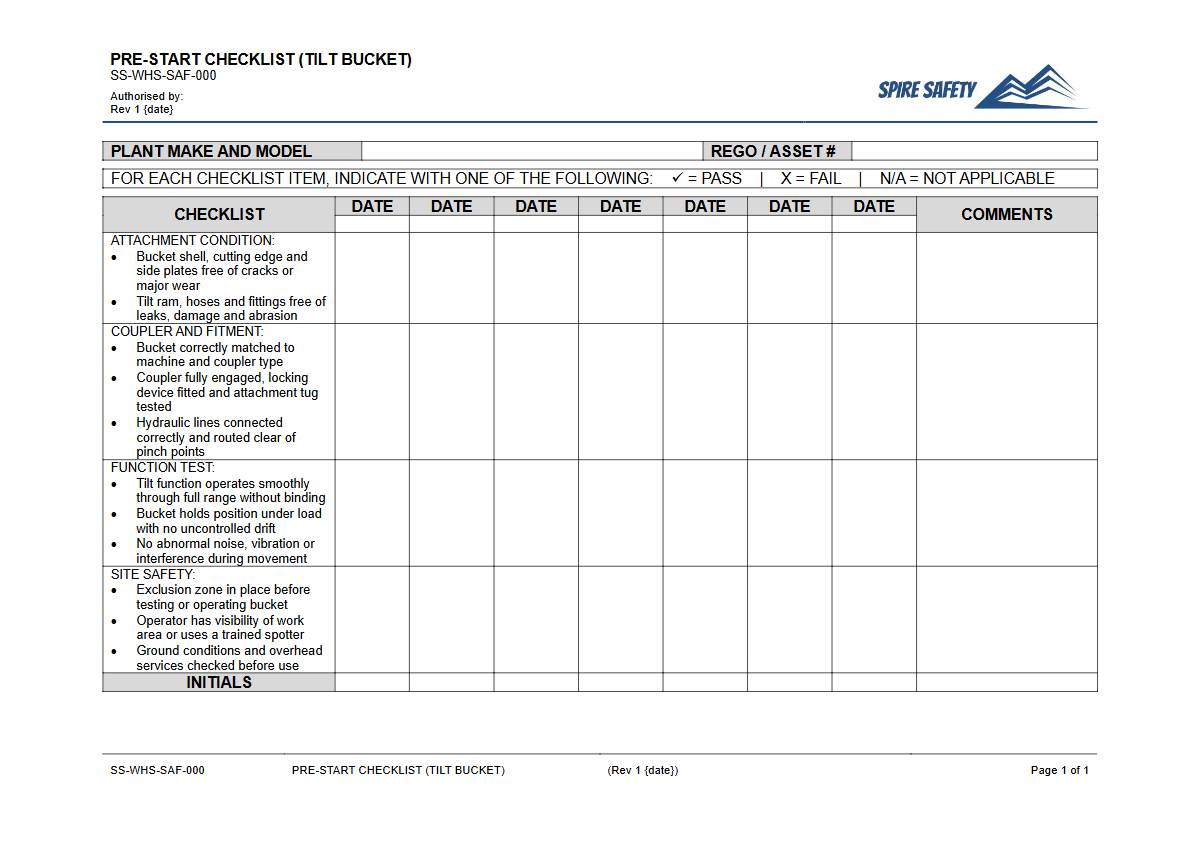
Download our free Pre-Start Checklist (Tilt Bucket) Template. This structured DOCX and PDF resource helps formalise safety checks for excavator tilt buckets.
Free Pre-Start Checklist (Tilt Bucket) Template
DOCX • 125 KB + PDF
Updated Oct 2026
No signup required
Purpose of the Free Pre-Start Checklist (Tilt Bucket) Template
A tilt bucket is a specialised excavator attachment that introduces additional complexity and risk compared to a standard bucket. This Free Pre-Start Checklist (Tilt Bucket) Template provides a structured framework for operators to conduct thorough daily inspections before use.
The primary purpose is to systematically identify potential mechanical failures, hydraulic leaks, or structural defects that could lead to an incident, equipment damage, or serious injury. Regularly completing these checks helps your organisation meet its duty of care under WHS laws by proactively managing the risks associated with mobile plant and attachments.
By formalising the inspection process, you create a consistent record that the equipment was in safe working order at the start of each shift. This documentation is a key component of effective plant safety management.
A recent case study highlights the tragic consequences of attachment failure, resulting in a $450,000 fine after an excavator bucket killed a worker, underscoring the critical importance of these checks.
Video walkthrough
How to use the Free Pre-Start Checklist (Tilt Bucket) Template
This template is provided as a downloadable DOCX file for easy customisation and a PDF for immediate use. First, download the document and adapt it to your specific operational needs.
This may involve adding details specific to the make and model of your tilt buckets, referencing your site-specific hazards, and including company-specific procedures for reporting faults.
Operators should be trained to use the checklist, understanding what each item entails and how to properly inspect it. The completed checklist should be signed, dated, and stored according to your organisation's record-keeping procedures.
Integrating this checklist into your broader WHS management systems ensures it becomes a routine part of your safety processes, rather than an isolated task.
Important Customisation Note
This document provides a foundational structure for your Pre-Start Checklist. As every worksite and piece of equipment is unique, we strongly recommend that you customise this template.
You must ensure it aligns with the manufacturer’s instructions, your specific operational risks, and your legal obligations under Australian WHS regulations.
Key Inspection Areas for a Tilt Bucket
While a general excavator pre-start is important, a tilt bucket requires specific attention due to its moving parts and hydraulic systems. This template guides the operator to focus on several critical areas:
- Hydraulic Components: Inspecting all hydraulic hoses, cylinders, and quick-hitch connections for leaks, cracks, abrasion, or damage. Even minor weeping can indicate an impending failure under load.
- Structural Integrity: Checking for cracks in welds, especially around the main pivot points, ears, and cutting edge. Examine all pins, bushes, and keepers for excessive wear, damage, or looseness.
- Attachment Security: Verifying that the bucket is correctly and securely attached to the excavator's quick hitch or coupler. This includes checking that safety pins or locking mechanisms are properly engaged.
- Control System: Ensuring the in-cab controls for the tilt function operate smoothly and correctly, without sticking or erratic behaviour.
Regularly reviewing these specific components helps prevent the most common failure points associated with these specialised attachments. To reinforce this knowledge across your team, consider using our Pre-Start Checks and Plant Maintenance Toolbox Talk Template.
When to use the Pre-Start Checklist
This Pre-Start Checklist should be completed before the tilt bucket is used for the first time on each shift or each day. It should be a non-negotiable step in the operator's daily routine, just like the pre-start for the excavator itself.
It is also wise to conduct a brief post-use inspection to identify any damage that may have occurred during operation, allowing for timely repairs.
The outcomes of the checklist can be discussed as part of daily site safety briefings. Using a Free Pre-Start Meeting Template can help formalise this communication, ensuring supervisors are aware of equipment status and any reported defects before work commences.
Who should use the Pre-Start Checklist
The checklist is designed to be completed by a competent person, which is typically the trained and authorised operator of the excavator. Their familiarity with the equipment makes them the ideal person to spot subtle changes or early signs of wear and tear.
Supervisors or maintenance personnel may also use the checklist to conduct periodic spot-checks or more detailed inspections.
The results of these checks are crucial for everyone on site. Supervisors must ensure operators are completing them diligently, and maintenance teams rely on this information to schedule preventative maintenance and repairs.
Periodic WHS compliance auditing can verify that these procedures are being followed correctly and are effective in practice. If you need more safety documents, you can explore our entire free WHS resources library.
Common mistakes
Common mistakes to avoid
- 'Pencil-whipping' the checklist without physically inspecting each item.
- Ignoring minor hydraulic fluid weeps or seeps, which can indicate imminent hose or seal failure.
- Using a generic excavator pre-start that doesn't include checks for the tilt mechanism's specific components.
- Failing to immediately tag out and report faulty equipment, allowing it to remain in service.
Legal references
Legal considerations
The following legal requirements may be relevant to this type of work.
- Work Health and Safety Act (Harmonised) — Provides the primary duties for protecting workers and other people from work health and safety risks.
- Work Health and Safety Regulations (Harmonised) — Sets out requirements supporting the management of workplace hazards and risks.
The following codes may be relevant to this type of work.
- Managing WHS Risks Code of Practice — Provides practical guidance on identifying hazards, assessing risks and applying effective controls.
- Work Health and Safety Consultation, Cooperation and Coordination Code of Practice — Provides practical guidance on consulting workers and coordinating with other duty holders.
- Managing the Work Environment and Facilities Code of Practice — Provides practical guidance on safe work environments, workplace facilities and related controls.
Did you know
Hydraulic Forces
The hydraulic systems on an excavator operate under immense pressure, often exceeding 3,000 PSI. A pinhole leak at this pressure can inject hydraulic fluid into the skin, causing severe and potentially fatal injuries.
Attachment Failures
Incidents involving falling or uncontrolled movement of excavator attachments are a significant cause of serious injuries and fatalities in the construction and earthmoving industries.
FAQ
Frequently asked questions
01Why is a specific pre-start checklist needed for a tilt bucket?
02What should an operator do if a defect is found during a pre-start check?
03How often should a tilt bucket pre-start check be performed?
04Can this pre-start checklist be used on a mobile phone or tablet?
Share this resource
Free Pre-Start Checklist (Tilt Bucket) Template
Browse Categories
How To Use It
- 1Download and open in Word or PDF.
- 2Replace the placeholders with your business details.
- 3Get it reviewed by a WHS specialist before rollout.
Need it customised?
Our WHS consultants can adapt this template to your site, run a gap analysis, or audit what you already have in place.
Book a Free Consultation WHS consulting servicesor call 1300 156 382