
Free Pre-Start Checklist (Tube Bender) Template
Download our free Pre-Start Checklist for Tube Benders. This DOCX & PDF template helps formalise daily equipment checks and manage WHS risks. Get started.
Free Pre-Start Checklist (Tube Bender) Template
DOCX • 125 KB + PDF
Updated Oct 2026
No signup required
Purpose of the Free Pre-Start Checklist (Tube Bender) Template
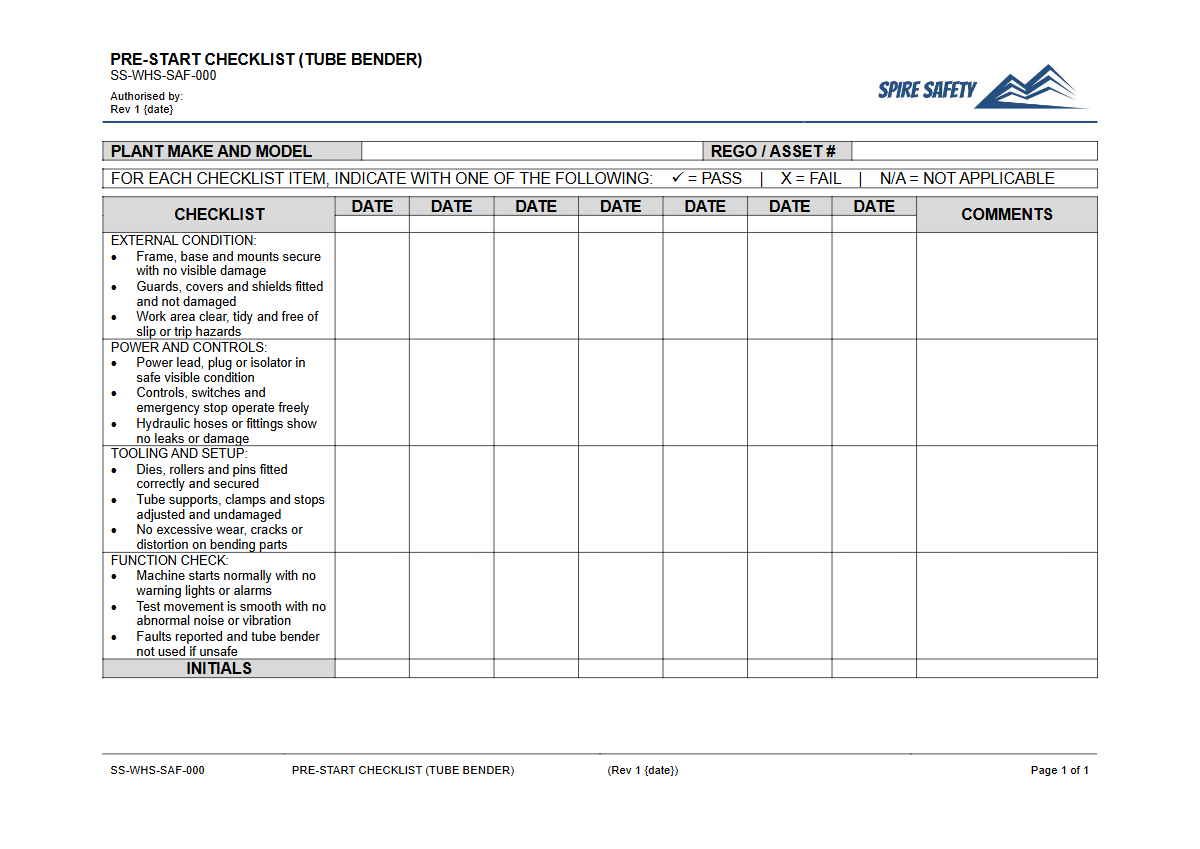
Regularly inspecting workshop equipment is a fundamental part of managing workplace health and safety. This Free Pre-Start Checklist (Tube Bender) Template provides a structured framework for operators to conduct consistent, documented safety checks before using the equipment.
Using this checklist helps identify potential faults, damage, or defects that could lead to an incident, injury, or costly downtime. By formalising this process, your organisation can demonstrate a proactive approach to risk management and maintain a safer working environment for everyone. A systematic check is just as important for a tube bender as it is for other common workshop equipment, as detailed in our bench grinder pre-start checklist.
Video walkthrough
How to use the Free Pre-Start Checklist (Tube Bender) Template
This template is provided as a starting point in both DOCX and PDF formats. After downloading, you should follow these steps:
- Customise: Review and modify the checklist to include specific details relevant to the make, model, and configuration of the tube benders used in your workplace. Add your company branding and any specific site procedures.
- Train: Ensure all operators are trained not only on how to use the tube bender safely but also on the importance and correct procedure for completing the pre-start checklist.
- Implement: Integrate the checklist into your daily operational workflow. Make copies readily available near the equipment and establish a clear process for where completed forms are stored.
- Review: Periodically review the checklist's effectiveness and update it as necessary, especially if new hazards are identified or the equipment is modified.
Important Note on Customisation
This document is a template and is not a complete safety solution on its own. It is essential that you customise it to reflect the specific hazards and control measures of your workplace and the particular equipment in use.
We recommend integrating this process into a comprehensive WHS management system to ensure all aspects of safety are covered.
What to Inspect on a Tube Bender
While your customised checklist will be more detailed, a typical tube bender inspection should cover key safety and operational components. These include:
- Guards & Shields: Check that all guards are in place, secure, and free from damage.
- Hydraulic System: Visually inspect hoses, fittings, and cylinders for leaks, cracks, or other signs of wear.
- Controls & E-Stops: Test that all operating controls function correctly and that the emergency stop button immediately halts the machine.
- Dies & Tooling: Ensure the correct dies are selected for the job and that they are securely mounted and in good condition.
- Frame & Work Area: Check the machine's overall structural integrity and ensure the surrounding area is clear of slip or trip hazards.
This process is similar for other powerful cutting and shaping machinery, such as that covered in our checklist for a floor saw, where component integrity is paramount.
When to Use This Checklist
The pre-start checklist should be completed by the operator before using the tube bender for the first time on any given day or shift. This regular, frequent inspection ensures that the machine's condition hasn't changed overnight or between shifts.
It catches gradual wear and tear or sudden damage before it can escalate into a more serious failure during operation. Completed checklists serve as a valuable record, which can be reviewed during WHS compliance audits to verify that safety procedures are being followed consistently.
Who Should Use This Checklist
The primary person responsible for completing the pre-start checklist is the trained and authorised operator of the tube bender. Supervisors also have a responsibility to ensure these checks are being completed correctly and that any reported issues are addressed promptly.
Maintenance personnel may also use the information from completed checklists to schedule preventative maintenance and track equipment condition over time. If you need assistance defining these roles and responsibilities within your safety framework, our WHS consultants can provide expert guidance. For more tools to support your safety processes, browse our full free WHS resources library.
Common mistakes
Common mistakes to avoid
- Skipping checks for 'quick' or 'minor' jobs, assuming the machine is fine.
- Failing to immediately tag out and report faulty equipment, leaving it for the next user.
- Using a generic checklist without customising it to the specific make, model, and hazards of the tube bender.
- "Pencil-whipping" the form — ticking boxes without physically performing each inspection step.
Legal references
Legal considerations
The following legal requirements may be relevant to this type of work.
- Work Health and Safety Act (Harmonised) — Provides the primary duties for protecting workers and other people from work health and safety risks.
- Work Health and Safety Regulations (Harmonised) — Sets out requirements supporting the management of workplace hazards and risks.
The following codes may be relevant to this type of work.
- Managing WHS Risks Code of Practice — Provides practical guidance on identifying hazards, assessing risks and applying effective controls.
- Work Health and Safety Consultation, Cooperation and Coordination Code of Practice — Provides practical guidance on consulting workers and coordinating with other duty holders.
- Managing the Work Environment and Facilities Code of Practice — Provides practical guidance on safe work environments, workplace facilities and related controls.
Did you know
Record Keeping
Consistent pre-start records can be invaluable during a safety audit or incident investigation, demonstrating a commitment to proactive risk management.
Hydraulic Hazards
Hydraulic systems on tube benders can operate at extreme pressures. A pinhole leak can inject fluid into the skin, causing severe injury, which makes visual inspection critical.
FAQ
Frequently asked questions
01What should be checked on a tube bender before use?
02How often should a tube bender pre-start check be done?
03Who is responsible for completing the tube bender checklist?
04What happens if a fault is found during the pre-start inspection?
Share this resource
Free Pre-Start Checklist (Tube Bender) Template
Browse Categories
How To Use It
- 1Download and open in Word or PDF.
- 2Replace the placeholders with your business details.
- 3Get it reviewed by a WHS specialist before rollout.
Need it customised?
Our WHS consultants can adapt this template to your site, run a gap analysis, or audit what you already have in place.
Book a Free Consultation WHS consulting servicesor call 1300 156 382