
Free Pre-Start Checklist (Wood Router) Template
Download our free Pre-Start Checklist (Wood Router) Template in DOCX and PDF. A structured starting point to help formalise your woodworking safety inspections.
Free Pre-Start Checklist (Wood Router) Template
DOCX • 125 KB + PDF
Updated Oct 2026
No signup required
Purpose of the Free Pre-Start Checklist (Wood Router) Template
Wood routers are powerful and versatile tools common in workshops, construction, and manufacturing. However, their high-speed rotating cutters present significant risks, including cuts, lacerations, eye injuries from flying debris, and respiratory issues from wood dust.
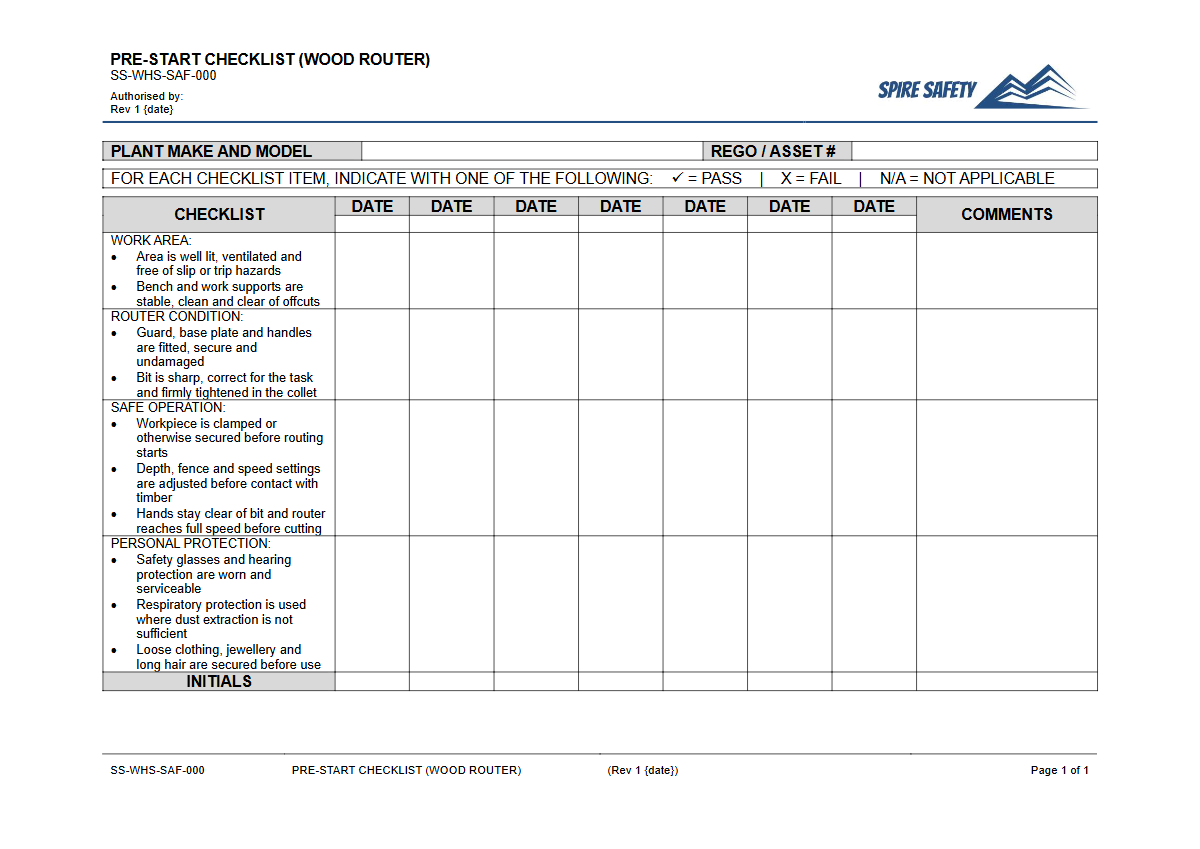
Implementing a routine inspection process is a critical control measure to manage these hazards. This Free Pre-Start Checklist (Wood Router) Template provides a structured format to guide operators through essential safety and operational checks before use.
Regular use of this checklist helps identify potential faults or damage early, preventing equipment failure and reducing the likelihood of workplace incidents.
By formalising this process, organisations can demonstrate due diligence in managing plant safety. These daily checks are a fundamental component of a robust safety framework, complementing scheduled maintenance and operator training.
Integrating such procedures is a key part of developing effective WHS management systems that protect workers and ensure operational integrity.
Video walkthrough
How to use the Free Pre-Start Checklist (Wood Router) Template
This resource is available as a DOCX file for easy customisation and a PDF for straightforward printing. To get the most value from this template, you should adapt it to your specific operational context.
This includes adding your company branding, site details, and referencing specific makes and models of wood routers used in your workplace.
Important: This document is a template and must be customised. We are not familiar with your business, equipment, or unique operational risks.
You must adapt this template to suit your specific circumstances, ensuring it aligns with the manufacturer's instructions for each piece of equipment and any site-specific safety procedures you have in place. Similar principles of pre-use inspection apply to other workshop equipment, as seen in our Free Pre-Start Checklist (Bench Grinder) Template.
When to use this Pre-Start Checklist
A pre-start check for a wood router should be completed by the operator before the first use on every shift. If the router is used by multiple operators during a single shift, each new operator should perform their own check before commencing work.
This ensures a consistent level of safety and accountability throughout the day. Completed checklists should be filed and retained as part of your safety records.
This documentation is invaluable for incident investigations, maintenance planning, and demonstrating a history of proactive safety management.
For more complex routing equipment, additional checks may be required. For instance, while this checklist is for manual routers, automated systems require a different approach, covered in our Free Pre-Start Checklist (CNC Router) Template.
Who should use this checklist
This checklist is designed to be used by competent personnel who have been trained and authorised to operate a wood router. This typically includes tradespeople, cabinet makers, carpenters, and factory workers.
Supervisors should also be familiar with the checklist to verify that inspections are being completed correctly and to manage any faults identified. It serves as both a safety tool for the operator and an oversight mechanism for management, ensuring that everyone involved in the task understands the equipment's condition.
Encouraging workers to browse a library of safety documents empowers them to take ownership of safety across all site equipment. You can find more templates in our free WHS resources library to build a comprehensive set of checks for your workplace.
Key Items on the Wood Router Checklist
A thorough wood router inspection covers several critical areas. The operator should physically check each component rather than assuming it is safe. Key inspection points include:
- Guards & Shields: Ensure all safety guards are in place, secure, and not damaged or modified.
- Router Bits: Check that the bit is the correct type for the job, is sharp, clean, and free from damage. Confirm it is securely tightened in the collet.
- Base Plate: Inspect for cracks or damage and ensure it is securely attached and moves smoothly.
- Power Cord & Plug: Look for any fraying, cuts, or exposed wires. The plug should be free from damage. If battery-operated, check the battery housing for security.
- Dust Extraction: Verify that the dust extraction port is clear and that the connected vacuum system is operational.
- Controls: Test that the on/off switch and any variable speed controls function correctly and are not jammed.
If you need assistance developing and implementing specific procedures like these for your unique machinery, engaging external expertise through WHS consulting can provide tailored solutions and expert guidance.
Integrating Checks into Your Safety System
A checklist is only effective when it is part of a broader safety culture. The pre-start process should not be a 'tick and flick' exercise.
Operators must understand that if they identify a fault, they have the authority and responsibility to stop work, tag the equipment out of service, and report the issue immediately. Management must support this by having a clear process for repairing or replacing faulty equipment.
Regular reviews of completed checklists can highlight recurring problems, indicating a need for different equipment, enhanced maintenance, or further training.
Periodic verification of your safety processes ensures they remain effective. A formal WHS compliance auditing program can help assess whether pre-start checks are being performed correctly and are contributing effectively to overall site safety.
Common mistakes
Common mistakes to avoid
- Ignoring the condition of router bits (using dull, chipped, or dirty bits).
- Failing to check that safety guards are in place, unmodified, and function correctly.
- Using the router without verifying the dust extraction system is active and effective.
- 'Pencil-whipping' the checklist without physically inspecting each component.
Legal references
Legal considerations
The following legal requirements may be relevant to this type of work.
- Work Health and Safety Act (Harmonised) — Provides the primary duties for protecting workers and other people from work health and safety risks.
- Work Health and Safety Regulations (Harmonised) — Sets out requirements supporting the management of workplace hazards and risks.
The following codes may be relevant to this type of work.
- Managing WHS Risks Code of Practice — Provides practical guidance on identifying hazards, assessing risks and applying effective controls.
- Work Health and Safety Consultation, Cooperation and Coordination Code of Practice — Provides practical guidance on consulting workers and coordinating with other duty holders.
- Managing the Work Environment and Facilities Code of Practice — Provides practical guidance on safe work environments, workplace facilities and related controls.
Did you know
Router Bit Speed
A typical wood router bit can spin at speeds between 8,000 and 24,000 revolutions per minute (RPM), making blade condition and security critical for preventing dangerous kickback and ensuring a clean cut.
FAQ
Frequently asked questions
01What is the primary purpose of a wood router pre-start check?
02What should an operator do if a wood router fails the pre-start check?
03How does this checklist differ from one for a CNC router?
04How often should router bits be inspected?
Share this resource
Free Pre-Start Checklist (Wood Router) Template
Browse Categories
How To Use It
- 1Download and open in Word or PDF.
- 2Replace the placeholders with your business details.
- 3Get it reviewed by a WHS specialist before rollout.
Need it customised?
Our WHS consultants can adapt this template to your site, run a gap analysis, or audit what you already have in place.
Book a Free Consultation WHS consulting servicesor call 1300 156 382