
Free Safe Operating Procedure (Brake Fluid Change) Template
Download our free Safe Operating Procedure (Brake Fluid Change) Template. This customisable Word document helps you manage workshop risks. Get started.
Free Safe Operating Procedure (Brake Fluid Change) Template
DOCX • 126 KB + PDF
Updated Oct 2026
No signup required
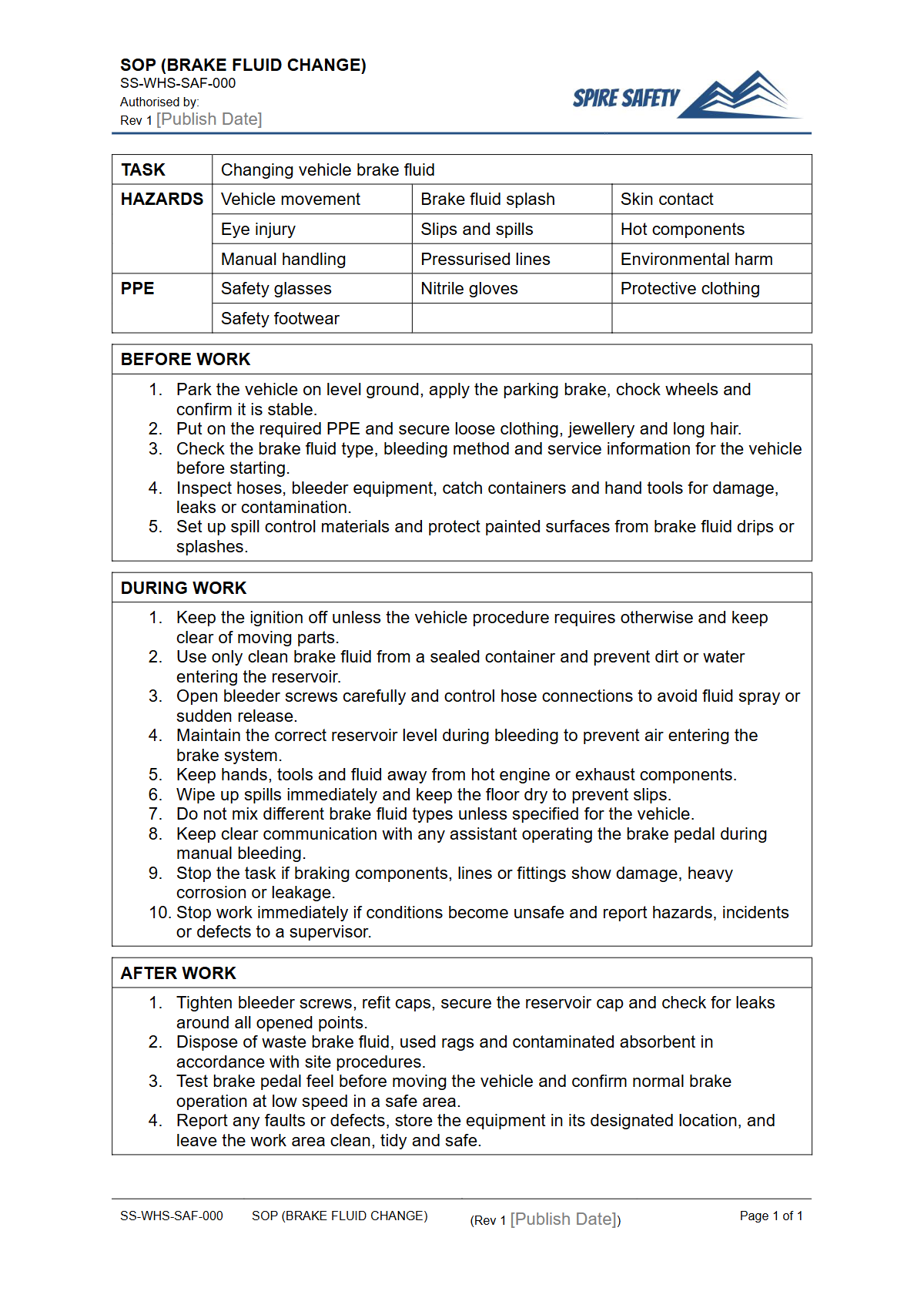
Establishing a clear and safe process for routine maintenance is critical in any automotive workshop. This Free Safe Operating Procedure (Brake Fluid Change) Template provides a structured starting point for documenting the steps required to perform this task safely.
By outlining hazards, required controls, and a step-by-step guide, this template helps your business manage WHS risks associated with vehicle servicing and hazardous substances.
Video walkthrough
Purpose of the Free Safe Operating Procedure (Brake Fluid Change) Template
The primary purpose of this Safe Operating Procedure is to provide a documented, systematic approach to changing brake fluid, minimising risks to workers and ensuring vehicle safety. This task involves significant hazards, including skin and eye exposure to corrosive brake fluid, manual handling risks when removing wheels, and the potential for introducing air into the braking system, which could lead to catastrophic failure. Implementing a formal SOP helps ensure every technician follows a consistent, safe method, which is a fundamental component of robust WHS management systems.
How to use the Free Safe Operating Procedure (Brake Fluid Change) Template
This template is provided as a fully editable DOCX file, with a PDF version also available for easy printing and distribution. It is designed as a comprehensive foundation, not a finished document.
It is essential that you customise this SOP to reflect the specific equipment, chemicals, and processes used in your workplace. We have included placeholder sections and prompts to guide you in adding site-specific details. A generic procedure cannot account for all variables; customisation is key to its effectiveness. For example, your procedure should align with other workshop processes, such as the safe use of pressurised equipment detailed in our air compressor SOP.
When to use it
An SOP for brake fluid changes should be developed and implemented before any worker undertakes the task. It serves as a critical training tool for new mechanics and apprentices, ensuring they understand the approved safe method from the outset.
The document should be readily accessible in the work area and reviewed as part of pre-start checks for the task. It also forms a key piece of evidence during safety reviews and regular WHS compliance auditing, demonstrating that your organisation has a formal process for managing this risk.
Who should use it
This procedure is intended for use by all personnel involved in vehicle maintenance, including qualified mechanics, technicians, apprentices, and workshop supervisors. Supervisors and managers should use the SOP to induct and train staff, monitor performance, and enforce safe work practices.
For workers, it is a practical guide and a reminder of the required safety controls for every job. Documenting processes like this is just as important as having an SOP for body truck operation or any other high-risk task on-site.
Key Elements of a Brake Fluid Change SOP
A comprehensive SOP for this task should be structured to cover several critical areas. Breaking the procedure down into logical sections makes it easier for workers to follow and understand.
Hazard Identification
Your procedure must begin by identifying all potential hazards associated with the task. This includes chemical hazards from the brake fluid itself (e.g., skin/eye irritation, corrosiveness), physical hazards from lifting wheels or working under a vehicle hoisted or on stands, and ergonomic risks from awkward postures.
It should also note the fire risk, as some fluids can be flammable.
Personal Protective Equipment (PPE)
Based on the identified hazards, the SOP must specify the mandatory PPE. For brake fluid changes, this will always include chemical-resistant gloves (e.g., nitrile) and certified safety glasses or goggles.
Depending on the workshop environment, other PPE like safety footwear may also be required.
Step-by-Step Procedure
This is the core of the document. It should detail the entire process in a clear, sequential order, from initial vehicle preparation (securing the vehicle, disconnecting the battery if required) to the final checks.
Steps should include locating the master cylinder, removing old fluid, refilling with the correct type of new fluid, bleeding each brake caliper in the correct sequence, and torqueing wheel nuts to manufacturer specifications. If you need help refining these technical steps, our WHS consultants can assist in developing procedures that are both practical and aligned with safety best practices.
Emergency and Spill Response
The SOP must outline the immediate actions to take in an emergency. This includes first aid for skin or eye contact with brake fluid, as well as procedures for containing and cleaning up spills.
Contact details for the designated first aid officer and emergency services should be included, along with the location of the Safety Data Sheet (SDS), first aid kit, and eyewash station.
By using this template as a guide, you can create a detailed and practical Safe Operating Procedure that enhances safety and standardises practice in your workshop. You can explore more templates and guides in our library of free WHS resources to build out your safety management system.
Common mistakes
Common mistakes to avoid
- Forgetting to check the vehicle-specific procedure and required fluid type (e.g., DOT 3 vs DOT 4).
- Using a container for bleeding that has been contaminated with oil or other substances.
- Allowing the master cylinder reservoir to run dry while bleeding, which introduces air into the system.
- Improper disposal of used brake fluid, which is considered hazardous waste in Australia.
Legal references
Legal considerations
The following legal requirements may be relevant to this type of work.
- Work Health and Safety Act (Harmonised) — Provides the primary duties for protecting workers and other people from work health and safety risks.
- Work Health and Safety Regulations (Harmonised) — Sets out requirements supporting the management of workplace hazards and risks.
The following codes may be relevant to this type of work.
- Managing WHS Risks Code of Practice — Provides practical guidance on identifying hazards, assessing risks and applying effective controls.
- Work Health and Safety Consultation, Cooperation and Coordination Code of Practice — Provides practical guidance on consulting workers and coordinating with other duty holders.
- Managing the Work Environment and Facilities Code of Practice — Provides practical guidance on safe work environments, workplace facilities and related controls.
Did you know
Hygroscopic Nature
Most common brake fluids (DOT 3, 4, 5.1) are hygroscopic, meaning they absorb moisture from the atmosphere. This moisture lowers the boiling point, which can lead to brake fade under heavy use.
Paint Stripper
Glycol-based brake fluid is an effective paint stripper. Spills on a vehicle's bodywork should be cleaned immediately with water to prevent permanent damage to the finish.
FAQ
Frequently asked questions
01Is a Safe Operating Procedure a legal requirement for changing brake fluid in Australia?
02What PPE should be worn when changing brake fluid?
03How often should a brake fluid change SOP be reviewed?
04Can I use this template for any type of vehicle?
Share this resource
Free Safe Operating Procedure (Brake Fluid Change) Template
Browse Categories
How To Use It
- 1Download and open in Word or PDF.
- 2Replace the placeholders with your business details.
- 3Get it reviewed by a WHS specialist before rollout.
Need it customised?
Our WHS consultants can adapt this template to your site, run a gap analysis, or audit what you already have in place.
Book a Free Consultation WHS consulting servicesor call 1300 156 382
Related templates
- Free Safe Operating Procedure (Brake Lathe) Template
- Free Safe Operating Procedure (Brake Pad Replacement) Template
- Free Safe Operating Procedure (Branch Chipping Prep) Template
- Free Safe Operating Procedure (Brazing Torch) Template
- Free Safe Operating Procedure (Bread Slicer) Template
- Free Safe Operating Procedure (Brick Saw) Template