
Free Safe Operating Procedure (Call Bell Cord Check) Template
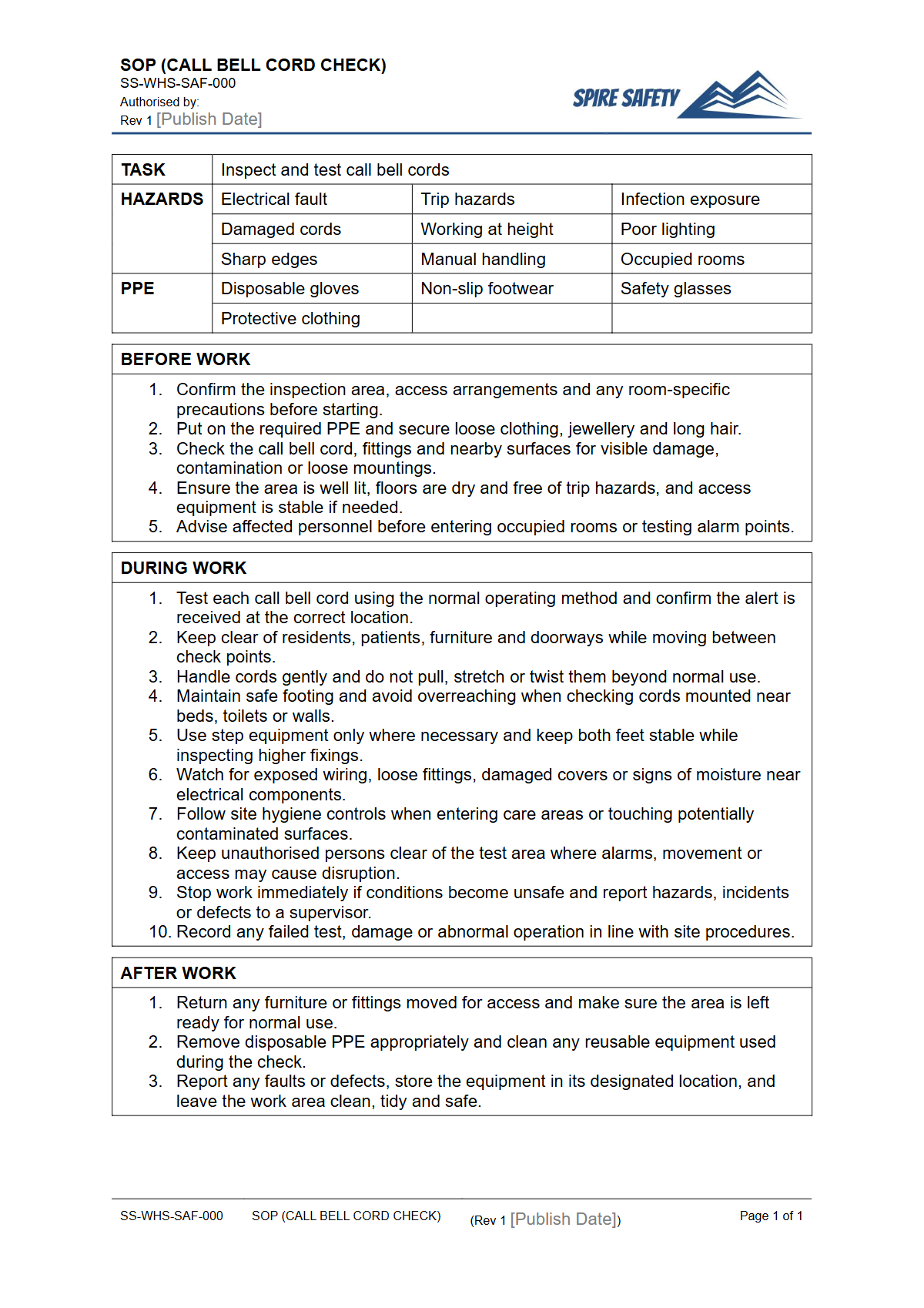
Download our free Safe Operating Procedure (Call bell cord check) template. This DOCX and PDF resource helps you document safe work practices.
Free Safe Operating Procedure (Call Bell Cord Check) Template
DOCX • 126 KB + PDF
Updated Oct 2026
No signup required
Purpose of the Free Safe Operating Procedure (Call Bell Cord Check) Template
Ensuring patient and resident safety is a primary responsibility in healthcare and aged care settings. A functional call bell is a critical lifeline, allowing individuals to summon assistance when needed.
This Free Safe Operating Procedure (Call Bell Cord Check) Template provides a structured framework for documenting the process of inspecting and maintaining call bell cords. It helps organisations systematically manage the risks associated with faulty, inaccessible, or hazardous call bells, such as delayed assistance or entanglement.
Using a standardised SOP demonstrates a commitment to proactive risk management and is a fundamental component of effective WHS management systems. This template helps you define clear steps, assign responsibilities, and establish a regular inspection schedule. By formalising this process, you create a reliable system that ensures call bells are always in a safe and operational state, supporting better care outcomes and fulfilling your duty of care obligations under Australian WHS legislation.
Video walkthrough
How to use the Free Safe Operating Procedure (Call Bell Cord Check) Template
This Safe Operating Procedure template is provided as a starting point in both DOCX and PDF formats. Download the file and integrate it into your existing safety management documentation.
The DOCX version is fully editable, allowing you to tailor it to the specific equipment, environment, and procedural requirements of your facility. It is crucial that you customise this document to reflect your unique operational context and risk profile.
Important: This is a template only. You must customise it with your site-specific details, including facility name, specific locations, responsible personnel, and review dates.
We are not responsible for the outcomes of any customisation. The effectiveness of this SOP depends on its correct implementation, which includes providing adequate training to all relevant staff members and ensuring consistent execution of the documented steps.
Once customised, the SOP should be used as a guide for regular inspections. The process forms part of your organisation's safety assurance activities and can be a key piece of evidence during a WHS compliance auditing process.
It provides a clear record that demonstrates proactive hazard management regarding essential resident safety equipment.
When to use this Safe Operating Procedure
A call bell cord check SOP should be used as part of a regular, scheduled maintenance and safety inspection program. The frequency of these checks should be determined by a risk assessment, considering factors like the vulnerability of the residents, the age of the system, and historical failure rates. Common practice includes:
- Daily Visual Checks: Simple visual inspections performed by care staff to ensure the cord is accessible, untangled, and appears undamaged.
- Periodic Detailed Inspections: More thorough weekly or monthly checks conducted by designated personnel (e.g., maintenance staff or a WHS representative) that involve testing the button, alarm, and checking for physical wear and tear.
- Post-Maintenance: A full functional check after any repairs or modifications to the nurse call system.
- Following an Incident: If a call bell fails or is involved in any safety incident, the SOP should guide the inspection and response process.
Who should use this Safe Operating Procedure
This SOP is intended for multiple roles within a healthcare, aged care, or disability support organisation. Responsibilities should be clearly assigned to ensure accountability. Key users include:
- Care Staff (Nurses, Personal Care Assistants): For performing daily visual checks and reporting any faults immediately. They are the first line of defence in identifying issues.
- Maintenance Personnel: For conducting detailed periodic inspections, carrying out repairs, and documenting maintenance activities.
- Facility Managers and WHS Officers: For overseeing the implementation of the SOP, reviewing inspection records, and ensuring the overall program is effective.
- Supervisors and Team Leaders: For ensuring their team members are trained on the procedure and are performing the checks as required.
Proper implementation requires that all users are competent and understand the importance of their role in the process. If you require assistance in developing or implementing robust safety procedures, consider engaging professional WHS consulting services for expert guidance tailored to your sector.
Common mistakes
Common mistakes to avoid
- Only checking the button and not confirming the call registers at the nurse's station.
- Tying knots in cords to shorten them, which creates serious entanglement hazards.
- Failing to document completed checks, leaving no audit trail for compliance or incident investigation.
- Not training all relevant staff, especially agency or new employees, on the procedure and importance of the checks.
Legal references
Legal considerations
The following legal requirements may be relevant to this type of work.
- Work Health and Safety Act (Harmonised) — Provides the primary duties for protecting workers and other people from work health and safety risks.
- Work Health and Safety Regulations (Harmonised) — Sets out requirements supporting the management of workplace hazards and risks.
The following codes may be relevant to this type of work.
- Managing WHS Risks Code of Practice — Provides practical guidance on identifying hazards, assessing risks and applying effective controls.
- Work Health and Safety Consultation, Cooperation and Coordination Code of Practice — Provides practical guidance on consulting workers and coordinating with other duty holders.
- Managing the Work Environment and Facilities Code of Practice — Provides practical guidance on safe work environments, workplace facilities and related controls.
Did you know
A Preventable Risk
Accessible and functional call bells are a key factor in fall prevention strategies within hospitals and aged care facilities. Timely response to a call for assistance can prevent a resident from attempting to mobilise unassisted, directly reducing the risk of falls and related injuries.
Beyond the Button
Modern nurse call systems can integrate with other technologies like bed sensors and personal pendants. However, the simple, hard-wired call bell cord remains a fundamental and essential safety device in most care environments.
FAQ
Frequently asked questions
01What should be included in a call bell cord check SOP?
02Why are frayed or knotted call bell cords a hazard?
03How often should call bell cords be checked?
04Is this template suitable for NDIS providers?
Share this resource
Free Safe Operating Procedure (Call Bell Cord Check) Template
Browse Categories
How To Use It
- 1Download and open in Word or PDF.
- 2Replace the placeholders with your business details.
- 3Get it reviewed by a WHS specialist before rollout.
Need it customised?
Our WHS consultants can adapt this template to your site, run a gap analysis, or audit what you already have in place.
Book a Free Consultation WHS consulting servicesor call 1300 156 382
Related templates
- Free Safe Operating Procedure (Call Bell Testing) Template
- Free Safe Operating Procedure (Can Opener Use) Template
- Free Safe Operating Procedure (Cane Pruning) Template
- Free Safe Operating Procedure (Canoe Operation) Template
- Free Safe Operating Procedure (Canopy Cleaning) Template
- Free Safe Operating Procedure (Cap Lamp) Template