
Free Safe Operating Procedure (Cargo Handling) Template
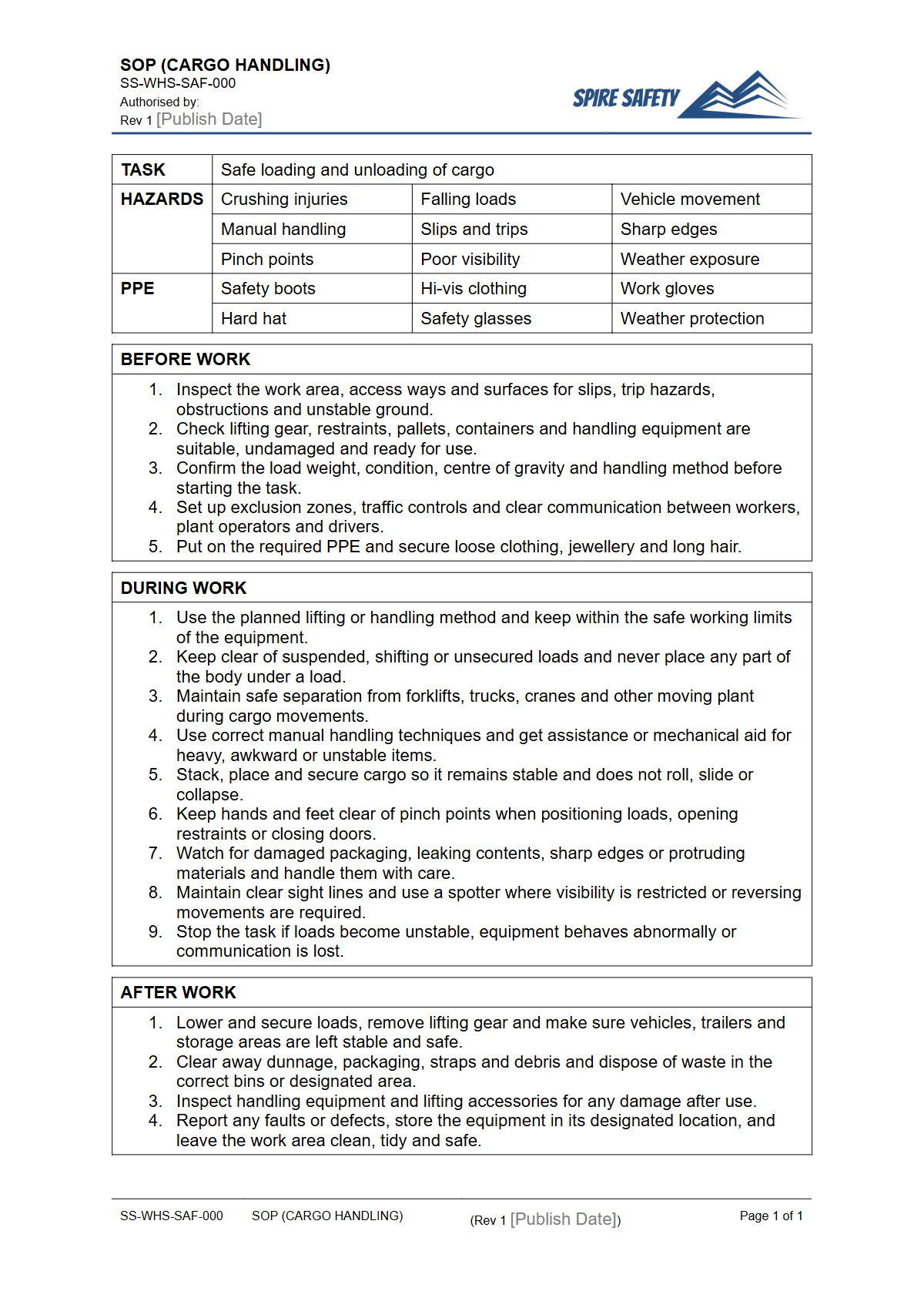
Download our free Safe Operating Procedure (Cargo Handling) template.
Free Safe Operating Procedure (Cargo Handling) Template
DOCX • 126 KB + PDF
Updated Oct 2026
No signup required
Purpose of the Free Safe Operating Procedure (Cargo Handling) Template
This free Safe Operating Procedure (Cargo Handling) template provides a structured framework for documenting the hazards and control measures associated with moving goods in your workplace. A documented procedure is a critical tool for ensuring tasks are performed safely and consistently, reducing the risk of injuries from manual handling, vehicle movements, and falling objects.
Implementing a clear Safe Operating Procedure helps standardise training, clarifies worker responsibilities, and demonstrates a commitment to proactive WHS management.
Effective cargo handling involves more than just lifting and moving. It encompasses a range of activities from pre-start equipment checks to safe loading patterns and securing loads for transport.
A comprehensive SOP helps manage the interaction between pedestrians and vehicles, a significant risk in warehouses, loading docks, and transport yards. For tasks involving specific vehicles, it is essential to have procedures for that equipment, such as our Safe Operating Procedure for body trucks, to cover vehicle-specific risks.
Video walkthrough
How to use the Free Safe Operating Procedure (Cargo Handling) Template
This resource is provided in both DOCX and PDF formats for your convenience. The DOCX version is fully editable, allowing you to adapt the content to your specific operational needs.
To get started, download the file and begin populating the sections with information relevant to your workplace, including the types of cargo handled, the equipment used (e.g., forklifts, pallet jacks, cranes), and the environment where the tasks occur. Using this template can streamline the development of other equipment-specific documents, for example, by integrating it with our free Telehandler SOP template for loading and unloading operations.
Customisation is Essential
It's vital to recognise that this document is a template, not a finished, universally applicable procedure. To be effective, you must customise it to reflect your unique workplace.
This involves conducting a thorough risk assessment of your cargo handling tasks to identify all relevant hazards and determine appropriate control measures. We have designed this template as a structured starting point for your own site-specific procedure development.
A robust SOP is a key component of a broader framework, such as a complete WHS management system, which integrates all aspects of safety into your daily operations.
When to use a Safe Operating Procedure
A Safe Operating Procedure for cargo handling should be used as a primary reference document for several key activities. It is essential for inducting new employees and for providing refresher training to existing workers to ensure they remain competent and aware of the risks.
The SOP should be reviewed during pre-task planning or toolbox talks, especially for non-routine or complex lifting operations. Furthermore, it serves as a critical investigative tool following an incident or near-miss, helping to identify any procedural gaps or non-conformance that may have contributed to the event.
Who should use this procedure
This Safe Operating Procedure should be used by all personnel involved in cargo handling tasks. This includes warehouse staff, forklift operators, truck drivers, and any other workers responsible for loading, unloading, shifting, and securing goods.
Supervisors and managers must also use the SOP to oversee work, ensure procedures are being followed correctly, and provide guidance. The document is also a valuable resource for WHS personnel and trainers responsible for developing and delivering training programs.
It's crucial that procedures for associated tasks are also available, such as using a step ladder SOP for safe access to loads when required. If you require expert assistance in developing and implementing site-specific procedures, our WHS consulting services can provide tailored support.
By ensuring all relevant workers are trained and competent in the procedure, you create a safer, more organised, and efficient work environment. For more templates and safety guides, you can explore our entire free WHS resources library to find documents that suit your business needs.
Common mistakes
Common mistakes to avoid
- Using a generic template without customising it for specific site conditions and cargo types.
- Failing to train workers on the specific procedures outlined in the finalised SOP.
- Not reviewing or updating the SOP after an incident or when new equipment is introduced.
- Storing the SOP in an office instead of making it easily accessible to workers at the point of use.
Legal references
Legal considerations
The following legal requirements may be relevant to this type of work.
- Work Health and Safety Act (Harmonised) — Provides the primary duties for protecting workers and other people from work health and safety risks.
- Work Health and Safety Regulations (Harmonised) — Sets out requirements supporting the management of workplace hazards and risks.
The following codes may be relevant to this type of work.
- Managing WHS Risks Code of Practice — Provides practical guidance on identifying hazards, assessing risks and applying effective controls.
- Work Health and Safety Consultation, Cooperation and Coordination Code of Practice — Provides practical guidance on consulting workers and coordinating with other duty holders.
- Managing the Work Environment and Facilities Code of Practice — Provides practical guidance on safe work environments, workplace facilities and related controls.
Did you know
Manual Handling Risk
According to Safe Work Australia, injuries resulting from hazardous manual tasks are a leading cause of serious workers' compensation claims. A well-implemented SOP is a key administrative control for reducing these risks.
FAQ
Frequently asked questions
01What is a Safe Operating Procedure for cargo handling?
02Is this cargo handling SOP template enough for WHS compliance?
03What key information should be included in a cargo handling SOP?
04How often should a Safe Operating Procedure be reviewed?
Share this resource
Free Safe Operating Procedure (Cargo Handling) Template
Browse Categories
How To Use It
- 1Download and open in Word or PDF.
- 2Replace the placeholders with your business details.
- 3Get it reviewed by a WHS specialist before rollout.
Need it customised?
Our WHS consultants can adapt this template to your site, run a gap analysis, or audit what you already have in place.
Book a Free Consultation WHS consulting servicesor call 1300 156 382
Related templates
- Free Safe Operating Procedure (Cargo Hold Cleaning) Template
- Free Safe Operating Procedure (Cargo Loader) Template
- Free Safe Operating Procedure (Cargo Net Inspection) Template
- Free Safe Operating Procedure (Cargo Restraint Check) Template
- Free Safe Operating Procedure (Carpet Cleaner) Template
- Free Safe Operating Procedure (Carpet Extraction) Template