
Free Safe Operating Procedure (Carpet Cleaner) Template
Download our free Safe Operating Procedure (Carpet Cleaner) Template.
Free Safe Operating Procedure (Carpet Cleaner) Template
DOCX • 126 KB + PDF
Updated Oct 2026
No signup required
Purpose of the Free Safe Operating Procedure (Carpet Cleaner) Template
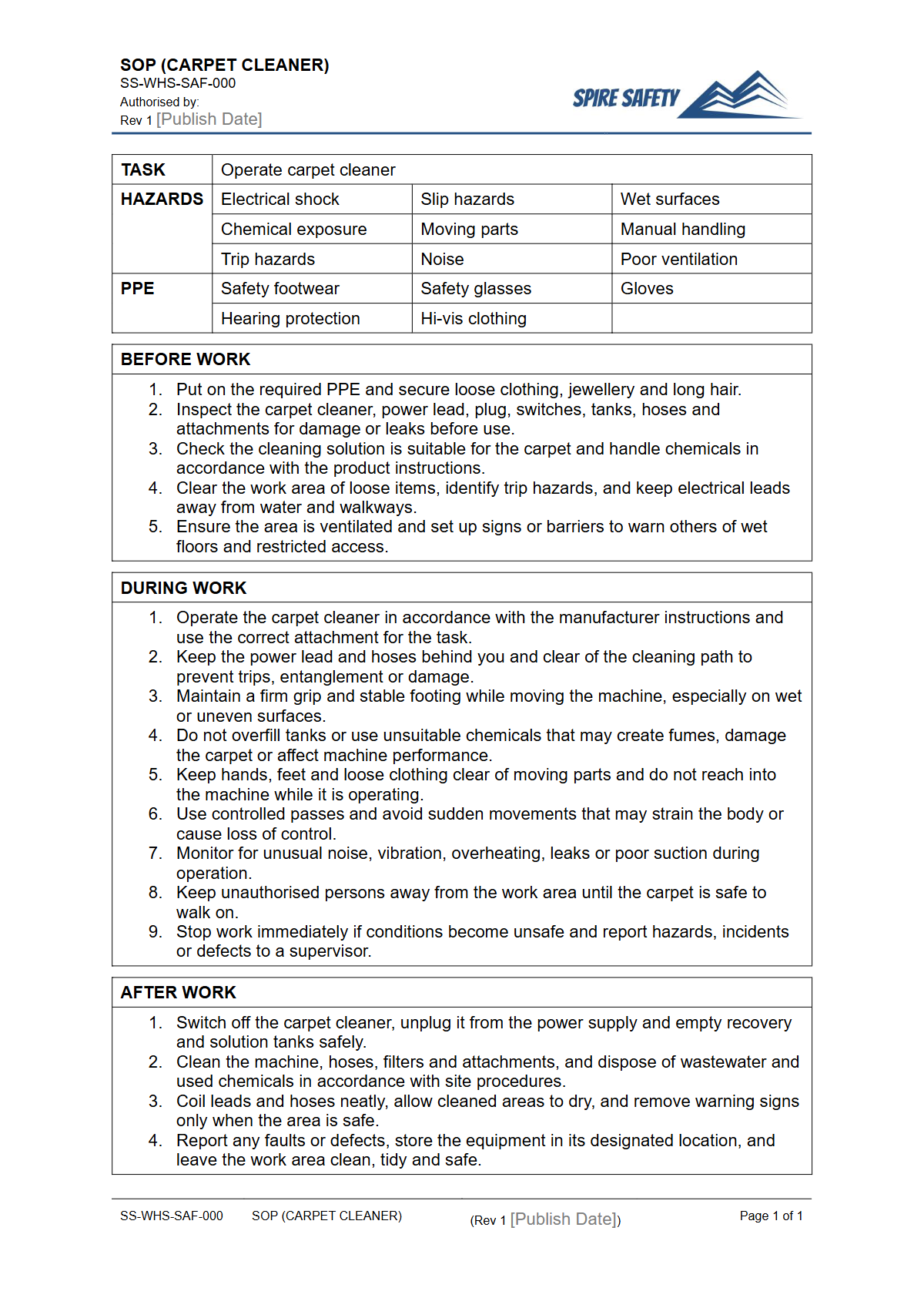
Operating a carpet cleaner, whether in a commercial or residential setting, involves a range of health and safety risks. This Free Safe Operating Procedure (Carpet Cleaner) Template provides a structured starting point for your business to document the specific hazards and control measures required for the safe use of this equipment.
Using a documented procedure helps ensure tasks are performed consistently and safely, fulfilling a key requirement of Australian WHS legislation to provide safe systems of work.
This Safe Operating Procedure outlines a step-by-step process for using a carpet cleaner, from pre-start checks to clean-up and shutdown. It prompts consideration of common hazards such as electrical shock from faulty cords or water ingress, slips and trips from trailing hoses and wet floors, manual handling injuries from moving the machine, and exposure to cleaning chemicals. Formalising these steps is a fundamental component of effective WHS management systems.
Common Hazards and Controls
Key risks when operating a carpet cleaner include:
- Electrical Hazards: Using damaged leads, plugs, or operating near water.
- Slips, Trips & Falls: Wet floors and trailing electrical cords or water hoses create significant trip hazards.
- Manual Handling: Lifting and moving heavy machinery, especially up and down stairs.
- Hazardous Chemicals: Inhalation of vapours or skin contact with cleaning solutions.
- Noise: Prolonged exposure to high noise levels from the machine's motor.
Your SOP should detail specific controls for each of these, such as using RCDs (Residual Current Devices), barricading wet areas, using correct lifting techniques, and ensuring adequate ventilation. The principles of identifying and controlling risks associated with powered equipment are universal, much like those found in our Free Air Compressor SOP.
Video walkthrough
How to use the Free Safe Operating Procedure (Carpet Cleaner) Template
Download the template in the format that best suits your needs (DOCX for easy editing or PDF). The document is pre-filled with common tasks, potential hazards, and standard control measures relevant to carpet cleaner operation.
Your primary task is to adapt this content to your specific workplace.
Review each section and add, remove, or modify the content to reflect the exact model of carpet cleaner you use, the cleaning chemicals approved for your site, and the unique conditions of your work environment. Include details such as the specific Personal Protective Equipment (PPE) required (e.g., non-slip footwear, gloves, eye protection) and your site's emergency procedures.
Please note: This document is a template only. We have pre-filled it with common hazards and controls, but you must customise it to reflect the specific equipment, chemicals, and work environment at your site.
A generic procedure is not sufficient to ensure safety.
When to use it
A Safe Operating Procedure for a carpet cleaner is a versatile document used in various daily and periodic activities. It should be the primary reference document during the induction and training of new employees who will operate the equipment.
It also serves as a guide for pre-start inspections, ensuring the machine is safe to use before each shift. The principles of safe equipment setup and use are also critical for other common workplace tools, as detailed in our FREE Step Ladder SOP Template.
Furthermore, the SOP should be readily accessible in the work area for operators to reference as needed. It is a vital tool for supervisors conducting safety observations and a key piece of evidence during incident investigations or regular safety audits.
Who should use it
This SOP template is designed for several key roles within an organisation:
- Workers/Operators: The primary users who must understand and follow the procedure to perform their work safely.
- Supervisors and Team Leaders: Responsible for ensuring workers are trained on the SOP and adhere to it during daily operations.
- WHS Managers/Coordinators: Responsible for developing, implementing, and reviewing safety procedures as part of the overall WHS system.
For businesses looking to ensure their safety documentation is robust and fit-for-purpose, undergoing a professional WHS compliance auditing process can provide clarity and direction. This helps confirm that procedures like this SOP are correctly integrated into the broader safety framework.
The effectiveness of any SOP hinges on thorough training and competency verification. It's not enough to simply have the document; operators must understand its contents and be able to apply them practically.
This might involve hands-on demonstration, observation, and formal sign-off. Many organisations find value in structured processes similar to our FREE Body Truck SOP Template, which also emphasises operator competency.
This document is one of many tools available to help build a safer workplace. For more templates and guides covering a wide range of equipment and tasks, browse our complete free WHS resources library.
Common mistakes
Common mistakes to avoid
- Using the downloaded template without customising it for the specific machine, chemicals, and workplace.
- Failing to adequately train all operators on the contents of the finalised SOP.
- Neglecting to supply or enforce the use of the Personal Protective Equipment (PPE) listed in the procedure.
- Not reviewing and updating the SOP after an incident, near-miss, or when equipment changes.
Legal references
Legal considerations
The following legal requirements may be relevant to this type of work.
- Work Health and Safety Act (Harmonised) — Provides the primary duties for protecting workers and other people from work health and safety risks.
- Work Health and Safety Regulations (Harmonised) — Sets out requirements supporting the management of workplace hazards and risks.
The following codes may be relevant to this type of work.
- Managing WHS Risks Code of Practice — Provides practical guidance on identifying hazards, assessing risks and applying effective controls.
- Work Health and Safety Consultation, Cooperation and Coordination Code of Practice — Provides practical guidance on consulting workers and coordinating with other duty holders.
- Managing the Work Environment and Facilities Code of Practice — Provides practical guidance on safe work environments, workplace facilities and related controls.
Did you know
Chemical Safety Data
Many carpet cleaning solutions contain chemicals that can cause skin or respiratory irritation. Always check the Safety Data Sheet (SDS) provided by the manufacturer and ensure adequate ventilation is maintained during use.
Trip Hazard Management
Trailing electrical cords and water hoses are a leading cause of trips and falls in cleaning operations. Using signs, cord covers, and securing hoses along wall edges can significantly reduce this common but serious risk.
FAQ
Frequently asked questions
01What should be included in a carpet cleaner SOP?
02Is an SOP a legal requirement for using a carpet cleaner in Australia?
03How often should a Safe Operating Procedure be reviewed?
04Can this template be used for both commercial and domestic carpet cleaners?
Share this resource
Free Safe Operating Procedure (Carpet Cleaner) Template
Browse Categories
How To Use It
- 1Download and open in Word or PDF.
- 2Replace the placeholders with your business details.
- 3Get it reviewed by a WHS specialist before rollout.
Need it customised?
Our WHS consultants can adapt this template to your site, run a gap analysis, or audit what you already have in place.
Book a Free Consultation WHS consulting servicesor call 1300 156 382
Related templates
- Free Safe Operating Procedure (Carpet Extraction) Template
- Free Safe Operating Procedure (Carpet Shampooing) Template
- Free Safe Operating Procedure (Carpet Spot Treatment) Template
- Free Safe Operating Procedure (Carpet Stretcher) Template
- Free Safe Operating Procedure (Carton Damage Handling) Template
- Free Safe Operating Procedure (Carton Erector) Template