
Free Safe Operating Procedure (Carpet Spot Treatment) Template
Download our free Safe Operating Procedure (Carpet Spot Treatment) Template.
Free Safe Operating Procedure (Carpet Spot Treatment) Template
DOCX • 126 KB + PDF
Updated Oct 2026
No signup required
Purpose of the Free Safe Operating Procedure (Carpet Spot Treatment) Template
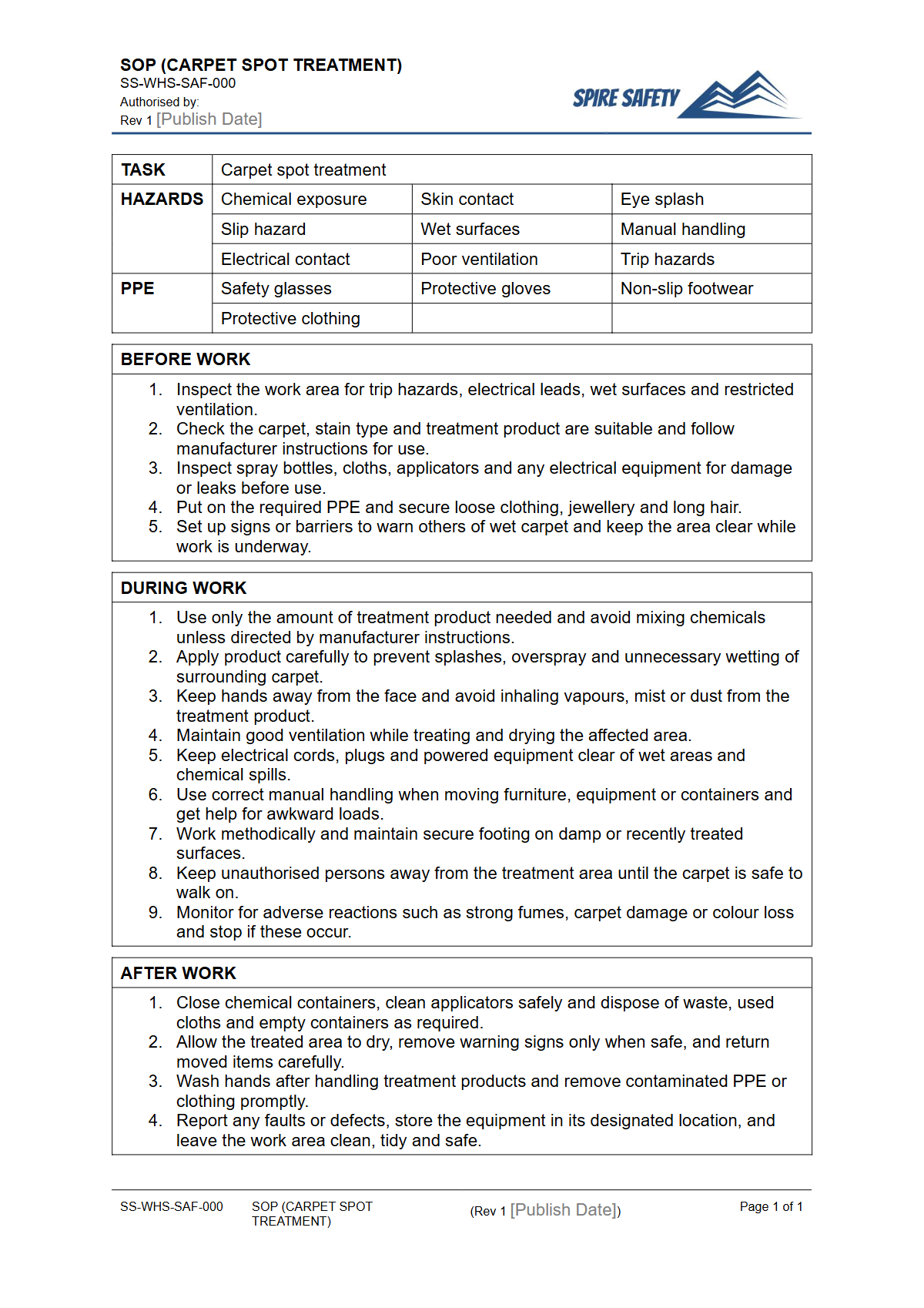
Carpet spot treatment seems like a simple task, but it carries inherent risks, including chemical exposure, slip hazards, and ergonomic strains. This Free Safe Operating Procedure (Carpet Spot Treatment) Template provides a structured framework for documenting the safest way to perform the task in your specific environment.
A documented SOP is a fundamental tool for managing workplace risks, ensuring consistent performance, and providing a clear reference for worker training. It demonstrates a commitment to safety by formalising steps to control hazards associated with cleaning chemicals, manual handling, and the work environment.
Implementing clear, task-specific SOPs is a cornerstone of an effective safety program. They are not just standalone documents but integral components of a holistic approach to workplace safety. Integrating procedures like this one into your daily operations helps build a robust safety culture and forms a critical part of your overall WHS management system.
Video walkthrough
How to use the Free Safe Operating Procedure (Carpet Spot Treatment) Template
This template is designed for ease of use. After downloading the DOCX or PDF file, you can begin tailoring it to your organisation’s specific needs.
The document is structured logically, guiding you through sections covering required PPE, pre-operational checks, the step-by-step treatment process, and post-task clean-up. Fill in the blanks with the details of your equipment, the specific chemicals you use (referencing their Safety Data Sheets), and your site-specific emergency procedures.
IMPORTANT: This is a template only. We have provided a structured starting point aligned with Australian WHS practice, but you must customise it to reflect your unique workplace.
A generic SOP is insufficient for compliance or safety. You must adapt the content with your specific chemicals, equipment, staff roles, and emergency protocols.
Your final document should be a practical tool that your team can genuinely follow.
The format of this SOP, which systematically breaks down a task into manageable and safe steps, is a standard practice for many workplace activities. For example, even seemingly simple tasks require a similar level of procedural thought, as shown in our FREE Step Ladder SOP Template, which also focuses on controlling common hazards through a clear process.
When to use a Safe Operating Procedure
A Safe Operating Procedure for carpet spot treatment should be used consistently as both a planning and operational tool. It is essential for training new employees, ensuring they learn the correct, safe method from their first day.
It should also be used for regular refresher training with existing staff to prevent complacency and bad habits from forming. The SOP serves as a mandatory guide that must be available and referenced before, during, and after the task is performed.
It should also be reviewed and updated whenever a new chemical is introduced, a different piece of equipment is used, or following any near miss or incident.
Regularly reviewing the effectiveness of your SOPs is a key compliance activity. These reviews can be integrated into your schedule of safety inspections and WHS compliance auditing to ensure procedures remain relevant and effective.
Who should use it
This SOP template is intended for anyone with responsibility for health and safety in environments where carpet cleaning occurs. This includes WHS Managers, Cleaning Supervisors, Facilities Managers, and small business owners.
They are responsible for using this template to create a workplace-specific SOP. The final, customised document is then used by the frontline workers—the cleaners and maintenance staff—who actually perform the carpet spot treatment.
It gives them a clear, unambiguous guide to follow, empowering them to work safely and protecting them from harm.
Developing and customising a comprehensive suite of SOPs can be a detailed process. If you require assistance in tailoring this document or developing others to suit the specific risks in your workplace, specialised WHS consulting can provide expert guidance.
You can also explore our free WHS resources library for other templates and guides to support your safety initiatives.
Common mistakes
Common mistakes to avoid
- Failing to ensure adequate ventilation, leading to a build-up of chemical fumes.
- Using the wrong chemical for the stain or carpet fibre type, causing bleaching or setting the stain permanently.
- Not wearing the correct Personal Protective Equipment (PPE) as specified in the chemical's Safety Data Sheet (SDS).
- Leaving 'wet floor' signs, buckets, or equipment in a position that creates a new trip hazard.
Legal references
Legal considerations
The following legal requirements may be relevant to this type of work.
- Work Health and Safety Act (Harmonised) — Provides the primary duties for protecting workers and other people from work health and safety risks.
- Work Health and Safety Regulations (Harmonised) — Sets out requirements supporting the management of workplace hazards and risks.
The following codes may be relevant to this type of work.
- Managing WHS Risks Code of Practice — Provides practical guidance on identifying hazards, assessing risks and applying effective controls.
- Work Health and Safety Consultation, Cooperation and Coordination Code of Practice — Provides practical guidance on consulting workers and coordinating with other duty holders.
- Managing the Work Environment and Facilities Code of Practice — Provides practical guidance on safe work environments, workplace facilities and related controls.
Did you know
Chemical Dilution Risks
Using a stronger chemical mix than recommended by the manufacturer often fails to improve performance, while increasing the risk of respiratory irritation, skin burns, and permanent damage to carpet fibres.
The Real Hazard
The most common injuries related to floor cleaning are not from chemicals, but from slips and falls on wet surfaces or from tripping over equipment hoses and power cords left in walkways.
FAQ
Frequently asked questions
01What is the difference between an SOP and a SWMS?
02Do I need a Safety Data Sheet (SDS) for my cleaning chemicals?
03How often should we review our Carpet Spot Treatment SOP?
04Can I use this template for full room carpet steam cleaning?
Share this resource
Free Safe Operating Procedure (Carpet Spot Treatment) Template
Browse Categories
How To Use It
- 1Download and open in Word or PDF.
- 2Replace the placeholders with your business details.
- 3Get it reviewed by a WHS specialist before rollout.
Need it customised?
Our WHS consultants can adapt this template to your site, run a gap analysis, or audit what you already have in place.
Book a Free Consultation WHS consulting servicesor call 1300 156 382
Related templates
- Free Safe Operating Procedure (Carpet Stretcher) Template
- Free Safe Operating Procedure (Carton Damage Handling) Template
- Free Safe Operating Procedure (Carton Erector) Template
- Free Safe Operating Procedure (Carton Sealer) Template
- Free Safe Operating Procedure (Case Packer) Template
- Free Safe Operating Procedure (Cash Counting) Template