
Free Safe Operating Procedure (Carton Damage Handling) Template
Download a free Safe Operating Procedure (SOP) for carton damage handling. This template helps create a consistent, safe process for your team.
Free Safe Operating Procedure (Carton Damage Handling) Template
DOCX • 126 KB + PDF
Updated Oct 2026
No signup required
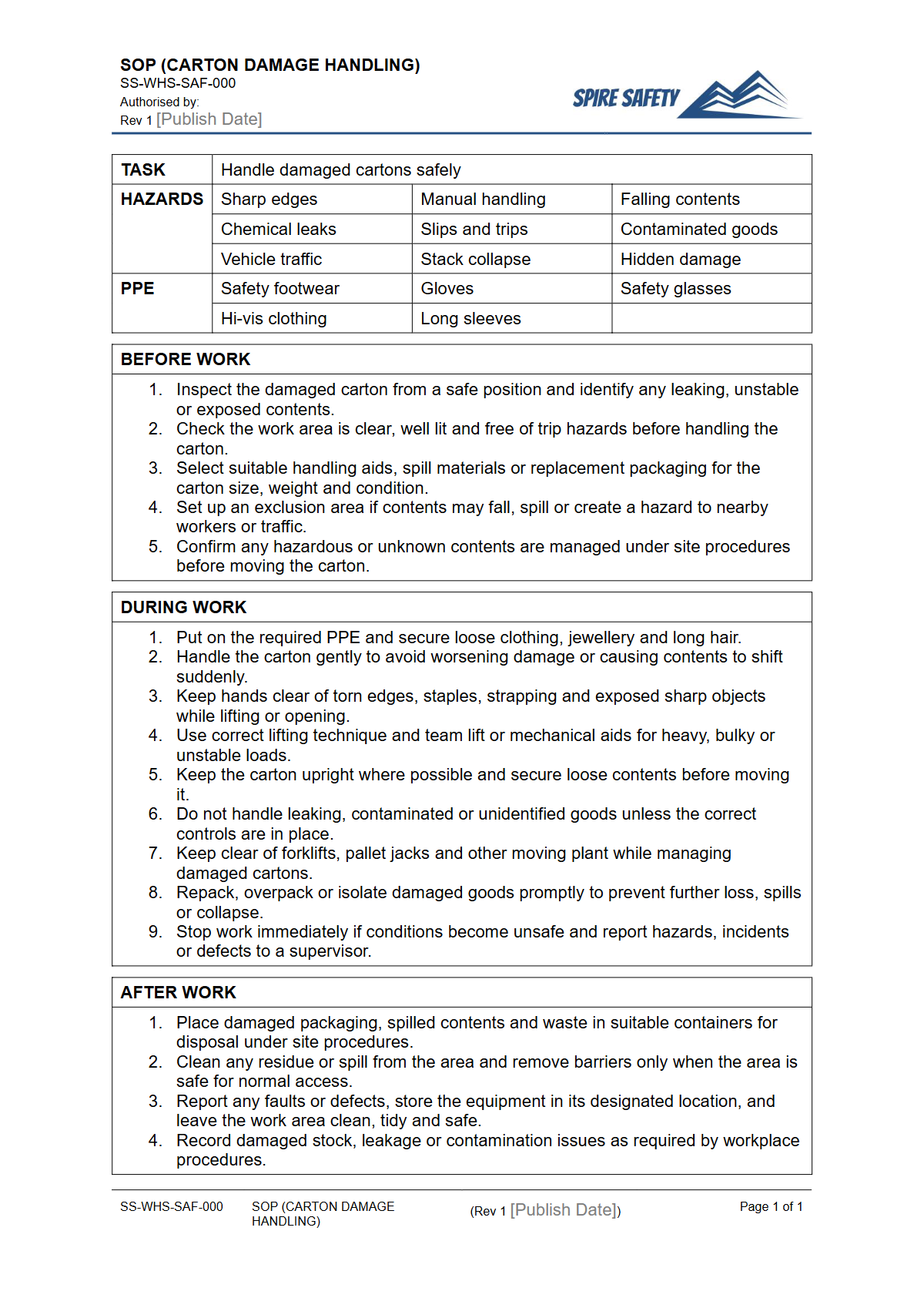
Purpose of the Free Safe Operating Procedure (Carton Damage Handling) Template
Receiving or discovering damaged cartons is a common issue in warehouses, logistics, and retail environments. Without a clear process, workers may be exposed to unnecessary risks, including manual handling injuries, cuts from broken packaging, or exposure to spilled contents.
This Free Safe Operating Procedure (Carton Damage Handling) Template provides a structured starting point for creating a formal, documented process for your business.
A well-defined SOP ensures every team member follows the same safe steps when encountering damaged goods. It helps to minimise product loss, prevent injuries, and maintain a safe working environment.
Implementing standardised procedures like this is a fundamental part of developing a WHS management system that effectively manages workplace risks.
Video walkthrough
How to use the Free Safe Operating Procedure (Carton Damage Handling) Template
This resource is available for download in both DOCX and PDF formats. The DOCX file is fully editable, allowing you to tailor it to the specific needs and circumstances of your workplace.
It serves as a comprehensive foundation, but it is not a complete, out-of-the-box solution.
Important: This is a template and must be customised. To make it effective, we strongly recommend you consult with your workers and incorporate details relevant to your site.
This includes specifying the types of cartons you handle, the equipment available (e.g., pallet jacks, trolleys), the exact PPE required, and your internal reporting structure.
When to use it
This SOP should be implemented and followed whenever a worker identifies a damaged carton. This can occur at various points in your operation, including during inwards goods receipt, stock put-away, order picking, or preparation for dispatch.
Specific triggers for using the procedure include cartons that are crushed, torn, leaking, unstable on a pallet, or showing any signs of compromised integrity.
Regularly reviewing its application can also be a valuable input for your internal WHS compliance audits, helping to verify that safety procedures are being followed correctly on the floor. It forms part of the evidence demonstrating that you are actively managing identified hazards.
Who should use it
This procedure is designed for any personnel who may come into contact with goods and freight. This typically includes warehouse operators, storepersons, forklift drivers, delivery drivers, and retail staff.
Supervisors and managers should also be thoroughly familiar with the SOP to ensure they can oversee its correct implementation, provide guidance, and lead incident investigations if required.
All relevant personnel must receive training on the final, customised procedure. This training should cover hazard identification, correct manual handling techniques, and the proper procedure for using a step ladder safely if accessing stock at height is required.
Key Steps in Handling Damaged Cartons
A robust procedure typically involves a sequence of actions designed to control the situation safely. Your customised SOP should guide workers through a process similar to this:
- Assess the Situation: Evaluate the damage from a safe distance. Look for signs of instability, leaks, sharp objects, or indicators of hazardous materials.
- Isolate the Area: Secure the immediate vicinity to prevent other workers from entering. Use cones, barrier tape, or signage as needed.
- Select PPE: Instruct workers to put on the required Personal Protective Equipment, such as safety glasses, gloves, and enclosed footwear, before approaching the item.
- Handle Safely: Follow a clear, step-by-step process for moving, re-packing, or disposing of the carton and its contents, using mechanical aids where possible to minimise manual handling.
- Clean Up: Ensure the area is cleared of any debris or spills according to your site's procedures.
- Document and Report: Record the incident using a designated form or system. This data is vital for identifying trends, addressing issues with suppliers, and continuously improving your safety processes.
Damage often occurs during transit or loading. Integrating this SOP with vehicle-related procedures, such as a Safe Operating Procedure for body trucks, creates a more comprehensive safety system for your logistics chain.
For larger-scale warehouse operations, ensuring that the principles are understood by those operating a telehandler is also crucial for managing damaged palletised goods.
By formalising your approach, you create a more predictable and controlled environment. If you require further assistance in adapting this template or developing other site-specific documentation, Spire Safety offers specialist WHS consulting services to help.
You can also explore our extensive free WHS resources library for more templates and guides.
Common mistakes
Common mistakes to avoid
- Failing to isolate the area, allowing other workers to be exposed to potential trip hazards or spills.
- Poor assessment of the carton's weight or stability before attempting to move it.
- Neglecting to wear appropriate PPE, such as gloves or safety glasses, leading to cuts or eye injuries.
- Forgetting to document the incident, which prevents analysis of recurring issues in the supply chain.
Legal references
Legal considerations
The following legal requirements may be relevant to this type of work.
- Work Health and Safety Act (Harmonised) — Provides the primary duties for protecting workers and other people from work health and safety risks.
- Work Health and Safety Regulations (Harmonised) — Sets out requirements supporting the management of workplace hazards and risks.
The following codes may be relevant to this type of work.
- Managing WHS Risks Code of Practice — Provides practical guidance on identifying hazards, assessing risks and applying effective controls.
- Work Health and Safety Consultation, Cooperation and Coordination Code of Practice — Provides practical guidance on consulting workers and coordinating with other duty holders.
- Managing the Work Environment and Facilities Code of Practice — Provides practical guidance on safe work environments, workplace facilities and related controls.
Did you know
Manual Task Injuries
Sprains and strains from manual tasks are one of the most common types of workplace injuries in Australia, particularly in the transport, postal, and warehousing industries. A clear SOP helps mitigate these risks.
Consultation is Key
Under WHS law, employers must consult with their workers on matters affecting their health and safety. Involving your team when customising this SOP can identify practical hazards you might have missed.
FAQ
Frequently asked questions
01What should be included in an SOP for handling damaged cartons?
02Is training required for handling damaged goods?
03How does this SOP relate to manual handling laws in Australia?
04Can I use this template for dangerous goods?
Share this resource
Free Safe Operating Procedure (Carton Damage Handling) Template
Browse Categories
How To Use It
- 1Download and open in Word or PDF.
- 2Replace the placeholders with your business details.
- 3Get it reviewed by a WHS specialist before rollout.
Need it customised?
Our WHS consultants can adapt this template to your site, run a gap analysis, or audit what you already have in place.
Book a Free Consultation WHS consulting servicesor call 1300 156 382
Related templates
- Free Safe Operating Procedure (Carton Erector) Template
- Free Safe Operating Procedure (Carton Sealer) Template
- Free Safe Operating Procedure (Case Packer) Template
- Free Safe Operating Procedure (Cash Counting) Template
- Free Safe Operating Procedure (Cash Drawer Handling) Template
- Free Safe Operating Procedure (Cash Safe Access) Template