
Free Safe Operating Procedure (Cash Counting) Template
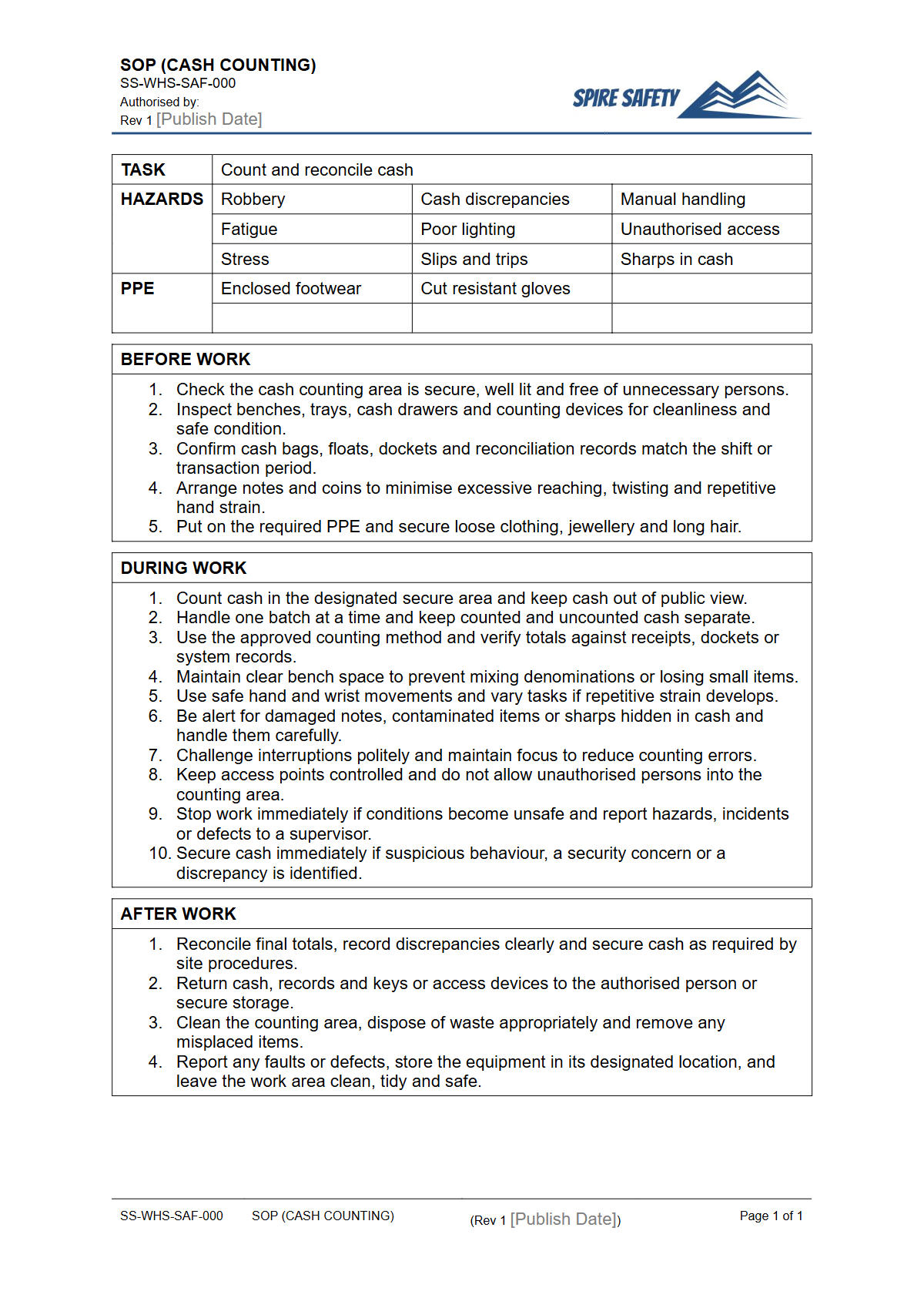
Download our free Safe Operating Procedure (Cash Counting) template. This customisable DOCX and PDF resource helps you outline safe cash handling processes.
Free Safe Operating Procedure (Cash Counting) Template
DOCX • 126 KB + PDF
Updated Oct 2026
No signup required
Purpose of the Free Safe Operating Procedure (Cash Counting) Template
Handling cash, while a routine business task, presents significant work health and safety risks. This Free Safe Operating Procedure (Cash Counting) Template provides a structured starting point for businesses to document and standardise their cash handling processes.
A documented SOP helps formalise controls to mitigate risks such as robbery, theft, manual handling injuries from lifting heavy coin bags, and the psychological stress associated with handling large sums of money. By outlining clear, step-by-step instructions, you create a consistent and safer system of work for all employees involved in cash management.
Using a Safe Operating Procedure (SOP) demonstrates a commitment to meeting your primary duty of care under Australian WHS legislation. It serves as a critical training tool, ensuring every team member understands their role and the required safety measures, from securing the counting area to managing discrepancies and preparing bank deposits.
This template helps you establish a baseline for safe behaviour and provides a framework for continuous improvement.
Video walkthrough
How to use the Free Safe Operating Procedure (Cash Counting) Template
This document is a template designed for customisation. After downloading the DOCX or PDF file, you must adapt it to the specific context of your business operations.
Review each section and modify the content to reflect your workplace's unique equipment, environment, and security protocols. This includes detailing the location of the cash counting area, specific security measures like CCTV or alarms, and the exact steps for reconciling tills.
IMPORTANT: This is a template only. We have populated it with common hazards and controls, but you must customise it to reflect the specific risks, equipment, and procedures in your workplace.
A generic procedure is not sufficient for compliance; it must be made site-specific. Pay close attention to sections covering emergency procedures, personnel responsibilities, and cash transport protocols, ensuring they align perfectly with your established practices.
When to use it
An SOP for cash counting should be a living document integrated into your daily operations. It is essential for routine tasks such as end-of-shift reconciliations, daily cash-ups, and preparing funds for bank deposit.
It provides a clear reference point that minimises ambiguity and the potential for error or unsafe shortcuts. The procedure should also be a central part of the induction and training process for any new employee who will be responsible for handling cash.
Furthermore, this SOP should be reviewed and referenced during safety meetings and refresher training sessions. It provides an excellent benchmark during internal reviews or external audits, helping to verify that agreed-upon safety protocols are being followed consistently.
Incorporating this review into your schedule of regular WHS compliance auditing ensures your procedures remain current and effective against evolving risks.
Who should use it
This Safe Operating Procedure is intended for anyone overseeing or performing cash handling tasks. This includes a wide range of roles across various industries:
- Retail Store Managers and Supervisors
- Hospitality Venue Managers (e.g., pubs, clubs, restaurants)
- Small Business Owners
- Accounts Staff and Bookkeepers
- Frontline Team Leaders and Shift Supervisors
For business owners and WHS managers, this template serves as a foundational element within broader comprehensive WHS management systems. It translates risk assessment findings into practical, actionable steps that frontline workers can easily follow, ensuring that safety policies are effectively implemented at the operational level.
Implementing robust SOPs is a key part of managing workplace risk. For organisations seeking to enhance their safety frameworks beyond individual procedures, engaging with professional WHS consulting services can provide expert guidance on developing integrated safety solutions.
You can also explore our complete free WHS resources library for more templates and guides to support your safety efforts.
Common mistakes
Common mistakes to avoid
- Counting cash at a front counter or in a location visible to the public.
- Allowing staff to handle cash without formal training on the procedure.
- Failing to have a clear, documented process for investigating and resolving cash discrepancies.
- Leaving safes or tills unsecured, even for a short period of time.
Legal references
Legal considerations
The following legal requirements may be relevant to this type of work.
- Work Health and Safety Act (Harmonised) — Provides the primary duties for protecting workers and other people from work health and safety risks.
- Work Health and Safety Regulations (Harmonised) — Sets out requirements supporting the management of workplace hazards and risks.
The following codes may be relevant to this type of work.
- Managing WHS Risks Code of Practice — Provides practical guidance on identifying hazards, assessing risks and applying effective controls.
- Work Health and Safety Consultation, Cooperation and Coordination Code of Practice — Provides practical guidance on consulting workers and coordinating with other duty holders.
- Managing the Work Environment and Facilities Code of Practice — Provides practical guidance on safe work environments, workplace facilities and related controls.
Did you know
Deterrent Effect
Visible and well-communicated security procedures, including cash handling protocols, can act as a significant deterrent to opportunistic theft by signalling that the business is organised and vigilant.
Psychological Impact
The psychological impact of a robbery or armed hold-up can be severe and long-lasting for employees. A strong SOP that minimises cash exposure helps protect both the financial assets and the mental wellbeing of your team.
FAQ
Frequently asked questions
01What are the main hazards involved in cash counting?
02Why is a written procedure for cash handling so important?
03Where should cash counting activities take place?
04How often should our cash handling SOP be reviewed?
Share this resource
Free Safe Operating Procedure (Cash Counting) Template
Browse Categories
How To Use It
- 1Download and open in Word or PDF.
- 2Replace the placeholders with your business details.
- 3Get it reviewed by a WHS specialist before rollout.
Need it customised?
Our WHS consultants can adapt this template to your site, run a gap analysis, or audit what you already have in place.
Book a Free Consultation WHS consulting servicesor call 1300 156 382
Related templates
- Free Safe Operating Procedure (Cash Drawer Handling) Template
- Free Safe Operating Procedure (Cash Safe Access) Template
- Free Safe Operating Procedure (Cash Transit Handover) Template
- Free Safe Operating Procedure (Cask Handling) Template
- Free Safe Operating Procedure (Casket Handling) Template
- Free Safe Operating Procedure (Catch Basin Cleaning) Template