
Free Safe Operating Procedure (Cask Handling) Template
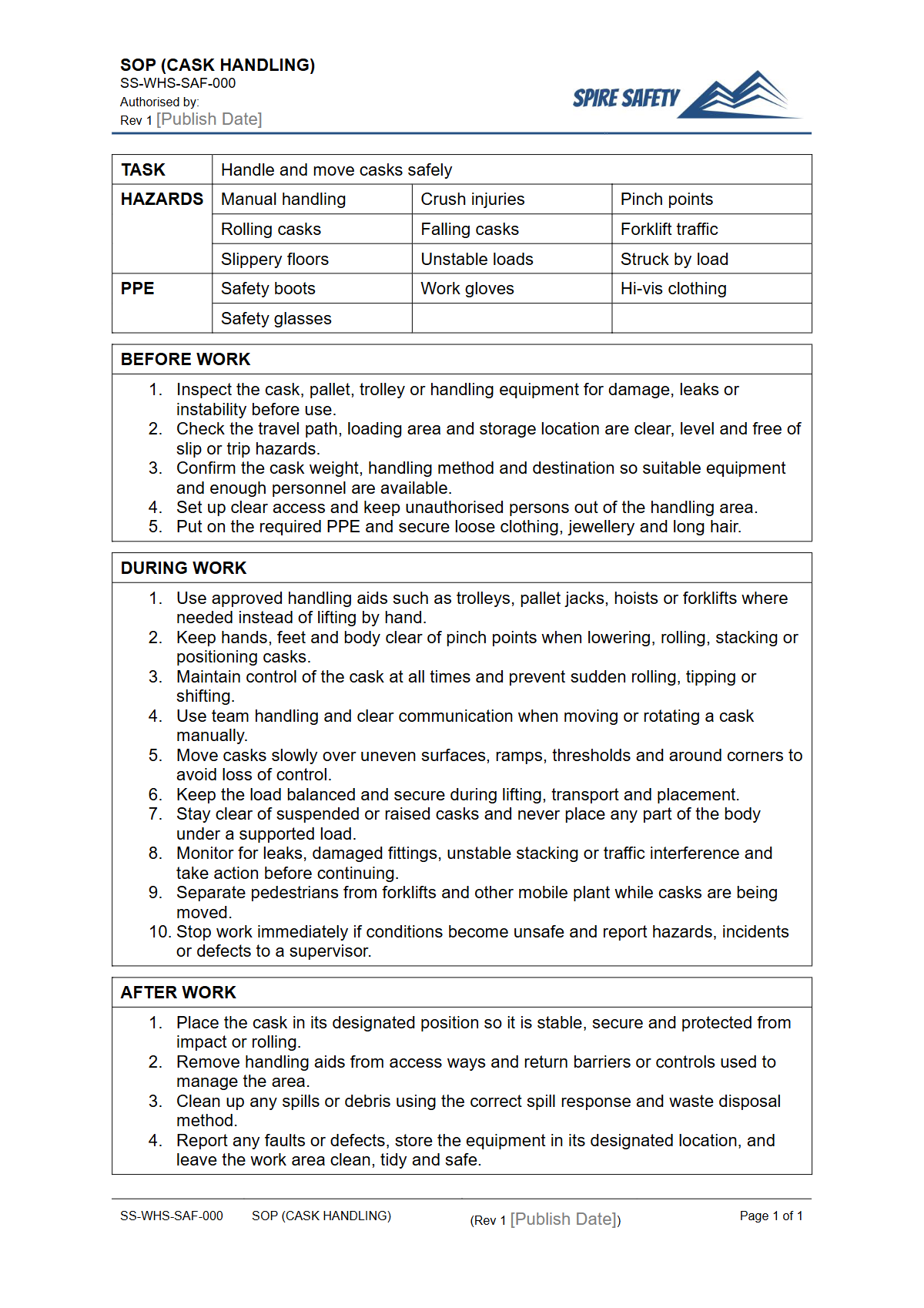
Download our free Safe Operating Procedure (Cask Handling) template.
Free Safe Operating Procedure (Cask Handling) Template
DOCX • 126 KB + PDF
Updated Oct 2026
No signup required
Purpose of the Free Safe Operating Procedure (Cask Handling) Template
Handling heavy and awkward casks, kegs, and barrels presents significant workplace risks. This free Safe Operating Procedure (Cask Handling) template provides a structured starting point for documenting the safest way to perform this task in your operation.
A documented SOP is a critical tool for managing risks, standardising work methods, and ensuring workers are not exposed to hazards like musculoskeletal disorders (MSDs) from heavy lifting, crushing injuries from dropped casks, or slips and trips in cellar or storage environments. Formalising your process helps demonstrate a commitment to a safe system of work, which is a key component of effective WHS management systems.
Video walkthrough
How to use the Free Safe Operating Procedure (Cask Handling) Template
This template is available for download in both DOCX and PDF formats. The DOCX version is fully editable, allowing you to adapt the content to your specific needs.
It's crucial to recognise that this is a generic guide. To be effective, you must conduct a risk assessment and customise the procedure to reflect the unique equipment, environment, and processes of your business.
This involves consulting directly with your workers—the people who handle casks every day. Their input is invaluable for creating a practical and effective document.
If you need assistance with this customisation process, our WHS consulting team can provide expert guidance.
Before you start
Ensure you identify the specific types of casks and handling equipment used at your site. Walk through the entire process, from delivery and unloading to storage, tapping, and removal of empties.
Note down control measures already in place and identify any gaps where risk could be better managed. This detailed analysis will form the basis of your customised SOP.
When to use this Safe Operating Procedure
A well-developed SOP for cask handling should be a core part of your daily operations and training framework. It is most effective when used to:
- Induct and train new employees, apprentices, or casual staff.
- Provide regular refresher training for all relevant workers.
- Set clear expectations for safe work behaviour before tasks begin.
- Form part of a toolbox talk or pre-start meeting agenda.
- Review and investigate incidents, near misses, or identified hazards related to cask handling.
- Demonstrate work processes to safety auditors or inspectors.
Regularly reviewing and reinforcing the SOP ensures that safe practices remain a priority and don't get overlooked during busy periods. Similar principles apply to operating equipment like delivery vehicles, as detailed in a Safe Operating Procedure for body trucks.
Who should use it
This SOP is designed for any person whose role involves the manual or mechanical handling of casks, kegs, or similar containers. This includes a wide range of roles across several industries, such as:
- Brewery and distillery production staff
- Cellar staff and bar personnel in pubs and hotels
- Warehouse and logistics operators
- Delivery drivers
- Event staff responsible for setting up beverage services
Supervisors and managers are also key users. They are responsible for ensuring the procedure is understood, followed, and enforced.
They also have a duty to provide the necessary training and equipment specified within the SOP, such as dollies, trolleys, or hoists. Where casks are stored on high racks, a specific procedure for safe access is also required, which could reference a step ladder use SOP.
Implementing effective controls
The hierarchy of controls is a fundamental concept in WHS risk management. When customising this SOP, always aim for the highest level of protection possible.
- Elimination: Can you eliminate the manual handling task altogether, for example by using piped systems?
- Substitution: Can you substitute full, heavy casks with smaller, lighter ones?
- Engineering Controls: This is a critical area for cask handling. It includes providing mechanical aids like dedicated cask trolleys, hand trucks, scissor lifts, or pallet jacks. For larger operations, this might involve equipment covered by a free Telehandler SOP template.
- Administrative Controls: The SOP itself is an administrative control. Others include team lifting policies, job rotation, clear signage, and robust training programs.
- Personal Protective Equipment (PPE): PPE is the last line of defence. This includes steel-capped, non-slip safety boots to protect against crushing injuries and falls, and gloves to improve grip.
Thorough and regular reviews, which can be part of a broader WHS compliance auditing program, ensure these controls remain effective over time. You can find more templates and checklists in our free WHS resources library to support your safety management efforts.
Common mistakes
Common mistakes to avoid
- Failing to customise the template for site-specific equipment, layouts, and cask types.
- Neglecting to consult with cellar, bar, or warehouse staff who actually perform the task.
- Using the SOP only for induction and not for ongoing supervision or refresher training.
- Not providing or maintaining the mechanical aids (e.g., trolleys, hoists) listed in the procedure.
Legal references
Legal considerations
The following legal requirements may be relevant to this type of work.
- Work Health and Safety Act (Harmonised) — Provides the primary duties for protecting workers and other people from work health and safety risks.
- Work Health and Safety Regulations (Harmonised) — Sets out requirements supporting the management of workplace hazards and risks.
The following codes may be relevant to this type of work.
- Managing WHS Risks Code of Practice — Provides practical guidance on identifying hazards, assessing risks and applying effective controls.
- Work Health and Safety Consultation, Cooperation and Coordination Code of Practice — Provides practical guidance on consulting workers and coordinating with other duty holders.
- Managing the Work Environment and Facilities Code of Practice — Provides practical guidance on safe work environments, workplace facilities and related controls.
Did you know
Manual Handling Risk
Hazardous manual tasks are a leading cause of workplace injury in Australia, contributing significantly to the number of serious workers' compensation claims each year.
Cask Weights
A full 50-litre keg can weigh over 60 kg, while a 41-litre cask (a 'firkin') weighs over 45 kg. These weights place them well above the thresholds generally recommended for single-person lifts.
FAQ
Frequently asked questions
01What is a Safe Operating Procedure for cask handling?
02Are mechanical aids required for handling casks in Australia?
03How often should an SOP for cask handling be reviewed?
04Who is responsible for creating a cask handling SOP?
Share this resource
Free Safe Operating Procedure (Cask Handling) Template
Browse Categories
How To Use It
- 1Download and open in Word or PDF.
- 2Replace the placeholders with your business details.
- 3Get it reviewed by a WHS specialist before rollout.
Need it customised?
Our WHS consultants can adapt this template to your site, run a gap analysis, or audit what you already have in place.
Book a Free Consultation WHS consulting servicesor call 1300 156 382
Related templates
- Free Safe Operating Procedure (Casket Handling) Template
- Free Safe Operating Procedure (Catch Basin Cleaning) Template
- Free Safe Operating Procedure (Catch Basin Inspection) Template
- Free Safe Operating Procedure (Catering Cart Handling) Template
- Free Safe Operating Procedure (Cattle Drafting) Template
- Free Safe Operating Procedure (Cattle Feeding) Template