
Free Safe Operating Procedure (Cattle Drafting) Template
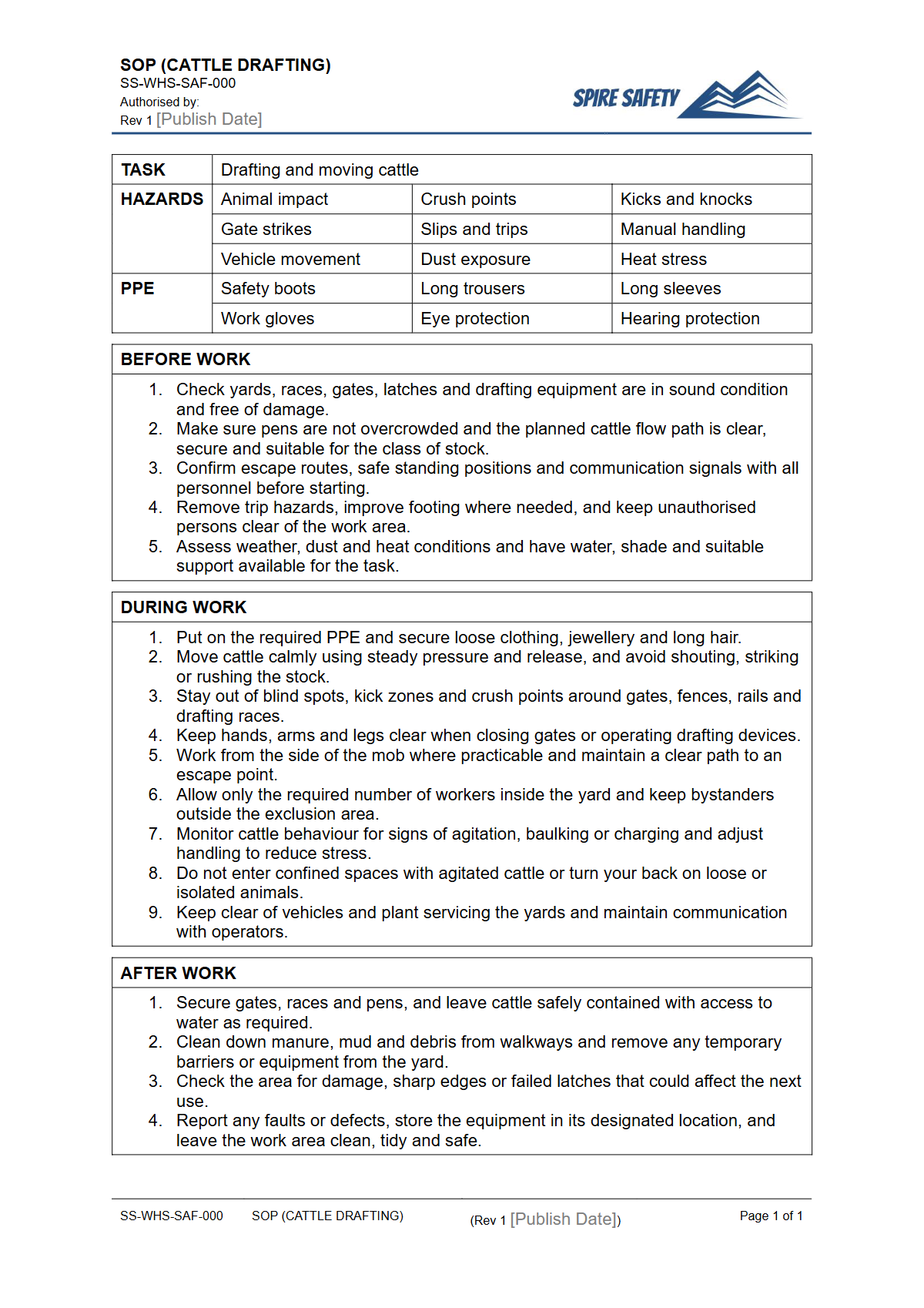
Download our free Safe Operating Procedure (Cattle Drafting) template.
Free Safe Operating Procedure (Cattle Drafting) Template
DOCX • 126 KB + PDF
Updated Oct 2026
No signup required
Purpose of the Free Safe Operating Procedure (Cattle Drafting) Template
Working with livestock, particularly during activities like drafting, presents significant safety risks, including crush injuries, kicks, and stress-related incidents. This Free Safe Operating Procedure (Cattle Drafting) Template provides a structured starting point for documenting safe work methods on your agricultural property.
A well-developed SOP is a critical administrative control that outlines step-by-step instructions for performing a task safely, helping to minimise the risk of injury to workers and ensure animal welfare standards are consistently met.
The primary purpose of this Safe Operating Procedure is to establish a clear, documented process for safely separating cattle. It helps your organisation to:
- Standardise cattle drafting procedures across all staff and contractors.
- Provide a reliable training tool for new or inexperienced stock handlers.
- Systematically identify hazards associated with the task, such as animal behaviour, yard design flaws, and equipment failure.
- Implement and communicate effective risk controls.
- Demonstrate due diligence as part of your broader WHS management systems.
Video walkthrough
How to use the Free Safe Operating Procedure (Cattle Drafting) Template
This resource is provided in both DOCX and PDF formats for your convenience. The DOCX version is fully editable, allowing you to tailor the content to the unique circumstances of your workplace.
To use the template effectively, you should add site-specific information, including details about your yard layout, the type and temperament of your cattle, the specific equipment used (e.g., crush, gates, drafting systems), and your established emergency procedures.
Important: This document is a template, not a finished procedure. As we do not know the specifics of your site, equipment, or personnel, we cannot guarantee its suitability for your needs.
You must review, edit, and customise this SOP to ensure it accurately reflects your operational risks and control measures. Consulting with your workers during this customisation process is essential for creating a practical and effective document.
In agricultural settings where multiple tasks are performed, it's beneficial to maintain a library of SOPs, such as a FREE Grain Drill SOP (Safe Operating Procedure) Template, to cover all high-risk activities.
When to use it
A Safe Operating Procedure for cattle drafting should be used as a primary reference document for the task. It is not meant to be filed away and forgotten. Integrate the SOP into your daily and periodic safety practices, including:
- Worker Inductions: Use it to train new employees and contractors on the expected safe work methods before they handle livestock.
- Pre-Task Briefings: Review the key steps and risks with the team before commencing a drafting session.
- Refresher Training: Conduct periodic reviews of the SOP with all relevant personnel to reinforce safe behaviour.
- Incident Investigations: Use the SOP as a benchmark to determine if procedures were followed correctly during a near miss or incident.
Regularly reviewing and updating your safety documentation is a key part of maintaining compliance and a safe workplace. Professional WHS compliance auditing can help identify gaps in your procedures and their practical implementation.
Who should use it
This SOP should be readily accessible to and understood by anyone involved in cattle drafting operations on your property. This includes:
- Farm owners and managers
- Experienced stockpersons and handlers
- New and young workers
- Family members involved in farm work
- Contractors, such as livestock agents or transport operators
By ensuring everyone follows the same documented procedure, you reduce variability and the potential for errors. This consistency is crucial when managing the entire logistics chain, from mustering in the paddock to loading animals onto a vehicle, a process that may be covered by a separate FREE Body Truck SOP (Safe Operating Procedure) Template. For complex agricultural operations, engaging external WHS consulting services can provide expert assistance in developing a comprehensive suite of safety documents.
You can also explore our complete free WHS resources library for other useful templates.
Common mistakes
Common mistakes to avoid
- Using a generic template without customising it for specific yard designs, cattle temperament, and worker experience.
- Failing to conduct and document pre-operational checks on gates, latches, and crush mechanisms before starting work.
- Workers becoming complacent or rushing, leading to poor positioning within the yards and increased risk of being crushed or kicked.
- Neglecting clear and consistent communication between handlers, especially in noisy environments or when working in separate areas.
Legal references
Legal considerations
The following legal requirements may be relevant to this type of work.
- Work Health and Safety Act (Harmonised) — Provides the primary duties for protecting workers and other people from work health and safety risks.
- Work Health and Safety Regulations (Harmonised) — Sets out requirements supporting the management of workplace hazards and risks.
The following codes may be relevant to this type of work.
- Managing WHS Risks Code of Practice — Provides practical guidance on identifying hazards, assessing risks and applying effective controls.
- Work Health and Safety Consultation, Cooperation and Coordination Code of Practice — Provides practical guidance on consulting workers and coordinating with other duty holders.
- Managing the Work Environment and Facilities Code of Practice — Provides practical guidance on safe work environments, workplace facilities and related controls.
Did you know
Animal Vision
Cattle have panoramic vision of about 330 degrees but possess a blind spot directly behind them. Approaching from this area can startle an animal, increasing the risk of it kicking or charging.
Zoonotic Disease Risks
Zoonoses are diseases transmissible from animals to humans. Handling cattle can expose workers to risks like Q fever and Leptospirosis, making personal hygiene and appropriate PPE critical control measures.
FAQ
Frequently asked questions
01What should be included in a cattle drafting SOP?
02Are Safe Operating Procedures a legal requirement for farms in Australia?
03How often should I review my cattle drafting SOP?
04Can I use this template for other livestock like sheep or horses?
Share this resource
Free Safe Operating Procedure (Cattle Drafting) Template
Browse Categories
How To Use It
- 1Download and open in Word or PDF.
- 2Replace the placeholders with your business details.
- 3Get it reviewed by a WHS specialist before rollout.
Need it customised?
Our WHS consultants can adapt this template to your site, run a gap analysis, or audit what you already have in place.
Book a Free Consultation WHS consulting servicesor call 1300 156 382
Related templates
- Free Safe Operating Procedure (Cattle Feeding) Template
- Free Safe Operating Procedure (Cattle Footbath) Template
- Free Safe Operating Procedure (Cattle Loading Ramp) Template
- Free Safe Operating Procedure (Cattle Loading) Template
- Free Safe Operating Procedure (Cattle Race) Template
- Free Safe Operating Procedure (Cattle Weighing) Template