
Free Safe Operating Procedure (Carpet Stretcher) Template
Download our free Safe Operating Procedure (Carpet Stretcher) Template. This user-friendly DOCX and PDF resource helps outline safe work practices.
Free Safe Operating Procedure (Carpet Stretcher) Template
DOCX • 126 KB + PDF
Updated Oct 2026
No signup required
Purpose of the Free Safe Operating Procedure (Carpet Stretcher) Template
This Free Safe Operating Procedure (Carpet Stretcher) Template provides a structured framework for documenting the safe use of knee kickers and power stretchers in your workplace. Its purpose is to help you clearly define the step-by-step process for operating this equipment, identify potential hazards, and establish robust control measures to minimise the risk of injury.
A well-developed SOP is a critical tool for training workers, ensuring consistent safe work practices, and demonstrating a commitment to health and safety.
Using a carpet stretcher involves risks such as musculoskeletal injuries from forceful exertion and awkward postures, as well as lacerations from sharp pins and trip hazards from the tool itself. This template helps you systematically address these risks in line with Australian WHS expectations.
Integrating clear SOPs is a fundamental component of effective WHS management systems, providing tangible proof of your organisation's proactive approach to safety management.
Video walkthrough
How to use the Free Safe Operating Procedure (Carpet Stretcher) Template
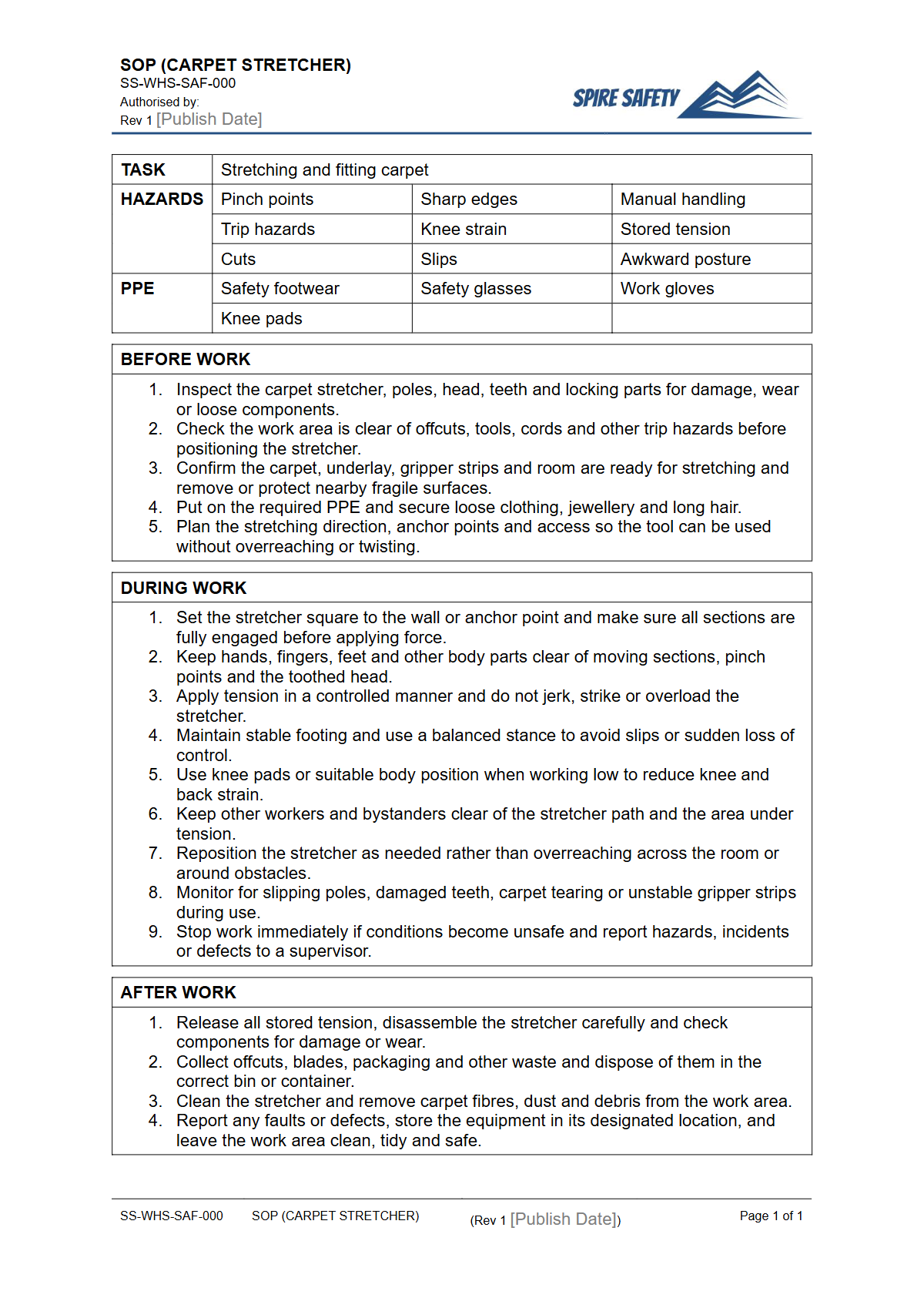
To effectively use this Safe Operating Procedure for a carpet stretcher, download the template in your preferred format (DOCX or PDF) and begin customising it to your specific operational context. The document is pre-filled with common steps, hazards, and controls relevant to carpet stretcher use, such as pre-start checks, correct operating techniques, and post-use procedures.
Your task is to review, add, and remove information to ensure the final document accurately reflects your equipment, environment, and work processes.
Important: This is a template only. For it to be useful, we strongly recommend you customise it by consulting with the workers who actually use the equipment.
They have direct experience with the risks and can provide invaluable input. You must ensure the final document is specific to your workplace to effectively manage your safety obligations.
A regular WHS compliance audit can verify that your documented procedures are being implemented correctly on the job.
What's included in the template?
The template provides a comprehensive starting point, organised into logical sections:
- Designated section for company-specific details.
- Personal Protective Equipment (PPE) requirements.
- A table for outlining the task sequence, associated hazards, and risk control measures.
- Pre-operational checks, operational procedures, and shutdown/cleaning steps.
- Space for emergency procedures and training/competency records.
When to use it
A Safe Operating Procedure for a carpet stretcher should be developed before the equipment is first used in the workplace. It must be readily accessible to all operators whenever they are required to use the tool.
It serves as a primary reference for initial training, competency assessments, and refresher training. The SOP should be reviewed and updated whenever there is a change to the equipment, the work environment, the task itself, or following an incident or near miss.
It's also wise to review SOPs for other common site equipment, such as the guidance found in our FREE Circular Saw SOP Template, to ensure comprehensive site safety.
Who should use it
This SOP should be used by anyone involved with the use or supervision of carpet stretchers. This includes:
- Workers/Operators: To understand and follow the safe steps required to perform their job without injury.
- Supervisors and Managers: To train workers, enforce safe procedures, and conduct workplace inspections.
- WHS Professionals and Officers: To develop and review risk management documentation as part of the overall safety system.
Competency in using a carpet stretcher is essential. Before independent operation, workers must receive adequate training on the specific procedures outlined in the SOP.
This includes understanding the risks of musculoskeletal strain and knowing the correct techniques to minimise them. This principle of documented procedure and training applies to all site equipment, which is why a FREE Step Ladder SOP Template is another valuable resource for flooring and construction trades.
For businesses needing expert assistance in developing a suite of customised, practical SOPs, Spire Safety offers specialised WHS consulting services.
Explore our extensive free WHS resources library for more templates and guides to help strengthen your safety management practices.
Common mistakes
Common mistakes to avoid
- Failing to inspect the stretcher's teeth and head for wear and damage before use.
- Using excessive, uncontrolled force with a knee-kicker instead of proper technique, leading to musculoskeletal strain.
- Leaving the tool extended or placed in a walkway, creating a significant trip hazard for others.
- Neglecting to wear appropriate PPE, particularly knee pads and gloves.
Legal references
Legal considerations
The following legal requirements may be relevant to this type of work.
- Work Health and Safety Act (Harmonised) — Provides the primary duties for protecting workers and other people from work health and safety risks.
- Work Health and Safety Regulations (Harmonised) — Sets out requirements supporting the management of workplace hazards and risks.
The following codes may be relevant to this type of work.
- Managing WHS Risks Code of Practice — Provides practical guidance on identifying hazards, assessing risks and applying effective controls.
- Work Health and Safety Consultation, Cooperation and Coordination Code of Practice — Provides practical guidance on consulting workers and coordinating with other duty holders.
- Managing the Work Environment and Facilities Code of Practice — Provides practical guidance on safe work environments, workplace facilities and related controls.
Did you know
Manual Task Injuries
According to Safe Work Australia, hazardous manual tasks are the leading cause of work-related injuries in Australia, with body stressing accounting for 36% of all serious workers' compensation claims.
FAQ
Frequently asked questions
01What are the main hazards of using a carpet stretcher?
02Is a Safe Work Method Statement (SWMS) required for using a carpet stretcher?
03How often should a carpet stretcher SOP be reviewed?
04What PPE is recommended when using a carpet stretcher?
Share this resource
Free Safe Operating Procedure (Carpet Stretcher) Template
Browse Categories
How To Use It
- 1Download and open in Word or PDF.
- 2Replace the placeholders with your business details.
- 3Get it reviewed by a WHS specialist before rollout.
Need it customised?
Our WHS consultants can adapt this template to your site, run a gap analysis, or audit what you already have in place.
Book a Free Consultation WHS consulting servicesor call 1300 156 382
Related templates
- Free Safe Operating Procedure (Carton Damage Handling) Template
- Free Safe Operating Procedure (Carton Erector) Template
- Free Safe Operating Procedure (Carton Sealer) Template
- Free Safe Operating Procedure (Case Packer) Template
- Free Safe Operating Procedure (Cash Counting) Template
- Free Safe Operating Procedure (Cash Drawer Handling) Template