
Free Safe Operating Procedure (Carpet Extraction) Template
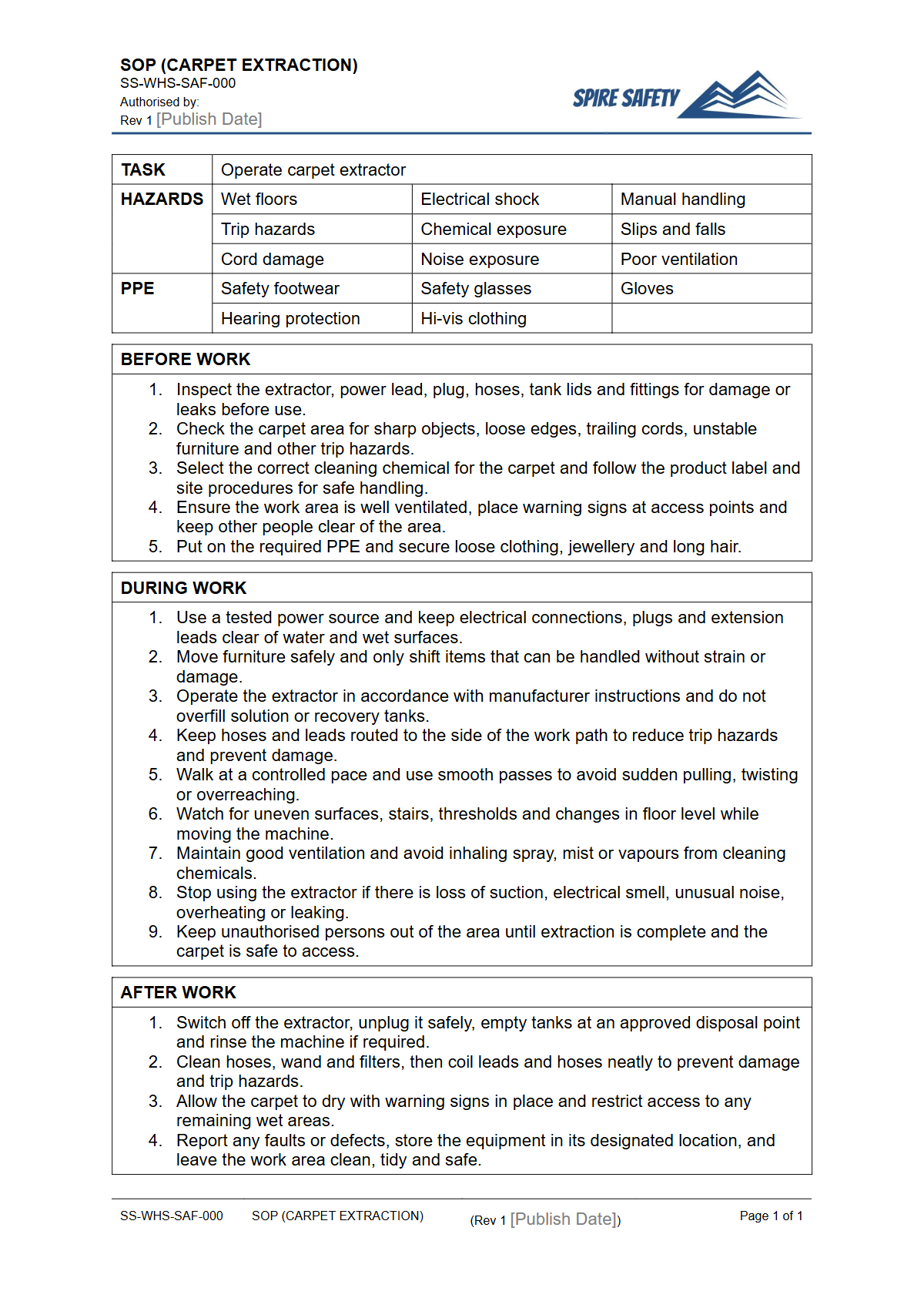
Download our free Safe Operating Procedure (Carpet Extraction) Template. This user-friendly DOCX and PDF resource helps you outline safe work practices.
Free Safe Operating Procedure (Carpet Extraction) Template
DOCX • 126 KB + PDF
Updated Oct 2026
No signup required
Purpose of the Free Safe Operating Procedure (Carpet Extraction) Template
Operating carpet extraction machinery involves a combination of hazards, including electricity, water, chemicals, and manual handling. This Free Safe Operating Procedure (Carpet Extraction) Template provides a structured framework for identifying these risks and documenting the required control measures.
A well-drafted SOP is a fundamental tool for any business using this type of equipment, forming a key part of your overall WHS management systems. It helps ensure that all tasks are performed in a consistently safe manner, minimising the risk of injury to workers and damage to property.
The primary purpose of this SOP is to provide clear, step-by-step instructions for workers. It formalises pre-operational checks, safe operation steps, and post-operation procedures.
By standardising these processes, you create a reliable benchmark for worker training, competency assessments, and performance monitoring. This document serves as a critical reference point for both new and experienced operators, reinforcing safe work habits and compliance with your organisation's safety policies.
Video walkthrough
How to use the Free Safe Operating Procedure (Carpet Extraction) Template
This template is provided in both DOCX and PDF formats for your convenience. To implement it effectively in your workplace, follow these steps:
- Download and Customise: Download the DOCX file and adapt its contents to your specific operational context. This includes adding your company name and logo, and specifying the exact make and model of the carpet extractor, the chemicals used, and the typical environments where it is operated.
- Consult with Workers: Engage the employees who will be using the equipment. Their practical experience is invaluable for identifying specific hazards and refining the procedure to ensure it is practical and effective.
- Finalise and Approve: Once customised, the SOP should be reviewed and approved by a supervisor or manager with responsibility for workplace safety.
- Train All Users: Ensure every operator is thoroughly trained on the contents of the final SOP. Keep records of this training as evidence of competency.
- Review and Update: The SOP is a living document. It should be reviewed regularly and updated whenever there is a change in equipment, chemicals, processes, or following a safety incident. This review process can be integrated into your schedule of WHS compliance auditing to ensure ongoing relevance.
Important: This document is a template and must be customised. We have designed it as a starting point, but for it to be effective, you must adapt it to reflect the specific equipment, chemicals, environment, and processes unique to your workplace.
Generic procedures are insufficient for managing specific risks.
When to use a Carpet Extraction SOP
A Safe Operating Procedure for carpet extraction should be used as the primary reference document for all related tasks. It is essential in several key situations:
- Worker Training and Induction: It should be the foundation for training any new employee tasked with operating a carpet extractor.
- Refresher Training: Use the SOP for periodic refresher training to prevent complacency and reinforce safe work practices among experienced staff.
- Pre-Task Planning: Operators should reference the SOP before starting a job, especially in unfamiliar environments, to review key safety checks and procedures.
- Incident Investigation: If an incident or near-miss occurs, the SOP can be used as a benchmark to determine if procedures were followed and whether they need to be updated to prevent a recurrence.
Using SOPs consistently across all high-risk tasks, from operating machinery to working at heights, is a cornerstone of a proactive safety culture. For example, even seemingly simple tasks benefit from documented procedures, as shown in our Free Step Ladder SOP Template.
Who should use this SOP
This Safe Operating Procedure is intended for a range of personnel within an organisation:
- Workers and Cleaning Staff: The primary users who perform the carpet extraction tasks. The SOP provides them with clear, authoritative instructions to follow for their own safety and the safety of others.
- Supervisors and Team Leaders: Responsible for ensuring workers are trained on and adhere to the SOP. They use it as a tool for monitoring work practices and conducting safety observations.
- WHS Managers and Advisors: Use the SOP as a component of the broader safety management system. They are often responsible for developing, reviewing, and managing the library of SOPs for the organisation.
Building a comprehensive set of procedures for all plant and equipment is a vital WHS activity. You can find more templates for different types of machinery in our free WHS resources library.
Common mistakes
Common mistakes to avoid
- Failing to inspect electrical cords and connections for damage before use with water.
- Neglecting to use 'wet floor' signs, creating a significant slip hazard for others in the area.
- Using incorrect dilution ratios for cleaning chemicals, leading to ineffective results or chemical exposure.
- Not ensuring adequate ventilation in enclosed spaces, allowing a build-up of chemical fumes.
Legal references
Legal considerations
The following legal requirements may be relevant to this type of work.
- Work Health and Safety Act (Harmonised) — Provides the primary duties for protecting workers and other people from work health and safety risks.
- Work Health and Safety Regulations (Harmonised) — Sets out requirements supporting the management of workplace hazards and risks.
The following codes may be relevant to this type of work.
- Managing WHS Risks Code of Practice — Provides practical guidance on identifying hazards, assessing risks and applying effective controls.
- Work Health and Safety Consultation, Cooperation and Coordination Code of Practice — Provides practical guidance on consulting workers and coordinating with other duty holders.
- Managing the Work Environment and Facilities Code of Practice — Provides practical guidance on safe work environments, workplace facilities and related controls.
Did you know
Slips, Trips, and Falls
Slips, trips, and falls are a leading cause of workplace injuries in Australia. Using signage to mark wet floors during and after carpet extraction is a critical and simple control measure.
Chemical Safety
Manufacturers of hazardous chemicals must provide a Safety Data Sheet (SDS) that details handling information. Always have the SDS readily available for any cleaning chemicals used.
FAQ
Frequently asked questions
01What should be included in a Safe Operating Procedure for carpet extraction?
02How often do SOPs for cleaning equipment need to be reviewed?
03Is training required after developing a carpet extraction SOP?
04Can this template be used for all types of carpet extractors?
Share this resource
Free Safe Operating Procedure (Carpet Extraction) Template
Browse Categories
How To Use It
- 1Download and open in Word or PDF.
- 2Replace the placeholders with your business details.
- 3Get it reviewed by a WHS specialist before rollout.
Need it customised?
Our WHS consultants can adapt this template to your site, run a gap analysis, or audit what you already have in place.
Book a Free Consultation WHS consulting servicesor call 1300 156 382
Related templates
- Free Safe Operating Procedure (Carpet Shampooing) Template
- Free Safe Operating Procedure (Carpet Spot Treatment) Template
- Free Safe Operating Procedure (Carpet Stretcher) Template
- Free Safe Operating Procedure (Carton Damage Handling) Template
- Free Safe Operating Procedure (Carton Erector) Template
- Free Safe Operating Procedure (Carton Sealer) Template