
Free Safe Operating Procedure (Carpet Shampooing) Template
Download our free Safe Operating Procedure (Carpet Shampooing) Template. This customisable DOCX and PDF helps you outline safe work methods for your team.
Free Safe Operating Procedure (Carpet Shampooing) Template
DOCX • 126 KB + PDF
Updated Oct 2026
No signup required
Purpose of the Free Safe Operating Procedure (Carpet Shampooing) Template
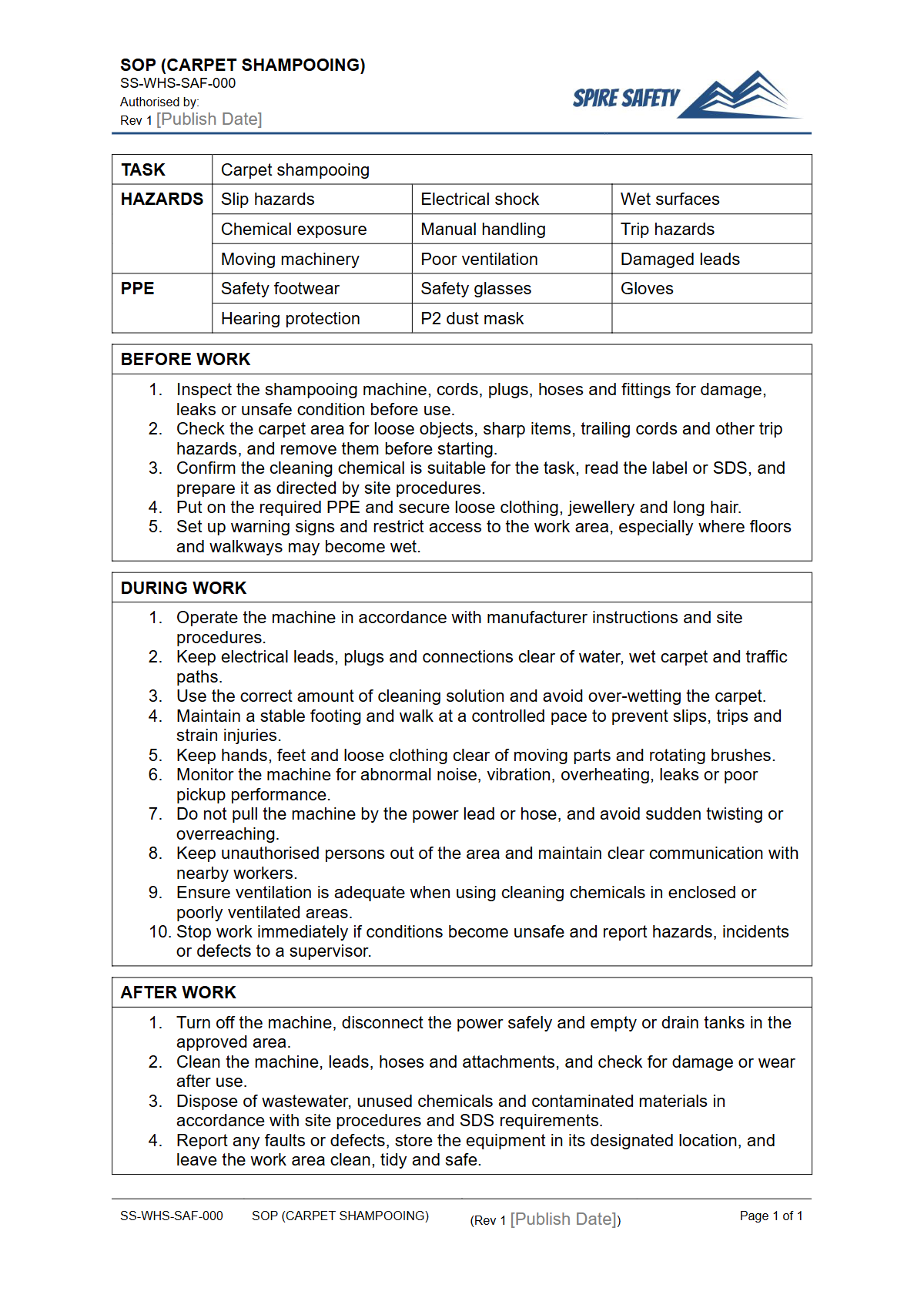
Operating carpet shampooing equipment presents several workplace hazards that must be managed to ensure worker safety. This Free Safe Operating Procedure (Carpet Shampooing) Template provides a structured starting point for your organisation to document the risks and control measures associated with the task.
It guides you in outlining a clear, step-by-step process that helps prevent incidents and injuries.
Key hazards addressed in a Safe Operating Procedure for this task typically include electrical risks from using mains-powered equipment near water, chemical exposure from cleaning solutions, slip and trip hazards from wet floors and trailing cables, and ergonomic strains from manual handling of furniture and the machine itself. By formally documenting safety protocols, you establish a consistent and safe method of work that all employees must follow.
Hazards Associated with Carpet Shampooing
- Electrical Hazards: Risk of electric shock from faulty equipment, damaged cords, or contact between electrical components and water.
- Chemical Hazards: Skin irritation, respiratory issues, or eye damage from contact with or inhalation of cleaning chemicals.
- Slips, Trips, and Falls: Wet, slippery floor surfaces during and after cleaning, as well as trip hazards from power cords and hoses.
- Ergonomic Hazards: Musculoskeletal injuries from lifting heavy furniture, moving the machine, or adopting awkward postures for extended periods.
- Noise Hazards: Exposure to high noise levels from the machine's motor, potentially leading to hearing damage over time.
Video walkthrough
How to Use the Free Safe Operating Procedure (Carpet Shampooing) Template
This Safe Operating Procedure template is provided in an easy-to-use DOCX format, allowing for full customisation. After downloading, you should review each section and adapt the content to reflect the specific equipment, chemicals, and environmental conditions at your workplace.
This process should involve consultation with the workers who actually perform the task, as they have direct knowledge of the associated risks.
Important: This is a template only. To be effective, it must be customised to your specific workplace.
We are not responsible for the outcomes if you use this template without tailoring it to your own equipment, processes, and legal obligations. An SOP is just one part of a comprehensive safety framework; integrating it into broader WHS management systems ensures a holistic approach to workplace safety.
When to Use a Safe Operating Procedure
A Safe Operating Procedure for carpet shampooing should be used as a primary reference tool before, during, and after the task. It is essential for new worker inductions and for providing task-specific training.
It also serves as a valuable refresher for experienced employees to ensure standards do not slip over time. Supervisors can use the SOP as a checklist to monitor work practices and confirm that safety controls are being correctly implemented on the job.
Furthermore, the SOP is a critical document during safety reviews and after any incident or near-miss occurs. It provides a baseline against which behaviour and conditions can be assessed, helping to identify gaps in your safety processes. Regular reviews are a key activity checked during a WHS compliance audit.
Who Should Use This Document
This Safe Operating Procedure is designed for Persons Conducting a Business or Undertaking (PCBUs), site managers, supervisors, and WHS representatives in any industry where commercial carpet cleaning occurs. This includes sectors like professional cleaning services, facilities management, hotels, and large office environments.
It helps management fulfil their duty of care by providing clear, documented instructions for a high-risk task.
Operators who perform carpet shampooing are the end-users of the SOP and must be trained in its contents. Having clear procedures is vital not just for complex machinery but for all workplace equipment, including items that seem simple.
For example, a thorough Safe Operating Procedure for step ladders is just as important for preventing common but serious fall-related injuries.
Beyond the shampooer itself, cleaning operations often involve other machinery. Ensuring that each piece of equipment has its own documented procedure is a cornerstone of good safety management.
For instance, if your operations use other tools, you might need a separate template for air compressor use to cover its specific hazards. This commitment to detailed, task-specific documentation significantly strengthens your overall safety culture.
By implementing robust SOPs across all relevant tasks, you create a safer and more organised work environment. You can explore our entire free WHS resources library for more templates to support your safety management system.
Common mistakes
Common mistakes to avoid
- Using domestic-grade equipment for demanding commercial jobs.
- Failing to display adequate 'wet floor' signage, creating slip hazards for others.
- Neglecting to read the Safety Data Sheet (SDS) for cleaning chemicals.
- Improper manual handling techniques when moving furniture or carrying the machine.
Legal references
Legal considerations
The following legal requirements may be relevant to this type of work.
- Work Health and Safety Act (Harmonised) — Provides the primary duties for protecting workers and other people from work health and safety risks.
- Work Health and Safety Regulations (Harmonised) — Sets out requirements supporting the management of workplace hazards and risks.
The following codes may be relevant to this type of work.
- Managing WHS Risks Code of Practice — Provides practical guidance on identifying hazards, assessing risks and applying effective controls.
- Work Health and Safety Consultation, Cooperation and Coordination Code of Practice — Provides practical guidance on consulting workers and coordinating with other duty holders.
- Managing the Work Environment and Facilities Code of Practice — Provides practical guidance on safe work environments, workplace facilities and related controls.
Did you know
A Leading Cause of Injury
Slips, trips, and falls are one of the most common causes of serious workplace injuries in Australia, making water management and hazard signposting critical during carpet cleaning.
FAQ
Frequently asked questions
01What are the main hazards when using a carpet shampooer?
02Does this SOP template cover the use of cleaning chemicals?
03Who is responsible for writing a Safe Operating Procedure?
04How often should a carpet shampooing SOP be reviewed?
Share this resource
Free Safe Operating Procedure (Carpet Shampooing) Template
Browse Categories
How To Use It
- 1Download and open in Word or PDF.
- 2Replace the placeholders with your business details.
- 3Get it reviewed by a WHS specialist before rollout.
Need it customised?
Our WHS consultants can adapt this template to your site, run a gap analysis, or audit what you already have in place.
Book a Free Consultation WHS consulting servicesor call 1300 156 382
Related templates
- Free Safe Operating Procedure (Carpet Spot Treatment) Template
- Free Safe Operating Procedure (Carpet Stretcher) Template
- Free Safe Operating Procedure (Carton Damage Handling) Template
- Free Safe Operating Procedure (Carton Erector) Template
- Free Safe Operating Procedure (Carton Sealer) Template
- Free Safe Operating Procedure (Case Packer) Template