
Free Safe Operating Procedure (Cooking Oil Transfer) Template
Formalise your kitchen safety protocols with our free SOP for cooking oil transfer. This customisable template helps manage risks like burns and spills.
Free Safe Operating Procedure (Cooking Oil Transfer) Template
DOCX • 126 KB + PDF
Updated Oct 2026
No signup required
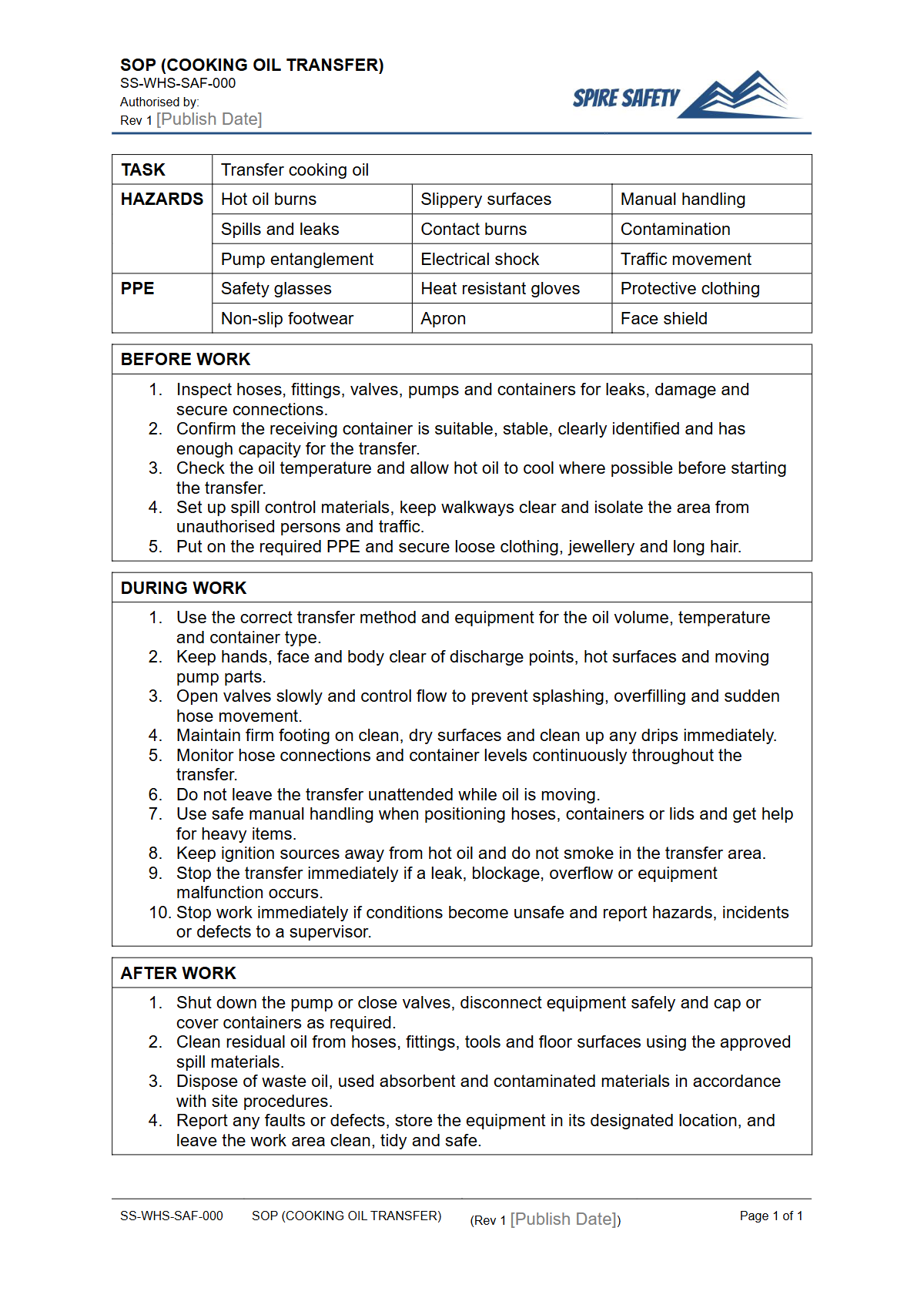
Purpose of the Free Safe Operating Procedure (Cooking Oil Transfer) Template
Handling cooking oil, particularly when hot or being disposed of, presents significant workplace hazards. This free Safe Operating Procedure (Cooking Oil Transfer) template provides a structured framework for documenting the agreed safe method for this common hospitality task.
Its primary purpose is to minimise risks such as severe burns from splashes, slips and falls from spills, and musculoskeletal injuries from manual handling. By clearly outlining steps, required personal protective equipment (PPE), and emergency actions, this SOP helps standardise safe work practices across your team.
Implementing a documented procedure ensures that all workers, regardless of experience level, are aware of the hazards and the control measures in place. It forms a critical component of your overall safety management approach, demonstrating a commitment to worker health and safety.
This SOP should be integrated into your broader WHS management systems to ensure it is part of a holistic safety culture, not just a standalone document.
Video walkthrough
How to use the Free Safe Operating Procedure (Cooking Oil Transfer) Template
This document is a template and must be adapted to your specific workplace. Before use, you must review and customise it to reflect your unique environment, equipment, and processes.
This includes specifying the exact type of deep fryers, oil caddies, or transfer pumps used, the designated storage areas for new and used oil, and the specific PPE your organisation provides.
Customisation Checklist:
- Equipment: Detail the make and model of fryers and transfer equipment.
- Chemicals: List any specific cleaning agents used on fryers or for spill cleanup.
- Personnel: Assign clear responsibilities for each step of the process.
- Site-specifics: Add details about the route for transporting oil, location of spill kits, and emergency eyewash stations.
- Emergency Contacts: Ensure phone numbers for first aid officers and emergency services are correct.
Important: This template is a starting point. We have provided a solid foundation based on Australian WHS principles, but you must complete the customisation process to ensure it is relevant and effective for your business.
Regular reviews are also essential to keep the SOP current. You may consider periodic WHS compliance auditing to verify that documented procedures are being followed correctly and remain effective at controlling risks.
When to use this Safe Operating Procedure
A Safe Operating Procedure for cooking oil transfer should be a living document used consistently within your operations. It is not a "set and forget" form.
Its primary use is as a tool for training and task execution. It should be used:
- During the induction and training of new kitchen staff or employees.
- As a refresher for existing staff before they perform the task, especially if it is done infrequently.
- During safety meetings or toolbox talks to discuss hazards associated with the task.
- As a reference guide for supervisors monitoring work practices.
- As a key document in incident investigations if an accident or near-miss occurs during oil transfer.
Who should use this Safe Operating Procedure
This SOP is intended for all personnel involved in the task of transferring, handling, or disposing of cooking oil. This includes:
- Kitchen Hands and Chefs: The primary users who perform the task and must follow the procedure step-by-step.
- Supervisors and Managers: Responsible for ensuring the SOP is understood, followed, and enforced. They also use it for training and competency assessments.
- WHS Representatives and Committee Members: Use the SOP to assist in risk assessments, workplace inspections, and safety consultations with workers.
Management has a duty to ensure that resources are available to follow the SOP, such as providing the correct PPE and maintaining equipment. For complex kitchen environments or if you need assistance developing a comprehensive safety system, engaging external expertise through WHS consulting can provide valuable guidance and support.
If this template isn't quite right, you can browse our complete free WHS resources library for other useful documents.
Common mistakes
Common mistakes to avoid
- Attempting to move or drain oil before it has cooled to a safe temperature (typically below 40°C).
- Using containers not designed for hot liquids, such as standard plastic buckets, which can melt or deform.
- Overfilling transport containers, increasing the risk of sloshing and spills during movement.
- Failing to clean up even minor spills immediately, creating a dangerous slip hazard for others.
Legal references
Legal considerations
The following legal requirements may be relevant to this type of work.
- Work Health and Safety Act (Harmonised) — Provides the primary duties for protecting workers and other people from work health and safety risks.
- Work Health and Safety Regulations (Harmonised) — Sets out requirements supporting the management of workplace hazards and risks.
The following codes may be relevant to this type of work.
- Managing WHS Risks Code of Practice — Provides practical guidance on identifying hazards, assessing risks and applying effective controls.
- Work Health and Safety Consultation, Cooperation and Coordination Code of Practice — Provides practical guidance on consulting workers and coordinating with other duty holders.
- Managing the Work Environment and Facilities Code of Practice — Provides practical guidance on safe work environments, workplace facilities and related controls.
Did you know
Hot Oil Burns
Cooking oil can reach temperatures well over 180°C. Contact with skin at this temperature can cause severe third-degree burns in less than a second.
Hospitality Slips
Slips, trips, and falls are a leading cause of injury in the hospitality industry, accounting for a significant percentage of all workers' compensation claims, with greasy floors being a major contributor.
FAQ
Frequently asked questions
01What are the biggest risks when transferring cooking oil?
02What PPE is required for handling used cooking oil?
03How often should a Safe Operating Procedure be reviewed?
04Can this template be used for any type of commercial kitchen?
Share this resource
Free Safe Operating Procedure (Cooking Oil Transfer) Template
Browse Categories
How To Use It
- 1Download and open in Word or PDF.
- 2Replace the placeholders with your business details.
- 3Get it reviewed by a WHS specialist before rollout.
Need it customised?
Our WHS consultants can adapt this template to your site, run a gap analysis, or audit what you already have in place.
Book a Free Consultation WHS consulting servicesor call 1300 156 382
Related templates
- Free Safe Operating Procedure (Cool Room Access) Template
- Free Safe Operating Procedure (Coolant Change) Template
- Free Safe Operating Procedure (Cooling Coil Cleaning) Template
- Free Safe Operating Procedure (Cooling Tower Blowdown) Template
- Free Safe Operating Procedure (Cooling Tower Cleaning) Template
- Free Safe Operating Procedure (Cooling Tower Dosing) Template