
Free Safe Operating Procedure (Floor Machine Setup) Template
Download our Free Safe Operating Procedure for Floor Machine Setup to establish clear, safe steps for your team. Customise this structured DOCX and PDF.
Free Safe Operating Procedure (Floor Machine Setup) Template
DOCX • 126 KB + PDF
Updated Oct 2026
No signup required
Purpose of the Free Safe Operating Procedure (Floor Machine Setup) Template
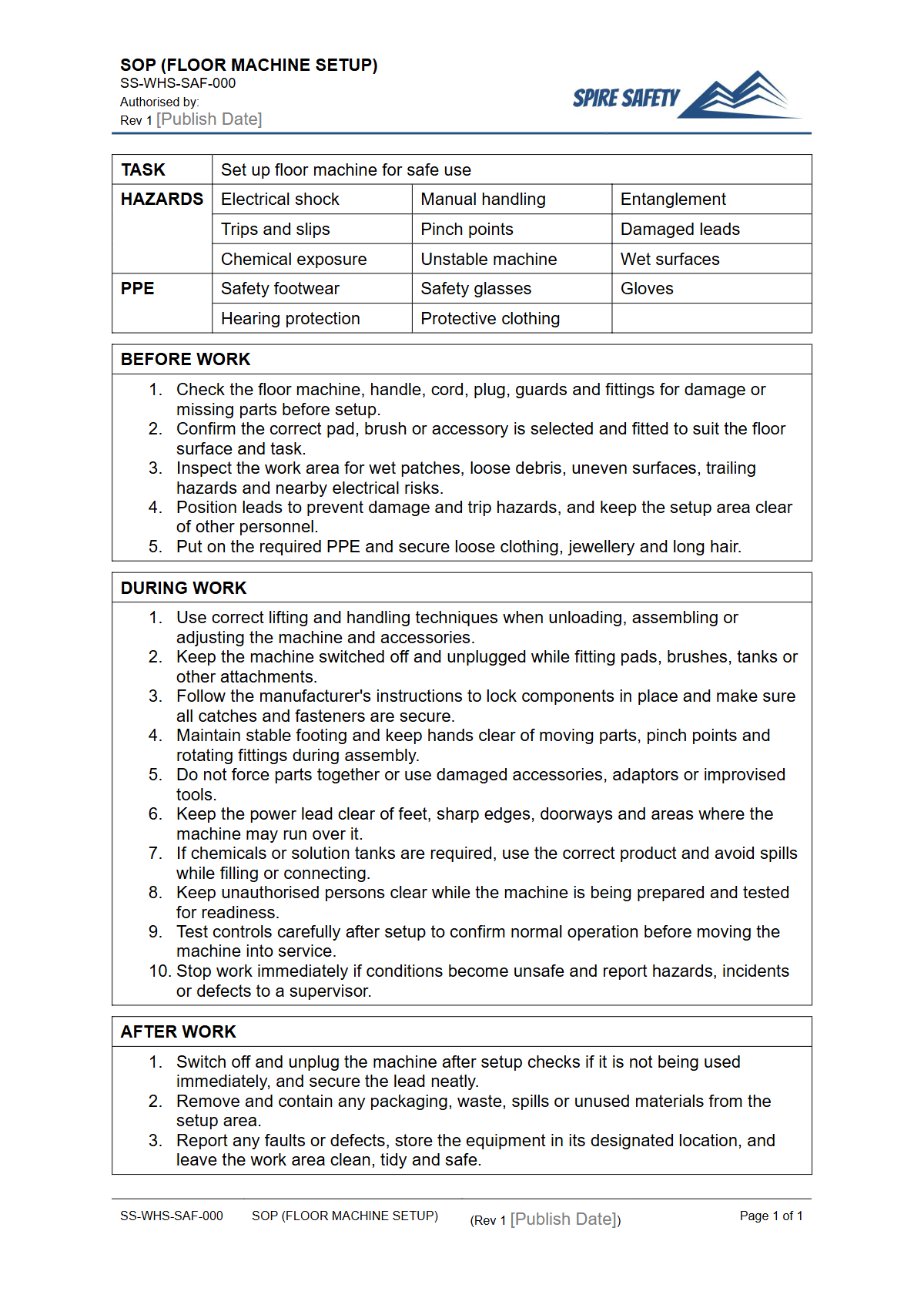
A Safe Operating Procedure (SOP) is a crucial document that provides step-by-step instructions on how to perform a task safely. This Free Safe Operating Procedure (Floor Machine Setup) Template is designed to help your organisation establish and document a consistent and safe method for preparing commercial floor machines like buffers, polishers, and scrubbers for use.
Implementing a clear setup procedure helps control common risks such as electric shock from faulty equipment, musculoskeletal injuries from incorrect lifting, and slip hazards from spilled liquids. By standardising the process, you ensure every worker prepares the equipment correctly every time, significantly reducing the likelihood of incidents and improving overall workplace safety.
Video walkthrough
How to use the Free Safe Operating Procedure (Floor Machine Setup) Template
This document is a downloadable template in both DOCX and PDF formats, providing a solid starting point for your business. It is not a finished, universally applicable procedure.
You must adapt it to the specific context of your workplace.
IMPORTANT: We have provided a structured framework based on common Australian WHS practice, but you must customise this template. Your final SOP needs to reflect the specific models of floor machines you use, the cleaning chemicals involved, your unique work environment, and the findings of your site-specific risk assessment.
Consult with your team who perform the task to ensure the procedure is practical and addresses the real-world hazards they face. Once customised, integrate the SOP into your broader WHS management systems.
When to use a Floor Machine Setup SOP
This Safe Operating Procedure should be used as a primary reference document before any worker sets up a floor machine for operation. It serves as a critical training tool for new employee inductions and for periodic refresher training to ensure ongoing competency.
The SOP should also be reviewed and referenced when introducing new floor machines into the workplace, or after any incident or near-miss involving this type of equipment. It acts as a checklist to ensure no safety-critical step is missed during the preparation phase.
Who should use it
This SOP is intended for all personnel involved with the use of floor machines. This includes cleaning and facilities management staff who operate the equipment daily, as well as maintenance personnel responsible for its upkeep and repair.
Supervisors and managers should also use this document to guide training, conduct workplace inspections, and verify that safe work practices are being followed. This procedure covers the setup phase; for the task itself, you may need a separate document like our Free Safe Operating Procedure (Floor Scrubber Operation) Template.
Key Hazards in Floor Machine Setup
The setup process for floor machines presents several key hazards that this SOP helps to control. A thorough risk assessment is necessary to identify all potential issues in your specific environment.
Electrical Hazards
Floor machines are powerful electrical appliances, often used in wet environments. A key part of the setup procedure involves inspecting the plug, cord, and body of the machine for any signs of damage, fraying, or exposed wires.
Using faulty electrical equipment is a primary cause of electric shock incidents.
Manual Handling Risks
These machines and their components, such as cleaning solution tanks, can be heavy and awkward. The SOP guides workers on correct lifting techniques and planning to minimise the risk of musculoskeletal injuries like sprains and strains.
A comprehensive WHS compliance audit can often identify gaps in manual task risk management across your operations.
Slips, Trips, and Falls
Trailing electrical cords and potential spills of water or cleaning solution create significant slip and trip hazards. The procedure mandates steps like erecting safety signs and managing cords effectively to create a safe exclusion zone around the work area before the main task begins.
Training and Worker Competency
An SOP is only effective if workers are properly trained on its contents. You must provide practical, hands-on training to ensure every operator understands and can demonstrate the safe setup steps outlined in the procedure.
This includes correct PPE selection, pre-start inspection, and hazard identification. Documenting this training provides a record of worker competency. This principle applies to all plant, including equipment covered by other resources like our Free Air Compressor SOP Template.
Integrating SOPs into Your Safety Framework
Effective WHS management relies on a system of documents that work together. This SOP for floor machine setup should not exist in isolation.
It should be stored in a location accessible to all relevant workers and be part of a larger library of procedures covering all high-risk tasks and equipment in your workplace. If you require professional guidance on developing or reviewing your safety documentation, our WHS consulting services can provide expert support tailored to your needs.
You can also explore our complete free WHS resources library for other useful templates.
Common mistakes
Common mistakes to avoid
- Using frayed electrical cords or damaged plugs.
- Neglecting to display "wet floor" or "cleaning in progress" signs before starting.
- Attaching an incorrect or overly worn-out pad/brush for the floor surface.
- Failing to wear required personal protective equipment (PPE) like gloves or non-slip footwear.
Legal references
Legal considerations
The following legal requirements may be relevant to this type of work.
- Work Health and Safety Act (Harmonised) — Provides the primary duties for protecting workers and other people from work health and safety risks.
- Work Health and Safety Regulations (Harmonised) — Sets out requirements supporting the management of workplace hazards and risks.
The following codes may be relevant to this type of work.
- Managing WHS Risks Code of Practice — Provides practical guidance on identifying hazards, assessing risks and applying effective controls.
- Work Health and Safety Consultation, Cooperation and Coordination Code of Practice — Provides practical guidance on consulting workers and coordinating with other duty holders.
- Managing the Work Environment and Facilities Code of Practice — Provides practical guidance on safe work environments, workplace facilities and related controls.
Did you know
Slips and Trips are Major Risks
Slips, trips, and falls are a leading cause of serious workplace injuries in Australia, making floor condition and cord management critical safety priorities during cleaning operations.
Pre-Start Checks Prevent Failure
A thorough pre-start inspection, as outlined in an SOP, can identify the vast majority of potential equipment faults before they lead to failure or an incident during operation.
FAQ
Frequently asked questions
01What is the difference between this setup SOP and an operation SOP?
02Does this template cover handling cleaning chemicals?
03How often should I review this Safe Operating Procedure?
04Is an SOP a substitute for a risk assessment?
Share this resource
Free Safe Operating Procedure (Floor Machine Setup) Template
Browse Categories
How To Use It
- 1Download and open in Word or PDF.
- 2Replace the placeholders with your business details.
- 3Get it reviewed by a WHS specialist before rollout.
Need it customised?
Our WHS consultants can adapt this template to your site, run a gap analysis, or audit what you already have in place.
Book a Free Consultation WHS consulting servicesor call 1300 156 382
Related templates
- Free Safe Operating Procedure (Floor Polisher) Template
- Free Safe Operating Procedure (Floor Polishing Prep) Template
- Free Safe Operating Procedure (Floor Sander) Template
- Free Safe Operating Procedure (Floor Scarifier) Template
- Free Safe Operating Procedure (Floor Scrubber Operation) Template
- Free Safe Operating Procedure (Floor Spot Cleaning) Template