
Free Safe Operating Procedure (Floor Polisher) Template
Formalise your safety measures for floor polisher use with our structured template. Download this free Safe Operating Procedure to refine your workplace safety protocols.
Free Safe Operating Procedure (Floor Polisher) Template
DOCX • 126 KB + PDF
Updated Oct 2026
No signup required
Purpose of the Free Safe Operating Procedure (Floor Polisher) Template
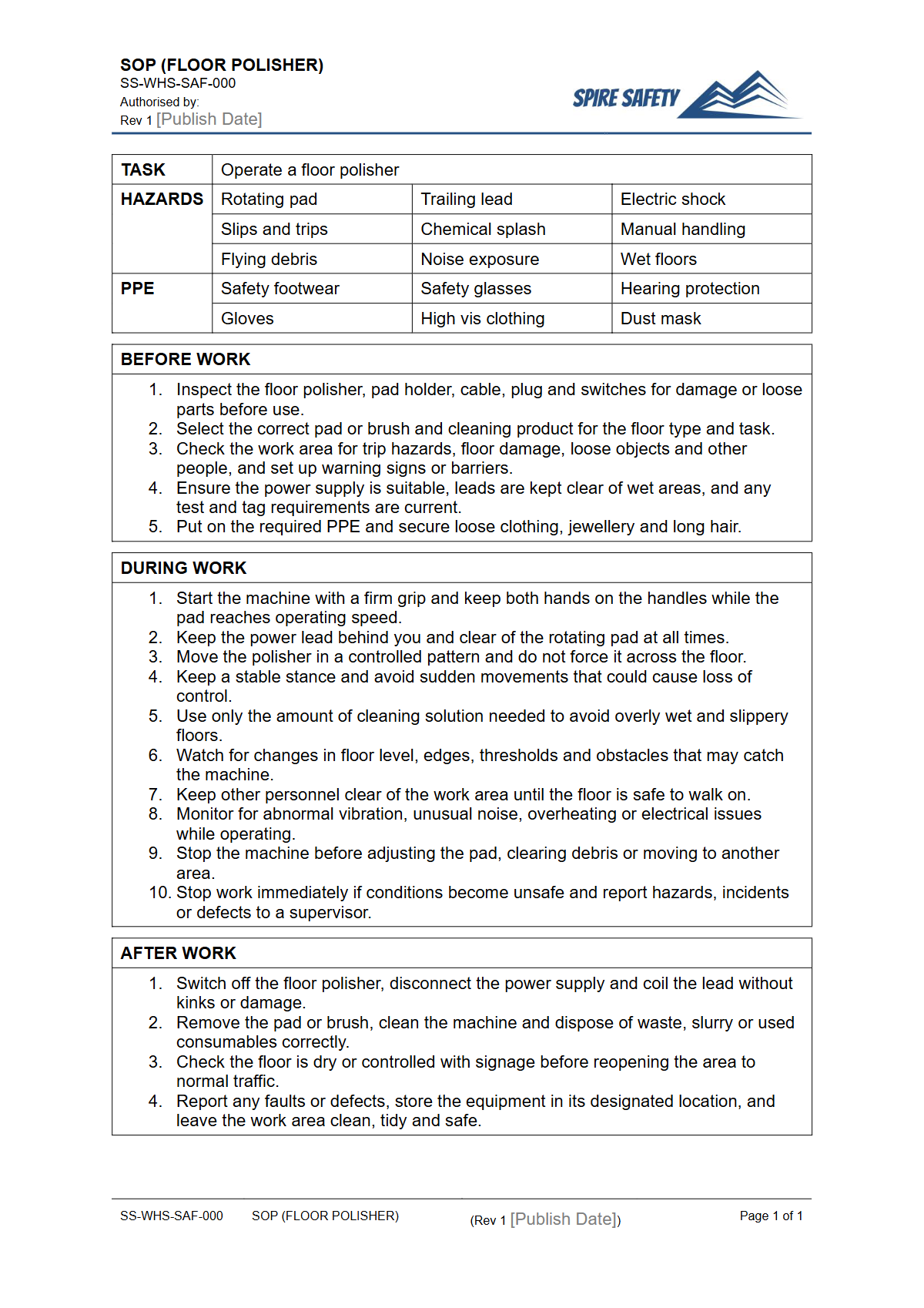
Operating a floor polisher, while a common task, involves several significant workplace hazards. Our Free Safe Operating Procedure (Floor Polisher) Template provides a structured framework for documenting the step-by-step process for using this equipment safely.
A comprehensive SOP is a critical tool for any organisation aiming to minimise risks and meet its duty of care. It helps standardise safe work practices, ensures consistency in training, and acts as a key reference for workers and supervisors.
By implementing a clear SOP, you can effectively manage hazards such as electrical shock from faulty cords, slips and trips from trailing leads or wet surfaces, musculoskeletal strain from poor ergonomics, and exposure to hazardous chemicals. This document helps formalise your risk control measures, from pre-start checks to clean-up and storage. Similar principles apply to other cleaning equipment, and for related tasks, you might consider our Free Safe Operating Procedure (Floor Scrubber Operation) Template.
Video walkthrough
How to use the Free Safe Operating Procedure (Floor Polisher) Template
This resource is available as an easily editable DOCX file and a ready-to-print PDF. The template is designed to be a comprehensive starting point, pre-filled with common steps and safety considerations based on Australian WHS principles.
Your role is to adapt it to the unique context of your workplace.
Important: This is a template, not a finished document. We have provided a solid foundation, but you must review and customise every section to reflect the specific floor polisher models, cleaning chemicals, floor surfaces, work environments, and personnel at your site.
A generic procedure is not enough; site-specific details are essential for it to be effective. SOPs are a fundamental part of broader WHS management systems, which integrate all aspects of safety into your daily operations.
Key sections to customise include:
- Personal Protective Equipment (PPE): Update the list to match the requirements of the cleaning agents you use (referencing their Safety Data Sheets) and your site's specific needs, such as non-slip footwear and protective eyewear.
- Pre-operational Checks: Modify the checklist to reflect the exact make and model of your floor polisher. Include checks for specific components like pads, brushes, and power cords.
- Operational Steps: Detail the process for your specific environment, including how to manage cords, apply cleaning solutions, and cordon off the work area with appropriate signage.
- Emergency Procedures: Outline site-specific steps for handling electrical shocks, chemical spills, or injuries.
When to use a Safe Operating Procedure
A Safe Operating Procedure for a floor polisher should be a living document, used consistently throughout your operations. It should be consulted before any worker operates the equipment for the first time as part of their induction and training.
It also serves as a valuable tool for refresher training to prevent complacency among experienced staff. Furthermore, the SOP should be a key document reviewed during any incident investigation related to floor polishing and updated as part of your scheduled safety reviews to ensure it remains current and effective.
Who should use this document
This template is designed for use by Persons Conducting a Business or Undertaking (PCBUs), WHS managers, supervisors, and team leaders who are responsible for developing and implementing safe work systems. They are the individuals tasked with customising the procedure.
Once finalised, the SOP is for the workers who operate the floor polishers. It provides them with clear, unambiguous instructions to perform their tasks safely.
Regular reviews of such procedures are crucial, and sometimes involves external WHS compliance auditing to identify gaps in your safety processes.
The principles of documenting safe work methods extend to all types of machinery. Whether it's workshop equipment or facility maintenance tools, having a documented SOP is best practice.
For example, the same structured approach can be applied when creating a Free Air Compressor SOP (Safe Operating Procedure) Template to manage different but equally significant hazards. You can find many more examples in our free WHS resources library to support your safety management efforts.
Common mistakes
Common mistakes to avoid
- Using the template 'as is' without customising it for the specific workplace, equipment, and chemicals.
- Failing to train all relevant workers on the contents of the finalised Safe Operating Procedure.
- Neglecting to perform pre-start electrical safety checks on the cord and plug before every use.
- Not using adequate barricades and warning signs to prevent others from entering the work area.
Legal references
Legal considerations
The following legal requirements may be relevant to this type of work.
- Work Health and Safety Act (Harmonised) — Provides the primary duties for protecting workers and other people from work health and safety risks.
- Work Health and Safety Regulations (Harmonised) — Sets out requirements supporting the management of workplace hazards and risks.
The following codes may be relevant to this type of work.
- Managing WHS Risks Code of Practice — Provides practical guidance on identifying hazards, assessing risks and applying effective controls.
- Work Health and Safety Consultation, Cooperation and Coordination Code of Practice — Provides practical guidance on consulting workers and coordinating with other duty holders.
- Managing the Work Environment and Facilities Code of Practice — Provides practical guidance on safe work environments, workplace facilities and related controls.
Did you know
Slips, Trips, and Falls
Slips, trips, and falls are a leading cause of serious workplace injuries in Australia. Trailing electrical cords from equipment like floor polishers are a common and preventable trip hazard.
Chemical Safety
Cleaning agents used with floor polishers can pose significant health risks if not handled correctly. Always consult the Safety Data Sheet (SDS) for each chemical before use to understand PPE and first aid requirements.
FAQ
Frequently asked questions
01What are the main hazards of using a floor polisher?
02Is a Safe Operating Procedure a legal requirement in Australia?
03How often should I review my Floor Polisher SOP?
04Can I use this template for a floor scrubber too?
Share this resource
Free Safe Operating Procedure (Floor Polisher) Template
Browse Categories
How To Use It
- 1Download and open in Word or PDF.
- 2Replace the placeholders with your business details.
- 3Get it reviewed by a WHS specialist before rollout.
Need it customised?
Our WHS consultants can adapt this template to your site, run a gap analysis, or audit what you already have in place.
Book a Free Consultation WHS consulting servicesor call 1300 156 382
Related templates
- Free Safe Operating Procedure (Floor Polishing Prep) Template
- Free Safe Operating Procedure (Floor Sander) Template
- Free Safe Operating Procedure (Floor Scarifier) Template
- Free Safe Operating Procedure (Floor Scrubber Operation) Template
- Free Safe Operating Procedure (Floor Spot Cleaning) Template
- Free Safe Operating Procedure (Floor Stripping) Template