
Free Safe Operating Procedure (Floor Stripping) Template
Formalise your floor maintenance safety with our free Safe Operating Procedure (Floor Stripping) Template. Download the customisable DOCX to get started.
Free Safe Operating Procedure (Floor Stripping) Template
DOCX • 126 KB + PDF
Updated Oct 2026
No signup required
Purpose of the Free Safe Operating Procedure (Floor Stripping) Template
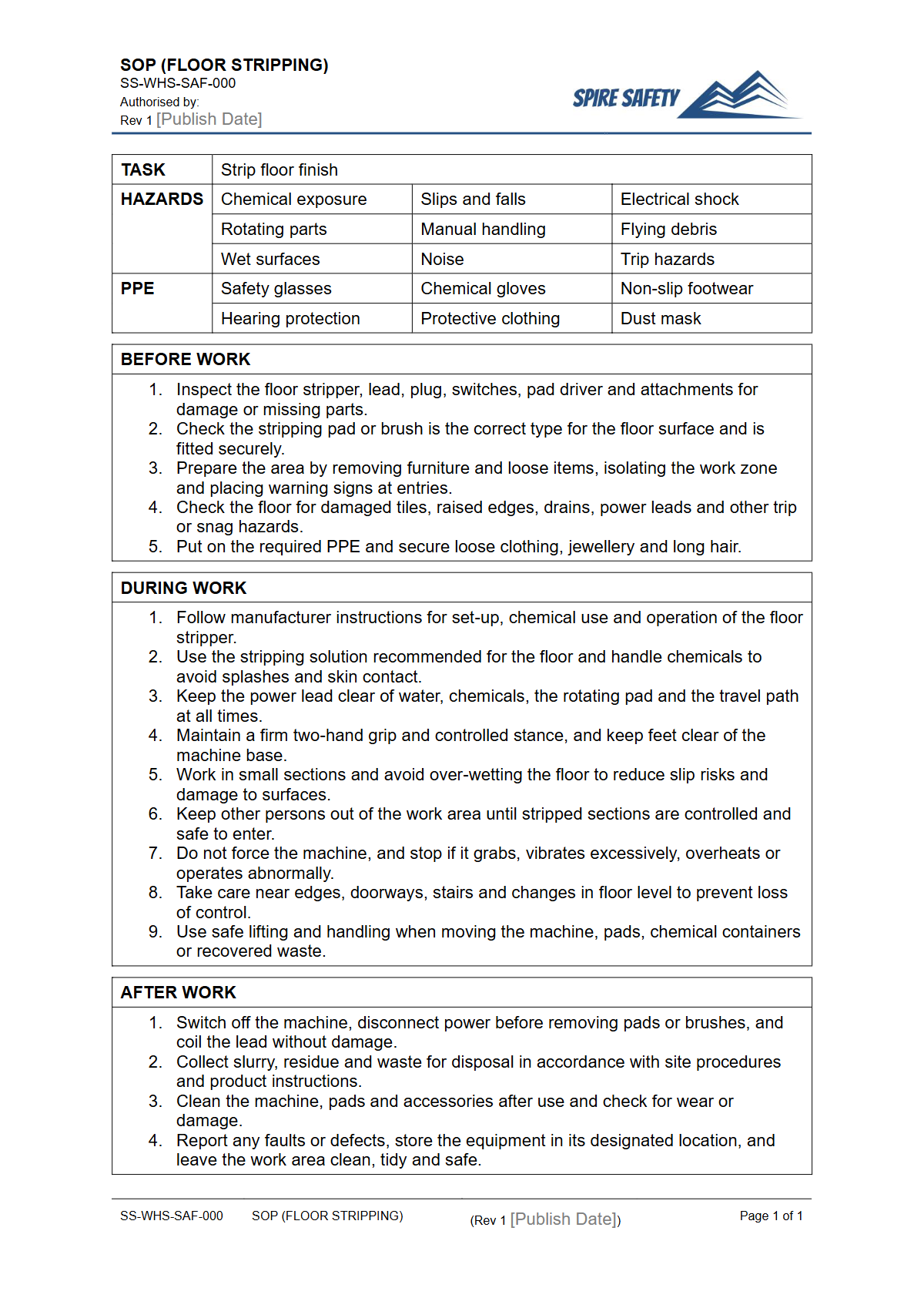
Developing a structured approach to workplace safety is essential for any high-risk task. This free Safe Operating Procedure (Floor Stripping) Template provides a comprehensive starting point for documenting the required safety measures for removing old floor polish and sealant.
The primary purpose of this SOP is to provide a clear, step-by-step guide that helps control hazards and minimise risks associated with floor stripping. Key risks include exposure to hazardous chemicals, slips and trips on wet surfaces, electrical hazards from machinery, and ergonomic injuries from manual handling.
By implementing a formal SOP, organisations can standardise their processes, ensuring every worker follows the same safety protocols every time. This consistency is vital for reducing incidents and creating a predictable, safe working environment.
It also serves as a critical training tool for new employees and a refresher for experienced staff. Similar to our Free Safe Operating Procedure (Floor Scrubber Operation) Template, this document establishes a benchmark for safe work practices in commercial cleaning and facility maintenance.
Video walkthrough
How to use the Free Safe Operating Procedure (Floor Stripping) Template
This template is available in both DOCX and PDF formats for your convenience. The DOCX version is fully editable, allowing you to tailor the content to your specific operational needs.
To use the template effectively, download the file and systematically work through each section. You should consult with workers who perform the task, review the Safety Data Sheets (SDS) for the chemicals you use, and inspect the specific floor stripping machines and equipment at your site.
Important: This document is a template, not a finished safety procedure. For it to be effective, you must customise it to reflect the unique conditions of your workplace.
We have provided a structured framework based on Australian WHS principles, but it is your responsibility to add, remove, and modify steps to align with your specific equipment, chemicals, work environment, and personnel. Integrating this SOP into your broader WHS management systems ensures a cohesive approach to workplace safety.
When to use a Floor Stripping SOP
A Safe Operating Procedure for floor stripping should be developed and implemented before any worker undertakes the task for the first time. It is a foundational document that forms part of the risk management process.
It should be used as the primary reference document during worker training and induction to ensure they understand the approved methodology and associated safety controls. The SOP should also be readily accessible in the work area for quick reference.
Furthermore, the SOP is a dynamic document that should be reviewed regularly. A review is necessary whenever a new type of chemical, machine, or process is introduced.
It must also be reviewed following any incident or near-miss to identify and rectify gaps in the procedure. Periodic reviews, typically annually, are a key part of effective safety management and are often examined during a WHS compliance auditing process to verify that safe work practices are current and effectively implemented.
Who should use it
This Safe Operating Procedure is intended for a range of personnel within an organisation. WHS Managers and Safety Officers can use it to establish a baseline for safe work and ensure regulatory duties are being met.
Supervisors and Team Leaders are responsible for implementing the SOP, providing direct instruction, and ensuring workers follow the outlined steps correctly. They must ensure all controls, such as ventilation and barricading, are in place before work commences.
Most importantly, the workers who perform the floor stripping task are the primary users. The SOP gives them clear, unambiguous instructions on how to work safely and protect themselves and others from harm.
For organisations needing assistance to adapt this document or develop other specialised procedures, our WHS consulting services can provide expert guidance. This SOP is one of many resources available; you can explore our entire free WHS resources library for more templates and guides.
Common mistakes
Common mistakes to avoid
- Using incorrect or incompatible chemical strippers and finishers.
- Failing to adequately ventilate the work area to disperse chemical fumes.
- Neglecting to use 'Wet Floor' signs and barricades to isolate the area from pedestrians.
- Using damaged electrical equipment, particularly frayed cords, near wet surfaces.
Legal references
Legal considerations
The following legal requirements may be relevant to this type of work.
- Work Health and Safety Act (Harmonised) — Provides the primary duties for protecting workers and other people from work health and safety risks.
- Work Health and Safety Regulations (Harmonised) — Sets out requirements supporting the management of workplace hazards and risks.
The following codes may be relevant to this type of work.
- Managing WHS Risks Code of Practice — Provides practical guidance on identifying hazards, assessing risks and applying effective controls.
- Work Health and Safety Consultation, Cooperation and Coordination Code of Practice — Provides practical guidance on consulting workers and coordinating with other duty holders.
- Managing the Work Environment and Facilities Code of Practice — Provides practical guidance on safe work environments, workplace facilities and related controls.
Did you know
Chemical Dilution
Incorrectly diluting floor stripping chemicals is a common cause of accidents. Overly concentrated solutions can damage floors and increase health risks, while overly diluted solutions are ineffective and lead to more physical effort.
Slips, Trips, and Falls
According to Safe Work Australia, slips, trips, and falls are a leading cause of workplace injury. Wet floor stripping processes present a significant risk if not managed with proper signage and physical barricades to isolate the area.
FAQ
Frequently asked questions
01What are the main hazards involved in floor stripping?
02Is a Safe Operating Procedure a legal requirement in Australia?
03How often should a Floor Stripping SOP be reviewed?
04What Personal Protective Equipment (PPE) is needed for floor stripping?
Share this resource
Free Safe Operating Procedure (Floor Stripping) Template
Browse Categories
How To Use It
- 1Download and open in Word or PDF.
- 2Replace the placeholders with your business details.
- 3Get it reviewed by a WHS specialist before rollout.
Need it customised?
Our WHS consultants can adapt this template to your site, run a gap analysis, or audit what you already have in place.
Book a Free Consultation WHS consulting servicesor call 1300 156 382
Related templates
- Free Safe Operating Procedure (Floor Waxing) Template
- Free Safe Operating Procedure (Flow Meter Test) Template
- Free Safe Operating Procedure (Flow Transmitter) Template
- Free Safe Operating Procedure (Flower Bed Maintenance) Template
- Free Safe Operating Procedure (Flower Bed Weeding) Template
- Free Safe Operating Procedure (Flower Deadheading) Template