
Free Safe Operating Procedure (Flower Bed Maintenance) Template
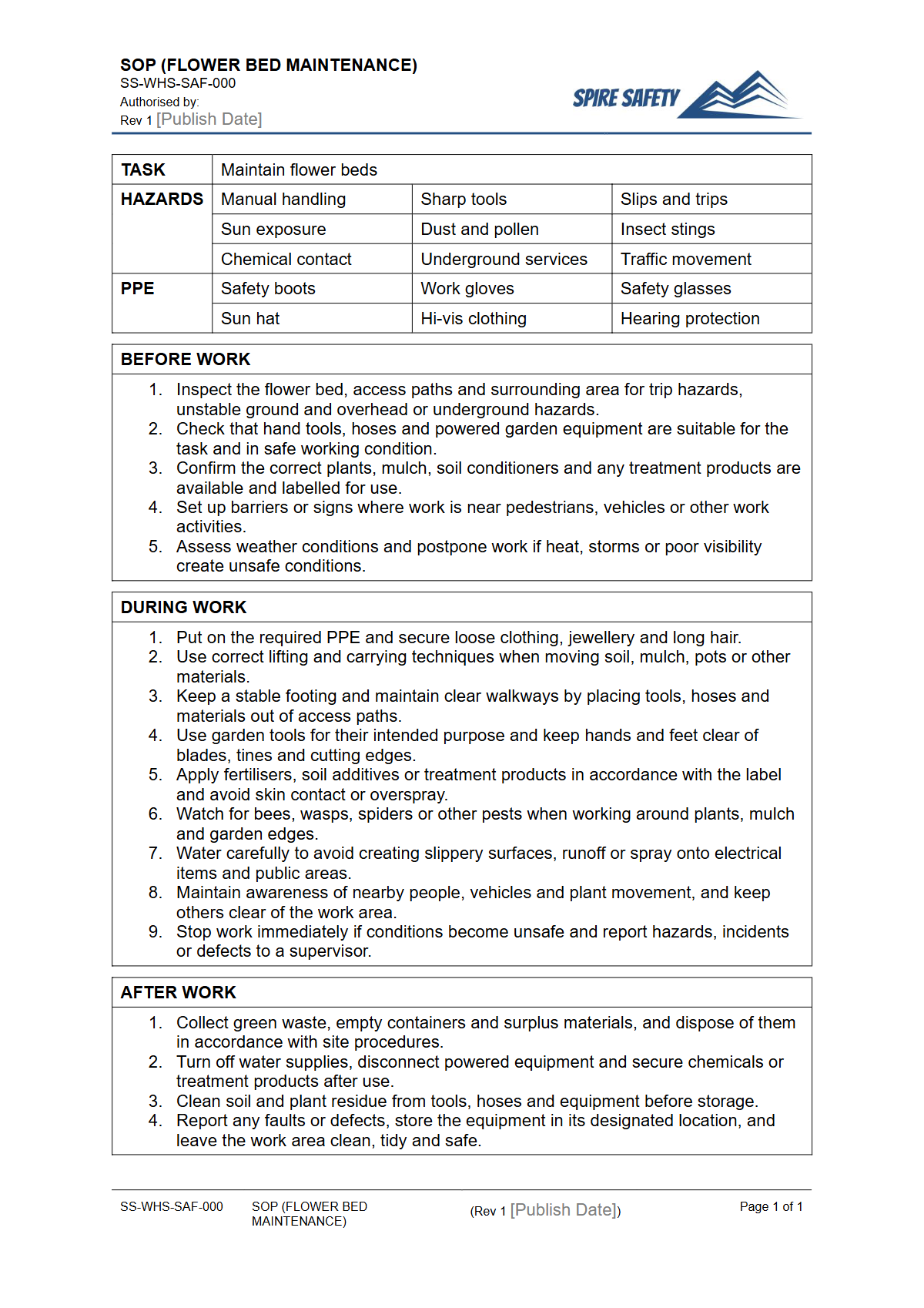
Download our free Safe Operating Procedure (Flower Bed Maintenance) Template.
Free Safe Operating Procedure (Flower Bed Maintenance) Template
DOCX • 126 KB + PDF
Updated Oct 2026
No signup required
Purpose of the Free Safe Operating Procedure (Flower Bed Maintenance) Template
Managing the safety of workers performing horticultural tasks is crucial. This free Safe Operating Procedure (Flower Bed Maintenance) Template provides a structured starting point for documenting the approved, safe method for tasks like planting, weeding, pruning, mulching, and applying treatments.
Flower bed maintenance involves a range of hazards, including hazardous manual tasks (lifting, bending, repetitive actions), cuts from sharp tools, exposure to chemicals like pesticides and herbicides, and environmental risks such as sun exposure and insect bites.
Using a Safe Operating Procedure (SOP) helps to systematically identify these risks and outline clear control measures. This formalises your process, ensuring tasks are performed consistently and safely every time.
Documenting safe work methods is a fundamental component of proactive WHS management systems, helping to reduce incidents and demonstrate due diligence.
Video walkthrough
How to use the Free Safe Operating Procedure (Flower Bed Maintenance) Template
This resource is available as a fully editable DOCX file and a printable PDF. The DOCX version allows you to tailor the content directly to your operational needs.
It includes sections for defining required Personal Protective Equipment (PPE), pre-operational checks, step-by-step instructions, and emergency procedures. We strongly recommend involving your workers in the customisation process, as they have direct experience with the tasks and hazards involved.
It is critical to understand that this template is a guide, not a finished document. You must customise this document to reflect the specific tools, equipment, chemicals, environment, and processes used in your workplace. We recommend conducting a site-specific risk assessment to inform your customisations and ensure all unique hazards are controlled. For example, if maintenance involves working at height to tend to climbing plants or tall hedges, you will need a specific process for that task, which can be documented using resources like our FREE Step Ladder SOP Template.
When to use a Safe Operating Procedure
A Safe Operating Procedure is a 'living' document that should be used actively within your organisation's safety framework. It is not a document to be filed away and forgotten.
It should be used during the induction and training of new employees to establish safe work habits from day one. It also serves as an essential tool for refresher training for existing staff and as a reference point for pre-start meetings or toolbox talks.
Furthermore, an SOP should be reviewed and potentially updated after any incident or near miss to incorporate lessons learned. Regular reviews, typically on an annual basis or when a process changes, are essential to ensure the procedure remains relevant and effective.
If a review highlights significant gaps in your safety processes, it may be beneficial to seek professional guidance from a WHS consulting firm.
Who should use it
This SOP template is designed for any Person Conducting a Business or Undertaking (PCBU) whose workers engage in gardening, landscaping, or groundskeeping activities. This includes:
- Landscaping companies
- Horticultural businesses
- Local councils and parks departments
- Body corporates and strata managers
- Facilities and property maintenance teams
- Schools and universities with grounds staff
Supervisors and managers can use the template to standardise training and operational safety, while workers can use the finalised SOP as a practical guide for performing their duties safely. For roles that involve broader maintenance duties, such as repairing wooden garden beds or trellises, additional task-specific SOPs may be required. For instance, tasks involving power saws would need a dedicated procedure, like the one detailed in our FREE Circular Saw SOP (Safe Operating Procedure) Template.
Key Hazards in Flower Bed Maintenance
Effectively managing safety in garden maintenance requires a clear understanding of the principal hazards. An SOP helps to control these risks by mandating specific safety measures. Key hazards include:
Manual Tasks
Lifting heavy bags of soil, prolonged bending or kneeling, and repetitive motions with tools can lead to musculoskeletal injuries. Controls include using mechanical aids, taking regular breaks, and training in safe lifting techniques.
Tools and Equipment
Sharp hand tools like secateurs and trowels can cause cuts and punctures. Powered equipment like hedge trimmers or leaf blowers introduce risks of laceration, noise, and vibration.
Pre-use checks and correct handling techniques are vital.
Environmental Factors
Outdoor work presents risks from UV radiation, heat stress, dehydration, and bites or stings from insects and spiders. Controls include wearing sun-protective clothing, scheduling work during cooler parts of the day, and having first aid supplies ready.
Chemicals and Biological Agents
Handling fertilisers, herbicides, pesticides, and potting mix can lead to skin irritation or respiratory issues. Controls include using the least toxic option available, wearing appropriate PPE like gloves and masks, and following the Safety Data Sheet (SDS).
You can browse our entire free WHS resources library for more templates and safety guides.
Common mistakes
Common mistakes to avoid
- Using a generic template without customising it for specific site conditions, tools, and chemicals.
- Failing to adequately train workers on the contents and application of the finished SOP.
- Not reviewing the SOP after an incident, near miss, or when a work process changes.
- Treating the SOP as a bureaucratic formality rather than a practical tool to be used daily.
Legal references
Legal considerations
The following legal requirements may be relevant to this type of work.
- Work Health and Safety Act (Harmonised) — Provides the primary duties for protecting workers and other people from work health and safety risks.
- Work Health and Safety Regulations (Harmonised) — Sets out requirements supporting the management of workplace hazards and risks.
The following codes may be relevant to this type of work.
- Managing WHS Risks Code of Practice — Provides practical guidance on identifying hazards, assessing risks and applying effective controls.
- Work Health and Safety Consultation, Cooperation and Coordination Code of Practice — Provides practical guidance on consulting workers and coordinating with other duty holders.
- Managing the Work Environment and Facilities Code of Practice — Provides practical guidance on safe work environments, workplace facilities and related controls.
Did you know
Manual Task Injuries
According to Safe Work Australia, hazardous manual tasks are a leading cause of serious workers' compensation claims in Australia, making ergonomic safety a top priority in physical roles like landscaping.
UV Exposure Risk
Outdoor workers can be exposed to 5 to 10 times more UV radiation than indoor workers. A robust sun protection policy is a critical component of any SOP for outdoor work in Australia.
FAQ
Frequently asked questions
01What should be included in an SOP for gardening or flower bed maintenance?
02Is a Safe Operating Procedure a legal requirement in Australia?
03How often should we review our flower bed maintenance SOP?
04Can I use this template for a commercial landscaping business?
Share this resource
Free Safe Operating Procedure (Flower Bed Maintenance) Template
Browse Categories
How To Use It
- 1Download and open in Word or PDF.
- 2Replace the placeholders with your business details.
- 3Get it reviewed by a WHS specialist before rollout.
Need it customised?
Our WHS consultants can adapt this template to your site, run a gap analysis, or audit what you already have in place.
Book a Free Consultation WHS consulting servicesor call 1300 156 382
Related templates
- Free Safe Operating Procedure (Flower Bed Weeding) Template
- Free Safe Operating Procedure (Flower Deadheading) Template
- Free Safe Operating Procedure (Flower Potting) Template
- Free Safe Operating Procedure (Fly Press) Template
- Free Safe Operating Procedure (Fogging Machine) Template
- Free Safe Operating Procedure (Food Cart Handling) Template