
Free Safe Operating Procedure (Food Probe Sanitising) Template
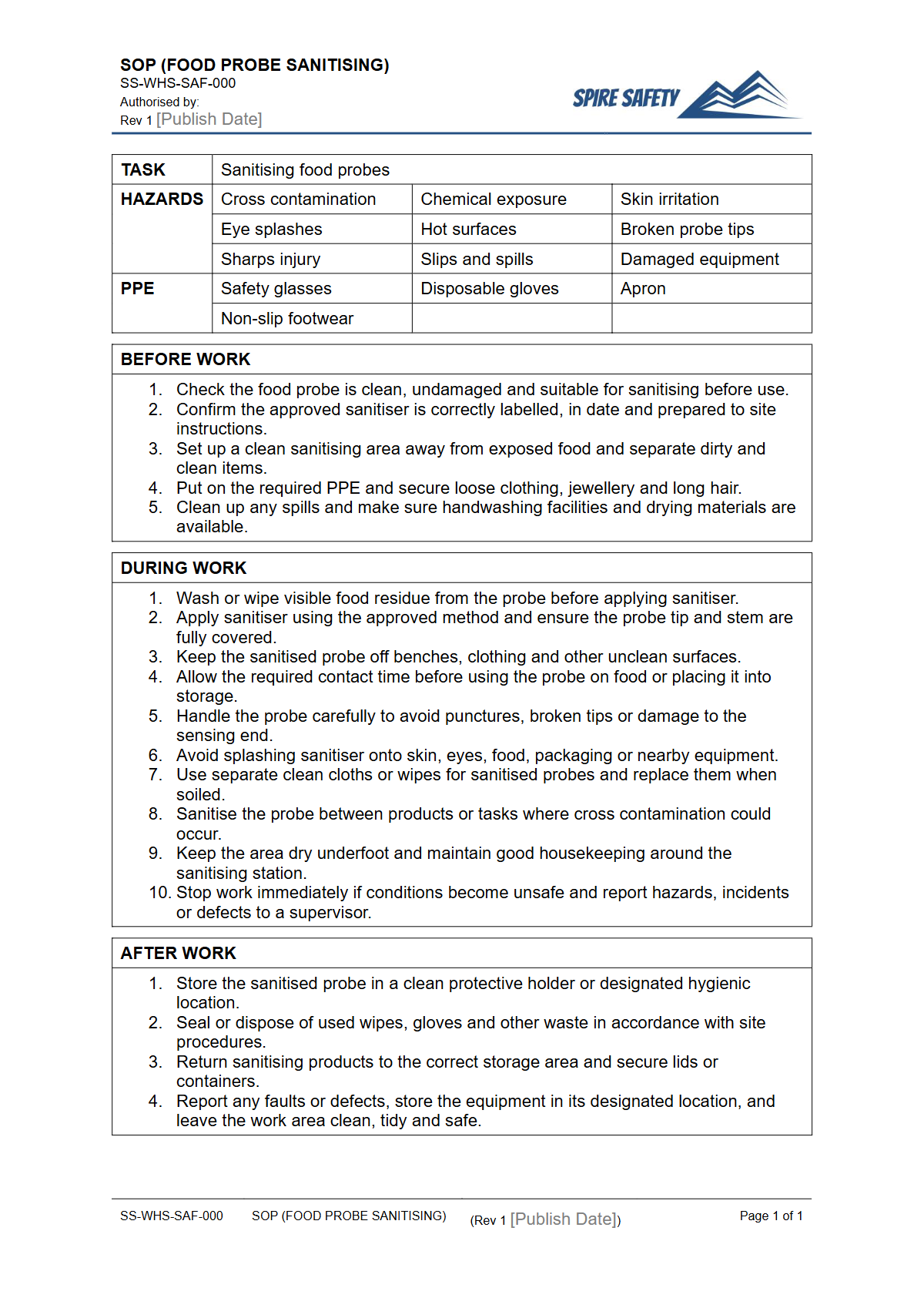
Download our free Safe Operating Procedure (Food Probe Sanitising) Template. This DOCX and PDF resource helps create a clear process for food handlers.
Free Safe Operating Procedure (Food Probe Sanitising) Template
DOCX • 126 KB + PDF
Updated Oct 2026
No signup required
Purpose of the Free Safe Operating Procedure (Food Probe Sanitising) Template
Proper food safety practices are non-negotiable in any commercial kitchen or food handling environment. A key component of this is ensuring that tools like food temperature probes are clean and sanitary to prevent cross-contamination.
This free Safe Operating Procedure (Food Probe Sanitising) Template provides a structured framework for documenting the correct, step-by-step process for cleaning and sanitising food probes. Using this SOP helps standardise practices across all staff, reducing the risk of foodborne illness and ensuring your business meets its food safety obligations.
It serves as a vital training and operational tool to maintain high standards of hygiene.
Video walkthrough
How to use the Free Safe Operating Procedure (Food Probe Sanitising) Template
This template is provided in both DOCX and PDF formats for your convenience. After downloading, you can easily add your company branding and specific details.
The core of an effective SOP is its relevance to the actual tasks performed in your workplace. It is critical that you customise this document to reflect your specific equipment, approved sanitising chemicals, and operational context.
We strongly recommend you consult with your food handlers and kitchen supervisors during the customisation process. Their direct experience is invaluable for creating a procedure that is practical, clear, and effective. Once finalised, this SOP should form part of your broader food safety program, which is often a component within a documented WHS management system.
The 4-Step Sanitising Process
An effective sanitising procedure is more than just a quick wipe. It generally involves four distinct steps to ensure the probe is safe for its next use. This SOP template guides you through documenting each phase:
- Step 1: Clean
This initial step involves removing any physical food residue from the probe. This is typically done with warm, soapy water and a clean cloth or brush. A probe cannot be properly sanitised if it is not clean first, as leftover food particles can shield microorganisms from the sanitiser. - Step 2: Rinse
After cleaning, the probe must be thoroughly rinsed with clean, potable water to remove any soap or detergent residue. - Step 3: Sanitise
The probe is then treated with an approved food-safe sanitiser. This step is crucial for eliminating or reducing harmful microorganisms to a safe level. The SOP must specify the type of sanitiser, the correct concentration, and the required contact time for it to be effective. - Step 4: Air Dry & Store
Finally, the probe should be allowed to air dry completely before being stored in a clean, protective case or designated area. Wiping it dry with a cloth could re-contaminate it.
When should a food probe be sanitised?
Sanitising isn't just an end-of-day task. To prevent cross-contamination, a food probe must be cleaned and sanitised at several key moments throughout the day. Your SOP should clearly state that the procedure must be followed:
- Before its first use during a shift.
- Between measuring different types of food, especially when moving from raw to ready-to-eat or cooked products.
- After the probe is touched, dropped, or otherwise contaminated.
- At regular intervals during continuous use (e.g., every four hours).
Adherence to this schedule is often a key focus of internal checks and formal WHS compliance audits. For other procedural documents, you might find inspiration in resources like our free defibrillator operation SOP, which also outlines critical step-by-step actions.
Who should use this Safe Operating Procedure?
This SOP is intended for any person responsible for handling and preparing food in a commercial or professional setting. Key personnel include:
- Chefs and Cooks
- Kitchen Hands and Assistants
- Food Process Workers
- Food Safety Supervisors
- Catering Staff
It is the responsibility of the Person Conducting a Business or Undertaking (PCBU) to provide adequate information, training, and instruction to all workers. This SOP is a perfect tool for fulfilling that duty. If you require assistance in developing or implementing robust safety procedures, Spire Safety offers expert WHS consulting services to help tailor solutions for your business. Explore our complete library of free WHS resources for more templates and guides to support your safety management system.
Common mistakes
Common mistakes to avoid
- Forgetting to clean the probe with soap and water before applying sanitiser.
- Using a contaminated cloth to wipe the probe clean or dry.
- Not allowing the sanitiser sufficient contact time to work effectively.
- Storing the clean probe in a dirty drawer, pocket, or unhygienic area.
Legal references
Legal considerations
The following legal requirements may be relevant to this type of work.
- Work Health and Safety Act (Harmonised) — Provides the primary duties for protecting workers and other people from work health and safety risks.
- Work Health and Safety Regulations (Harmonised) — Sets out requirements supporting the management of workplace hazards and risks.
The following codes may be relevant to this type of work.
- Managing WHS Risks Code of Practice — Provides practical guidance on identifying hazards, assessing risks and applying effective controls.
- Work Health and Safety Consultation, Cooperation and Coordination Code of Practice — Provides practical guidance on consulting workers and coordinating with other duty holders.
- Managing the Work Environment and Facilities Code of Practice — Provides practical guidance on safe work environments, workplace facilities and related controls.
Did you know
The Temperature Danger Zone
Food-poisoning bacteria grow most rapidly in the 'Temperature Danger Zone' between 5°C and 60°C. A correctly sanitised and calibrated probe is your best tool for ensuring food is cooked, cooled, and held outside this zone.
Invisible Threat
You cannot see, taste, or smell the harmful bacteria that cause food poisoning. This is why following a strict, documented procedure for sanitising equipment is essential, as you cannot rely on your senses to detect contamination.
FAQ
Frequently asked questions
01What's the difference between cleaning and sanitising a food probe?
02Why is sanitising a food thermometer probe so important?
03Can I use alcohol wipes to sanitise a food probe?
04How often should a food probe be calibrated?
Share this resource
Free Safe Operating Procedure (Food Probe Sanitising) Template
Browse Categories
How To Use It
- 1Download and open in Word or PDF.
- 2Replace the placeholders with your business details.
- 3Get it reviewed by a WHS specialist before rollout.
Need it customised?
Our WHS consultants can adapt this template to your site, run a gap analysis, or audit what you already have in place.
Book a Free Consultation WHS consulting servicesor call 1300 156 382
Related templates
- Free Safe Operating Procedure (Food Processor) Template
- Free Safe Operating Procedure (Food Recall Isolation) Template
- Free Safe Operating Procedure (Food Scale Cleaning) Template
- Free Safe Operating Procedure (Food Smoker) Template
- Free Safe Operating Procedure (Food Tray Collection) Template
- Free Safe Operating Procedure (Food Tray Delivery) Template