
Free Safe Operating Procedure (Graffiti Paint Touchup) Template
Download our free Safe Operating Procedure (Graffiti Paint Touchup) template. This DOCX & PDF resource helps document safe work practices for paint touchups.
Free Safe Operating Procedure (Graffiti Paint Touchup) Template
DOCX • 126 KB + PDF
Updated Oct 2026
No signup required
Purpose of the Free Safe Operating Procedure (Graffiti Paint Touchup) Template
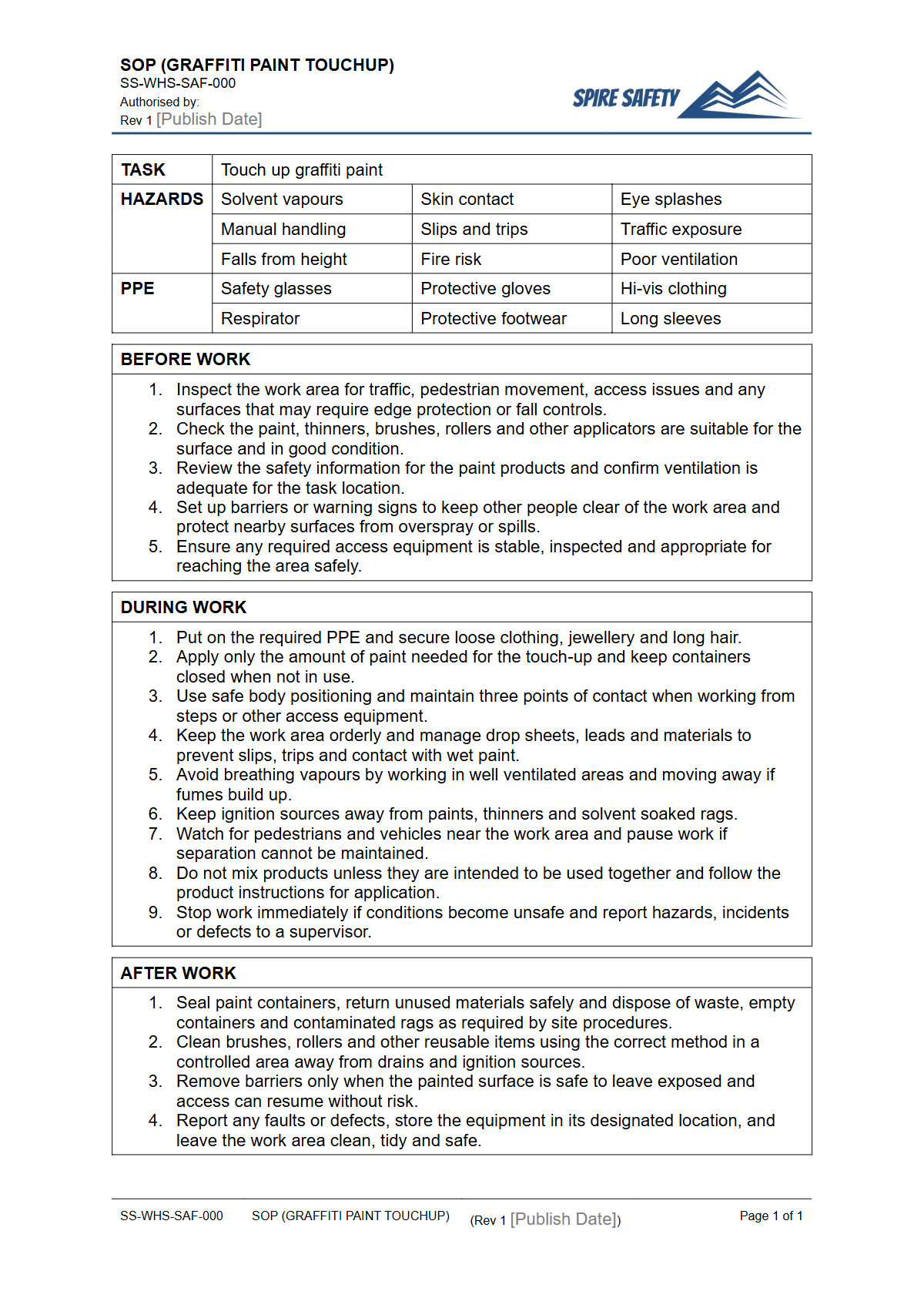
This Free Safe Operating Procedure (Graffiti Paint Touchup) Template provides a structured framework for outlining the hazards and control measures associated with removing graffiti and applying new paint. The task, while seemingly simple, involves risks such as exposure to hazardous chemicals (paints, primers, solvents), manual handling injuries from carrying equipment, and potential slips, trips, and falls.
Using a formalised SOP helps persons conducting a business or undertaking (PCBUs) fulfil their duty of care by establishing and communicating a safe system of work. It forms a critical component of broader WHS management systems by ensuring tasks are performed consistently and safely every time.
Video walkthrough
How to use the Free Safe Operating Procedure (Graffiti Paint Touchup) Template
This template is available as a fully editable DOCX file, allowing you to tailor it to your specific operational needs, and a ready-to-use PDF. It is essential to customise this document to reflect the unique environment, equipment, and chemical products used at your workplace.
This includes adding site-specific details, listing the exact Personal Protective Equipment (PPE) required based on the paint's Safety Data Sheet (SDS), and incorporating your organisation's emergency procedures.
Important: This is a template, not a finished document. To be effective, you must adapt it.
We are not responsible for the outcomes if you use this template without customising it to your specific workplace conditions, equipment, and legal obligations.
Key Elements in the SOP Template
Our template prompts you to consider several critical safety stages to create a comprehensive procedure. It includes sections for:
- Required PPE: Specifies gear like respirators, safety glasses, and chemical-resistant gloves.
- Hazard Identification: Lists common risks such as chemical inhalation, skin contact, and ergonomic strains.
- Pre-operational Checks: Outlines steps to take before work begins, such as inspecting equipment, ensuring adequate ventilation, and reviewing the SDS.
- Step-by-Step Procedure: A logical sequence for performing the paint touchup safely, from surface preparation to cleanup and waste disposal.
- Emergency Response: Details procedures for incidents like chemical spills or first aid requirements.
Regularly reviewing your SOPs is crucial for maintaining their relevance and effectiveness, a process often verified during WHS compliance auditing.
When to use a Safe Operating Procedure
An SOP for graffiti paint touchups should be used as a primary reference tool in several situations. It is fundamental for inducting new workers and providing refresher training for existing staff, ensuring everyone understands the established safe process.
It should also be consulted during the planning phase of any non-routine paint job and used as a key document when conducting a risk assessment for the task. If you require assistance integrating SOPs into your daily operations, consider engaging professional WHS consulting services.
Who should use it
This SOP should be used by all personnel involved in graffiti paint touchup tasks. This includes facilities maintenance staff, painters, and groundskeepers who perform the work, as well as their supervisors and managers who are responsible for overseeing safety.
It serves as a practical guide for workers at the 'sharp end' and a due diligence tool for management. Ensuring workers are trained and competent in using all associated equipment is vital; for tasks involving spray application, for instance, you may also need a specific Air Compressor SOP template. You can find a wide range of similar documents in our free WHS resources library to support various operational tasks.
Common mistakes
Common mistakes to avoid
- Using the template without customising it for the specific paint products and site conditions.
- Failing to consult the Safety Data Sheet (SDS) for the specific paint being used to determine PPE and first aid needs.
- Neglecting to ensure adequate ventilation, especially when working in enclosed or poorly ventilated spaces.
- Using incorrect or poorly maintained Personal Protective Equipment (PPE), such as the wrong type of respirator cartridge.
Legal references
Legal considerations
The following legal requirements may be relevant to this type of work.
- Work Health and Safety Act (Harmonised) — Provides the primary duties for protecting workers and other people from work health and safety risks.
- Work Health and Safety Regulations (Harmonised) — Sets out requirements supporting the management of workplace hazards and risks.
The following codes may be relevant to this type of work.
- Managing WHS Risks Code of Practice — Provides practical guidance on identifying hazards, assessing risks and applying effective controls.
- Work Health and Safety Consultation, Cooperation and Coordination Code of Practice — Provides practical guidance on consulting workers and coordinating with other duty holders.
- Managing the Work Environment and Facilities Code of Practice — Provides practical guidance on safe work environments, workplace facilities and related controls.
Did you know
VOCs in Paint
Many common paints contain Volatile Organic Compounds (VOCs) which can cause short-term health effects like headaches and dizziness, and long-term effects with prolonged exposure. Always ensure adequate ventilation.
Graffiti Costs
Australian councils and public transport authorities spend tens of millions of dollars each year on graffiti removal, making efficient and safe cleanup procedures a significant operational focus.
FAQ
Frequently asked questions
01What are the main hazards involved in graffiti paint touchups?
02Is a Safe Operating Procedure a legal requirement in Australia?
03Does this SOP template cover working at heights to remove graffiti?
04How often should an SOP for paint touchups be reviewed?
Share this resource
Free Safe Operating Procedure (Graffiti Paint Touchup) Template
Browse Categories
How To Use It
- 1Download and open in Word or PDF.
- 2Replace the placeholders with your business details.
- 3Get it reviewed by a WHS specialist before rollout.
Need it customised?
Our WHS consultants can adapt this template to your site, run a gap analysis, or audit what you already have in place.
Book a Free Consultation WHS consulting servicesor call 1300 156 382
Related templates
- Free Safe Operating Procedure (Graffiti Removal) Template
- Free Safe Operating Procedure (Grain Dryer) Template
- Free Safe Operating Procedure (Grain Elevator) Template
- Free Safe Operating Procedure (Grandstand Cleaning) Template
- Free Safe Operating Procedure (Gravel Path Repair) Template
- Free Safe Operating Procedure (Gravel Raking) Template