
Free Safe Operating Procedure (Hydraulic Nut Splitter) Template
Streamline your safety documents with our free Safe Operating Procedure (Hydraulic Nut Splitter) template.
Free Safe Operating Procedure (Hydraulic Nut Splitter) Template
DOCX • 126 KB + PDF
Updated Oct 2026
No signup required
Purpose of the Free Safe Operating Procedure (Hydraulic Nut Splitter) Template
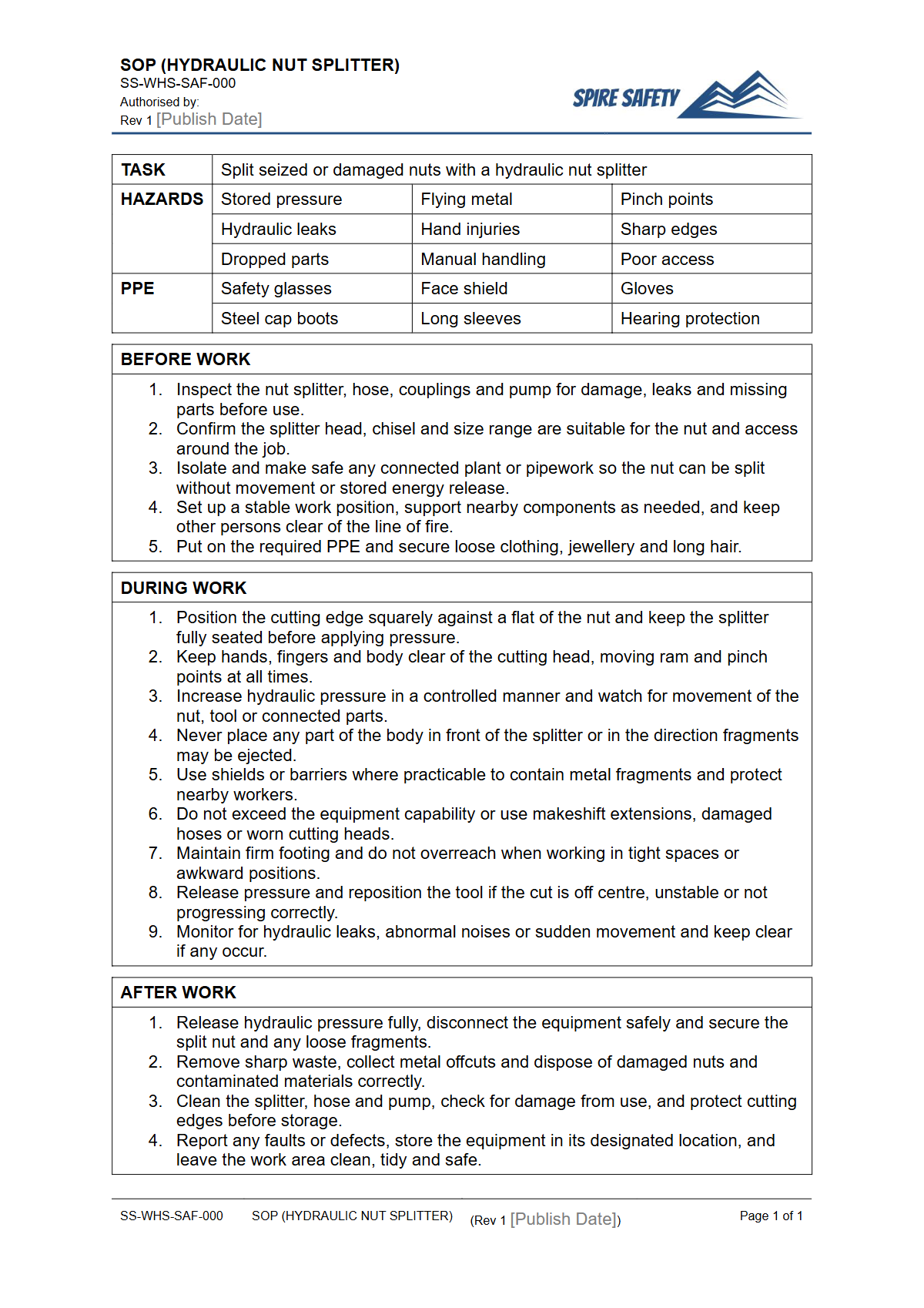
Operating high-pressure hydraulic equipment like a nut splitter introduces significant workplace risks, including high-pressure fluid injection, crush injuries, and component failure. This free Safe Operating Procedure (Hydraulic Nut Splitter) template provides a structured starting point for documenting the required controls and work steps to manage these risks effectively.
It is designed to assist a Person Conducting a Business or Undertaking (PCBU) in fulfilling their duty of care by establishing and communicating a safe system of work.
Using a standardised SOP helps ensure that every operator follows the same verified process, minimising unexpected events and promoting consistent, safe behaviour. Integrating this document into your broader safety framework is a key part of developing robust WHS management systems, demonstrating a proactive approach to risk management for plant and equipment.
Video walkthrough
How to use the Free Safe Operating Procedure (Hydraulic Nut Splitter) Template
This template is available for download in both DOCX and PDF formats. We recommend using the DOCX file to add, remove, and edit the content to align with your specific operational context.
A well-drafted SOP is not a generic document; it must reflect the reality of your workplace.
Important: This is a template, not a finished document. To make it effective, you must customise it with your specific workplace details, equipment models, risk assessment findings, and worker consultation outcomes.
We cannot guarantee its suitability for your specific circumstances without thorough customisation by a competent person.
Key Elements to Customise
Your finished SOP should be a comprehensive guide for operators. Ensure you detail the following sections based on your specific equipment and environment:
- Required Personal Protective Equipment (PPE): Specify the exact type of safety glasses, gloves, and any other required PPE.
- Pre-Operational Safety Checks: Create a checklist for inspecting the hydraulic pump, hoses, fittings, and the splitter head for leaks, damage, or wear before each use. A similar level of detail is required in our FREE Hydraulic Press SOP (Safe Operating Procedure) Template.
- Step-by-Step Operating Sequence: Clearly outline the process from setup to completion, including correct positioning of the splitter, applying hydraulic pressure, splitting the nut, and releasing pressure safely.
- Post-Operational Checks & Shutdown: Detail procedures for cleaning the equipment, checking for damage, and storing it correctly.
- Emergency Procedures: Document immediate actions to take in case of hydraulic fluid injection, equipment failure, or other emergencies.
When to use a Hydraulic Nut Splitter SOP
A Safe Operating Procedure is a dynamic document used throughout the equipment's lifecycle. It should be the primary reference guide before any worker operates a hydraulic nut splitter for the first time.
It is a critical tool for training new staff and verifying the competency of existing operators. Furthermore, the SOP should be reviewed and updated periodically as part of your internal safety review process or after any incident, near miss, or change in equipment or procedure. Regular reviews are a core component of effective WHS compliance auditing.
Who should use this Safe Operating Procedure
This SOP is intended for multiple roles within an organisation. While operators are the primary end-users who follow the step-by-step instructions, other personnel have key responsibilities related to the document:
- Managers and Supervisors: Use the SOP to train workers, supervise tasks, and enforce safe work practices. They are responsible for ensuring the procedures are understood and followed correctly.
- WHS/HSE Professionals: Use the template as a foundation for developing a site-specific document as part of the overall risk management process for plant and equipment.
- Operators: Must be trained on the contents of the final, customised SOP and follow its instructions every time they use the hydraulic nut splitter. Their feedback is also vital for keeping the document practical and relevant.
The principles of documenting pre-start checks and operational steps are common across many types of equipment. For example, our Free Air Compressor SOP (Safe Operating Procedure) Template applies a similar structured approach to a different type of powered equipment often found in the same work environments.
By implementing a clear, detailed SOP, you provide workers with the information they need to perform their tasks safely and competently. This documentation is a cornerstone of a positive safety culture. For more templates covering a wide range of tasks and equipment, browse our complete free WHS resources library.
Common mistakes
Common mistakes to avoid
- Failing to fully release system pressure before connecting or disconnecting hoses.
- Using damaged, kinked, or worn hydraulic hoses and fittings.
- Neglecting to wear mandatory PPE, especially high-impact eye protection.
- Positioning the body directly in line with the nut splitter during operation.
Legal references
Legal considerations
The following legal requirements may be relevant to this type of work.
- Work Health and Safety Act (Harmonised) — Provides the primary duties for protecting workers and other people from work health and safety risks.
- Work Health and Safety Regulations (Harmonised) — Sets out requirements supporting the management of workplace hazards and risks.
The following codes may be relevant to this type of work.
- Managing WHS Risks Code of Practice — Provides practical guidance on identifying hazards, assessing risks and applying effective controls.
- Work Health and Safety Consultation, Cooperation and Coordination Code of Practice — Provides practical guidance on consulting workers and coordinating with other duty holders.
- Managing the Work Environment and Facilities Code of Practice — Provides practical guidance on safe work environments, workplace facilities and related controls.
Did you know
Stored Energy Hazard
Hydraulic systems store enormous amounts of energy. Even a small pinhole leak in a high-pressure hose can release fluid at a velocity high enough to penetrate skin and cause severe, life-changing injuries.
FAQ
Frequently asked questions
01What are the main hazards of a hydraulic nut splitter?
02How often should a Safe Operating Procedure be reviewed?
03Is training required to use a hydraulic nut splitter?
04Can I use this SOP for any brand of hydraulic nut splitter?
Share this resource
Free Safe Operating Procedure (Hydraulic Nut Splitter) Template
Browse Categories
How To Use It
- 1Download and open in Word or PDF.
- 2Replace the placeholders with your business details.
- 3Get it reviewed by a WHS specialist before rollout.
Need it customised?
Our WHS consultants can adapt this template to your site, run a gap analysis, or audit what you already have in place.
Book a Free Consultation WHS consulting servicesor call 1300 156 382
Related templates
- Free Safe Operating Procedure (Hydraulic Power Pack) Template
- Free Safe Operating Procedure (Hydraulic Spreader) Template
- Free Safe Operating Procedure (Hydraulic Torque Tool) Template
- Free Safe Operating Procedure (Hydro Excavation) Template
- Free Safe Operating Procedure (Hydroponic Cleaning) Template
- Free Safe Operating Procedure (Hydroponic Mixing) Template