
Free Safe Operating Procedure (Hydroponic Cleaning) Template
Download our free Safe Operating Procedure (Hydroponic Cleaning) Template to manage risks in your agricultural or horticultural business. Get started now.
Free Safe Operating Procedure (Hydroponic Cleaning) Template
DOCX • 126 KB + PDF
Updated Oct 2026
No signup required
Purpose of the Free Safe Operating Procedure (Hydroponic Cleaning) Template
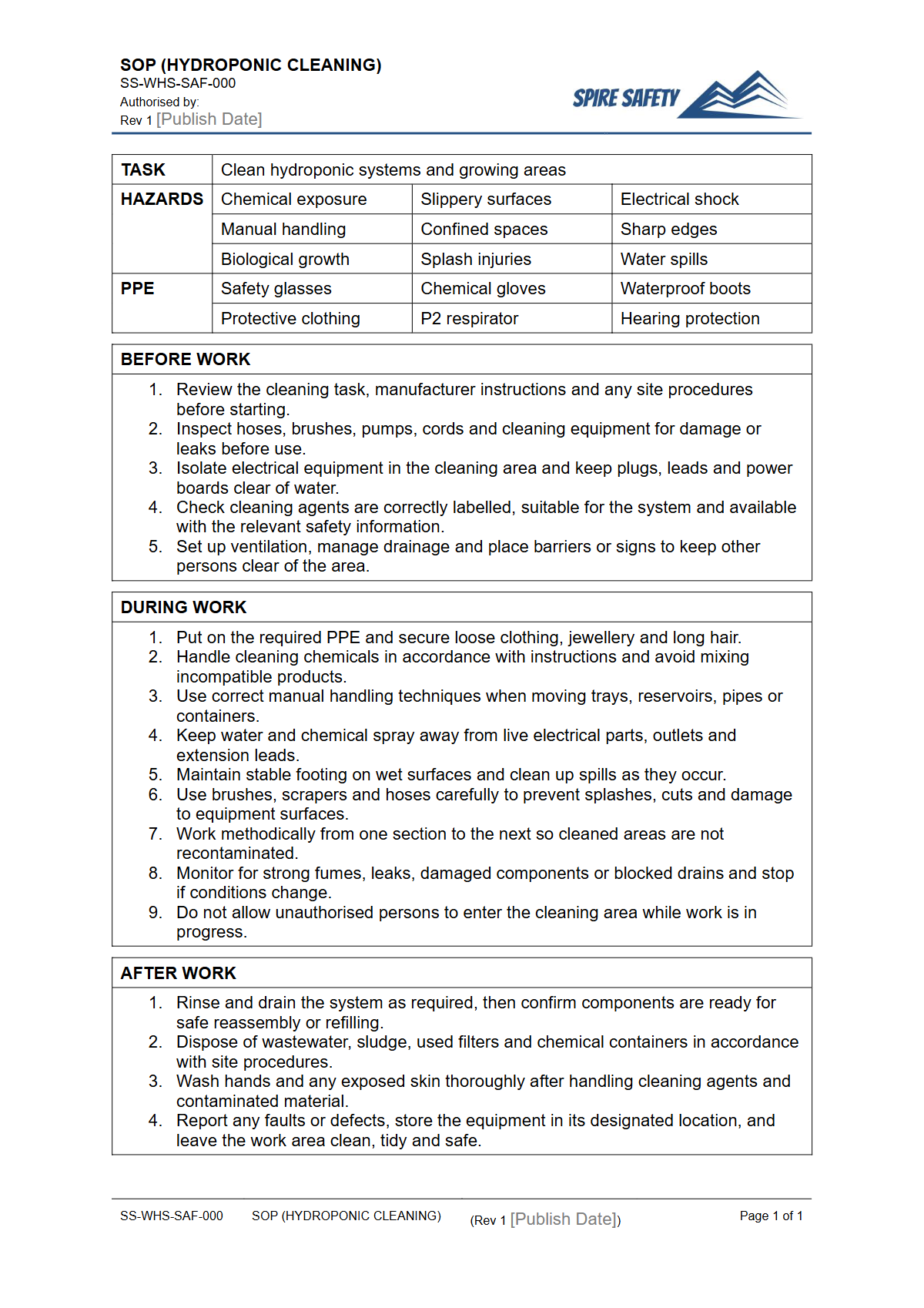
A Safe Operating Procedure (SOP) provides a documented, step-by-step guide to performing a task safely. This Free Safe Operating Procedure (Hydroponic Cleaning) Template is designed to help you formalise the process for cleaning and sanitising hydroponic systems, a critical task for preventing disease and ensuring optimal plant health.
Using a structured SOP helps control significant workplace hazards, including exposure to cleaning chemicals, electrical risks from pumps and lighting, and slips on wet surfaces. By implementing this procedure, you establish a clear, consistent, and safe method for all workers to follow, reducing the likelihood of incidents and injuries.
Integrating task-specific SOPs like this one is a fundamental part of building robust and effective WHS management systems. It demonstrates a commitment to proactive risk management and provides essential documentation for training, supervision, and incident investigation.
Common Hazards in Hydroponic Cleaning
Cleaning hydroponic equipment involves several potential hazards that must be identified and controlled. The SOP guides you in addressing risks such as:
- Chemical Exposure: Contact with acids, bases, or disinfectants used to clean reservoirs and lines can cause skin burns, eye damage, or respiratory issues.
- Electrical Hazards: Water and electricity are a dangerous combination. Pumps, heaters, lights, and other electrical components must be safely isolated before cleaning begins.
- Slips, Trips, and Falls: Spilled water or cleaning solutions create slippery surfaces, increasing the risk of falls, especially in cramped or cluttered areas.
- Biological Hazards: Stagnant water can harbour bacteria, fungi (like pythium), and moulds, which can pose health risks if inhaled or if they enter the body through cuts.
- Ergonomic Strains: Lifting heavy reservoirs, bending, and working in awkward postures for extended periods can lead to musculoskeletal injuries.
Properly managing nutrient and cleaning solutions is key to a safe operation. For guidance on handling similar substances, our FREE Spreader SOP (Safe Operating Procedure) Template provides a useful reference for agricultural equipment.
Video walkthrough
How to use the Free Safe Operating Procedure (Hydroponic Cleaning) Template
This resource is provided in both DOCX and PDF formats. The DOCX file is fully editable, allowing you to tailor the content to the specific equipment, chemicals, and layout of your facility.
The PDF version is a ready-to-print document for immediate use once you have completed your customisation. To effectively use this template, you should review each section and modify it to reflect your operational reality.
This includes listing the exact cleaning agents used, specifying the personal protective equipment (PPE) required, and detailing the step-by-step process for your unique system.
Important: This document is a template, not a finished safety document. We have provided a structured starting point based on Australian WHS principles, but you must customise it to suit the specific hazards and control measures relevant to your workplace.
Consultation with workers who perform the cleaning task is essential to ensure the procedure is practical and effective.
If you require assistance with risk assessments or customising procedures, our team offers expert WHS consulting support to help you meet your obligations. For more ready-to-use documents, you can browse our complete free WHS resources library.
Key Components of the Safe Operating Procedure
Our template prompts you to detail all critical stages of the task. A well-written SOP should include:
- Required PPE: Specifies the exact gloves, eye protection, footwear, and other gear needed.
- Pre-Operational Checks: A checklist of actions to take before starting, such as isolating power sources and gathering all necessary tools and chemicals.
- Step-by-Step Instructions: A clear, sequential guide for draining, scrubbing, disinfecting, and rinsing the system components.
- Post-Cleaning Checks: Actions to ensure the system is safe to restart and the work area is clean and free of hazards.
- Emergency Procedures: Instructions on what to do in case of a chemical spill, electrical shock, or other incident.
Regularly reviewing your implemented procedures is a key part of maintaining safety standards. Professional WHS compliance auditing services can provide an independent assessment of your safety systems, including the effectiveness of your SOPs.
When to use it
This Safe Operating Procedure should be used every time a hydroponic system is scheduled for a full clean and sterilisation. It is also a critical training tool for new employees or for workers assigned to the task for the first time.
The SOP should be reviewed periodically (e.g., annually) or whenever there is a change in equipment, cleaning chemicals, or work processes. It also serves as a key reference document during safety audits or following a near-miss or incident related to the cleaning task.
Who should use it
This SOP is intended for anyone involved in the hydroponic cleaning process. This includes:
- Horticultural workers and farmhands who perform the cleaning.
- Supervisors and team leaders responsible for overseeing the work.
- Farm managers and business owners (PCBUs) who hold ultimate responsibility for workplace safety.
- WHS representatives and officers involved in developing and reviewing safety documentation.
The procedure ensures that every person, regardless of their experience level, has access to a standardised, safe method for completing the job. Many controlled environment agriculture setups use a variety of equipment; for related machinery, you might also find our Free Air Compressor SOP useful for maintenance tasks.
Common mistakes
Common mistakes to avoid
- Forgetting to disconnect or isolate electrical pumps and lighting before introducing water.
- Using incorrect concentrations of cleaning chemicals, leading to plant damage or ineffective sterilisation.
- Failing to thoroughly rinse the system, leaving chemical residues that can harm the next crop.
- Not wearing appropriate PPE, especially safety glasses and chemical-resistant gloves.
Legal references
Legal considerations
The following legal requirements may be relevant to this type of work.
- Work Health and Safety Act (Harmonised) — Provides the primary duties for protecting workers and other people from work health and safety risks.
- Work Health and Safety Regulations (Harmonised) — Sets out requirements supporting the management of workplace hazards and risks.
The following codes may be relevant to this type of work.
- Managing WHS Risks Code of Practice — Provides practical guidance on identifying hazards, assessing risks and applying effective controls.
- Work Health and Safety Consultation, Cooperation and Coordination Code of Practice — Provides practical guidance on consulting workers and coordinating with other duty holders.
- Managing the Work Environment and Facilities Code of Practice — Provides practical guidance on safe work environments, workplace facilities and related controls.
Did you know
Pathogen Prevention
Thorough cleaning and disinfection between crop cycles is the most effective way to prevent the spread of waterborne plant pathogens like Pythium (root rot), which can devastate an entire hydroponic crop in days.
Salt Buildup
Besides removing biofilm and pathogens, regular cleaning also prevents the buildup of mineral salt deposits from nutrient solutions, which can clog pumps, emitters, and irrigation lines, leading to inconsistent nutrient delivery.
FAQ
Frequently asked questions
01What PPE is required for cleaning hydroponic systems?
02How often should hydroponic systems be cleaned?
03Can I use this hydroponic cleaning SOP for an aquaponics system?
04Why is a Safe Operating Procedure important for a simple task like cleaning?
Share this resource
Free Safe Operating Procedure (Hydroponic Cleaning) Template
Browse Categories
How To Use It
- 1Download and open in Word or PDF.
- 2Replace the placeholders with your business details.
- 3Get it reviewed by a WHS specialist before rollout.
Need it customised?
Our WHS consultants can adapt this template to your site, run a gap analysis, or audit what you already have in place.
Book a Free Consultation WHS consulting servicesor call 1300 156 382
Related templates
- Free Safe Operating Procedure (Hydroponic Mixing) Template
- Free Safe Operating Procedure (Hygrometer) Template
- Free Safe Operating Procedure (IBC Cleaning) Template
- Free Safe Operating Procedure (IBC Decanting) Template
- Free Safe Operating Procedure (Ice Bin Cleaning) Template
- Free Safe Operating Procedure (Ice Crusher) Template