
Free Safe Operating Procedure (Kennel Waste Cleanup) Template
Formalise your cleaning processes with our free Safe Operating Procedure for kennel waste cleanup.
Free Safe Operating Procedure (Kennel Waste Cleanup) Template
DOCX • 126 KB + PDF
Updated Oct 2026
No signup required
Purpose of the Free Safe Operating Procedure (Kennel Waste Cleanup) Template
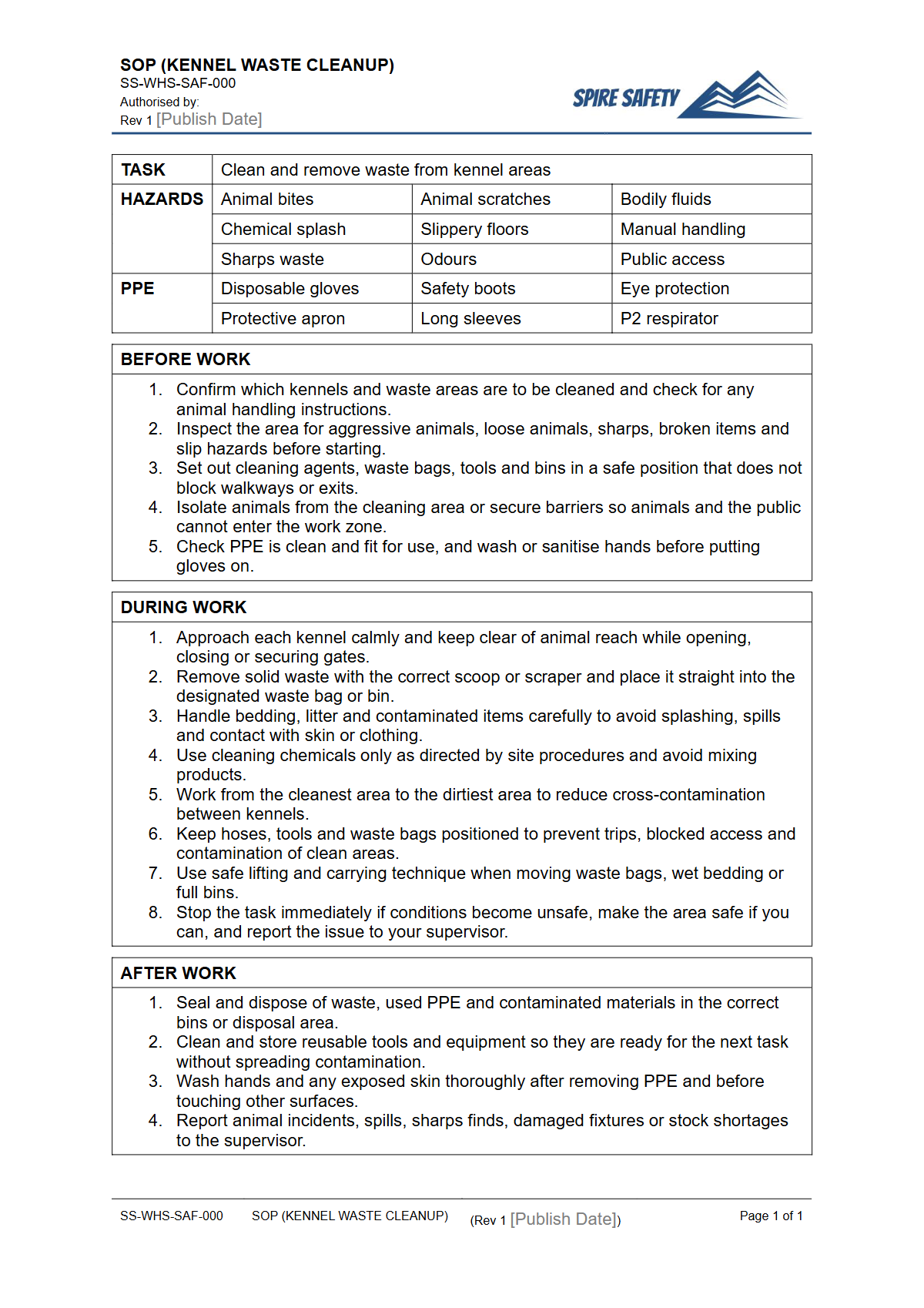
Managing an animal care facility requires a strong focus on hygiene and safety, for both staff and the animals. Our Free Safe Operating Procedure (Kennel Waste Cleanup) Template provides a structured framework for documenting the steps required to safely and effectively clean kennels and manage animal waste.
This downloadable resource helps you formalise procedures, control hazards, and ensure everyone on your team understands their responsibilities. It's an essential tool for maintaining a safe working environment in vet clinics, boarding kennels, animal shelters, and similar facilities.
The primary purpose of this Safe Operating Procedure (SOP) is to provide a clear, step-by-step guide for cleaning up kennel waste. This task, while routine, involves significant health and safety risks if not managed correctly.
This template helps a Person Conducting a Business or Undertaking (PCBU) meet their duty of care by establishing and communicating a safe system of work. It addresses key hazards such as biological risks from faeces and urine (zoonotic diseases), chemical exposure from cleaning agents, and ergonomic injuries from manual handling.
By implementing a formal SOP, you can standardise your cleaning processes, improve training consistency, and reduce the likelihood of incidents and injuries.
Video walkthrough
How to use the Free Safe Operating Procedure (Kennel Waste Cleanup) Template
This resource is provided as a fully editable DOCX file and a print-ready PDF. To use it, simply download the file and open it in your preferred word processor.
The template is structured with sections for outlining PPE requirements, pre-operational checks, the step-by-step cleaning procedure, and waste disposal protocols.
It is crucial to remember that this is a template, not a finished document. We have designed it to be a starting point, and you must customise it to reflect the specific hazards, equipment, chemicals, and procedures unique to your workplace.
Review and adapt every section to align with your site-specific risk assessments. If you require assistance in tailoring this document or implementing broader safety frameworks, consider seeking specialist WHS consulting.
Key Hazards in Kennel Waste Cleanup
A thorough understanding of the hazards involved is the first step toward controlling them. A robust SOP for kennel waste cleanup should be built upon a risk assessment that considers several key areas.
- Biological Hazards: Animal waste can contain bacteria, viruses, parasites, and fungi that can cause zoonotic diseases (illnesses transmitted from animals to humans). These include Giardia, Salmonella, Campylobacter, and Ringworm.
- Chemical Hazards: Cleaning and disinfecting agents can cause skin irritation, respiratory issues, or chemical burns if handled improperly. The risk is heightened if chemicals are mixed incorrectly, potentially creating toxic gases.
- Ergonomic Hazards: The task often involves repetitive bending, lifting heavy bags of waste or soiled bedding, and awkward postures, which can lead to musculoskeletal injuries over time.
Documenting these hazards and their controls within your SOP is fundamental to creating a safe work environment. This procedure should form a key part of your overall WHS management systems.
When to Use This Safe Operating Procedure
An SOP is a living document used in daily operations, not just a file that sits on a shelf. It should be used in several key situations:
- As a guide for work: Staff should refer to the SOP before and during the kennel cleanup task to ensure they are following the correct, safe procedure every time.
- For worker training and induction: The SOP is an excellent training tool for new employees, ensuring they learn the safe and correct way to perform the task from day one.
- For refresher training: Regular reviews of the SOP help keep safety top-of-mind for all staff and reinforce correct practices.
- After an incident: If an incident or near-miss occurs during cleanup, the SOP should be reviewed as part of the investigation to identify if the procedure was adequate or if it was followed correctly. Periodic reviews as part of WHS compliance audits can also identify gaps before an incident occurs.
Who Should Use This SOP?
This SOP is designed for any worker whose duties involve cleaning animal enclosures and handling waste. This includes:
- Kennel Hands and Animal Attendants
- Veterinary Nurses and Technicians
- Animal Shelter Volunteers and Staff
- Boarding Facility Operators
- Doggy Daycare Employees
Additionally, supervisors and managers should use this SOP to oversee work, conduct training, and ensure that safety standards are being met consistently. It provides a clear benchmark for performance and safe behaviour.
Explore our entire free WHS resources library for more templates to support your business.
Common mistakes
Common mistakes to avoid
- Using incorrect or insufficient Personal Protective Equipment (PPE).
- Failing to follow manufacturer's instructions for diluting and using cleaning chemicals.
- Improper disposal of contaminated waste, leading to cross-contamination or environmental risks.
- Neglecting to wash hands thoroughly with soap and water after the task is completed.
Legal references
Legal considerations
The following legal requirements may be relevant to this type of work.
- Work Health and Safety Act (Harmonised) — Provides the primary duties for protecting workers and other people from work health and safety risks.
- Work Health and Safety Regulations (Harmonised) — Sets out requirements supporting the management of workplace hazards and risks.
The following codes may be relevant to this type of work.
- Managing WHS Risks Code of Practice — Provides practical guidance on identifying hazards, assessing risks and applying effective controls.
- Work Health and Safety Consultation, Cooperation and Coordination Code of Practice — Provides practical guidance on consulting workers and coordinating with other duty holders.
- Managing the Work Environment and Facilities Code of Practice — Provides practical guidance on safe work environments, workplace facilities and related controls.
Did you know
Zoonotic Disease Risk
Zoonotic diseases are infections that can be transmitted from animals to humans. Proper waste handling, personal hygiene, and effective disinfection are your most critical lines of defence.
Chemical Cocktails
Never mix different cleaning chemicals unless the manufacturer's instructions explicitly permit it. Mixing bleach and ammonia-based cleaners, for example, creates toxic chloramine gas, which is extremely dangerous to inhale.
FAQ
Frequently asked questions
01What should be included in a kennel waste cleanup SOP?
02Is a Safe Operating Procedure legally required for cleaning kennels in Australia?
03How often should we review our kennel waste cleanup procedure?
04What PPE is needed for cleaning up kennel waste?
Share this resource
Free Safe Operating Procedure (Kennel Waste Cleanup) Template
Browse Categories
How To Use It
- 1Download and open in Word or PDF.
- 2Replace the placeholders with your business details.
- 3Get it reviewed by a WHS specialist before rollout.
Need it customised?
Our WHS consultants can adapt this template to your site, run a gap analysis, or audit what you already have in place.
Book a Free Consultation WHS consulting servicesor call 1300 156 382
Related templates
- Free Safe Operating Procedure (Kerb Saw) Template
- Free Safe Operating Procedure (Kerbside Cleanup) Template
- Free Safe Operating Procedure (Key Safe Access) Template
- Free Safe Operating Procedure (Kitchen Bench Cleaning) Template
- Free Safe Operating Procedure (Kitchen Exhaust Clean) Template
- Free Safe Operating Procedure (Kitchen Floor Cleaning) Template