
Free Safe Operating Procedure (Kitchen Exhaust Clean) Template
Download our free Safe Operating Procedure (Kitchen Exhaust Clean) template to manage risks in your hospitality or cleaning business. Get your DOCX and PDF.
Free Safe Operating Procedure (Kitchen Exhaust Clean) Template
DOCX • 126 KB + PDF
Updated Oct 2026
No signup required
Purpose of the Free Safe Operating Procedure (Kitchen Exhaust Clean) Template
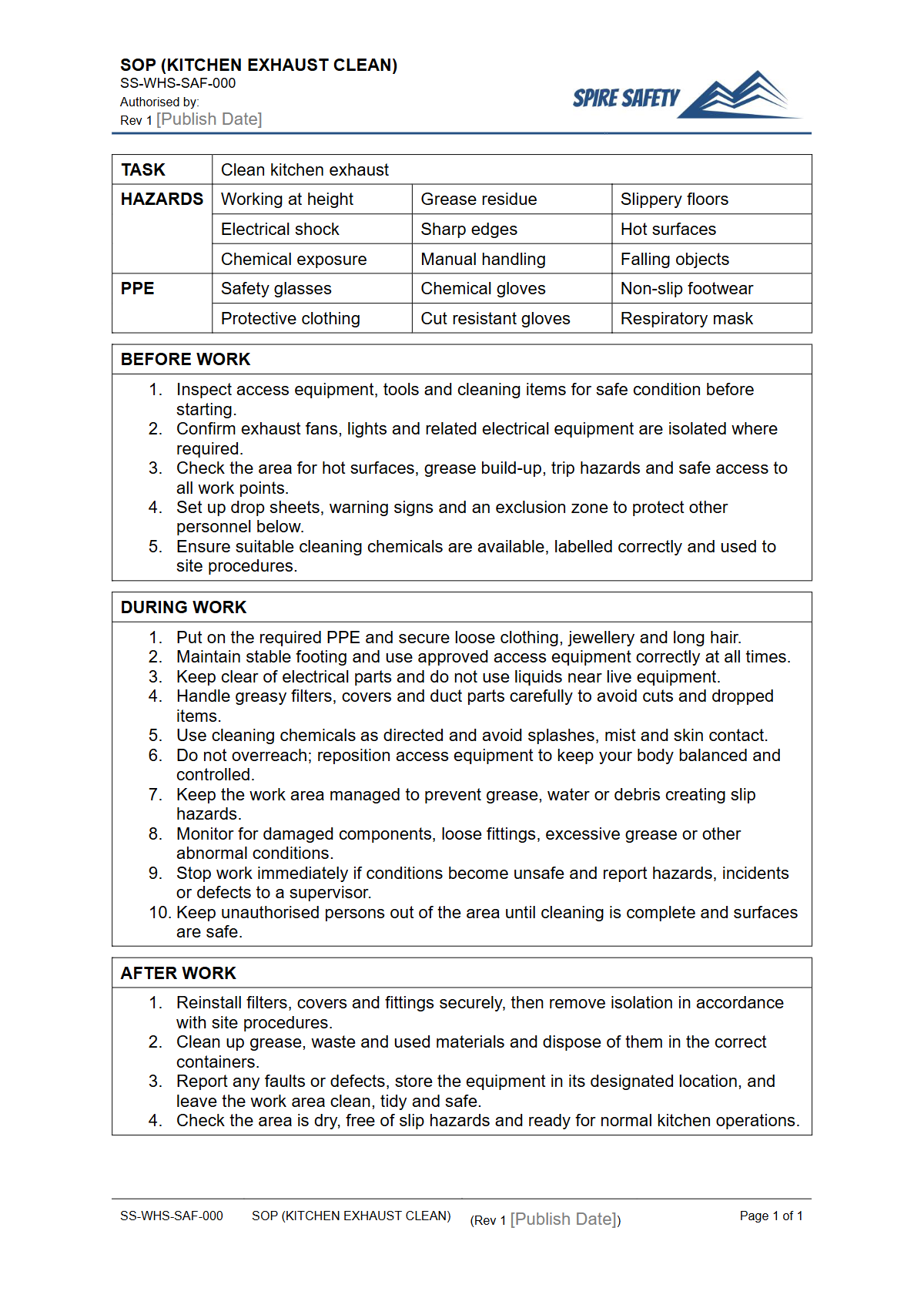
This free Safe Operating Procedure (Kitchen Exhaust Clean) template provides a structured framework for documenting the steps required to safely clean commercial kitchen exhaust systems. Grease and oil residue accumulates rapidly in canopies, filters, and ductwork, creating a significant fire hazard.
An effective cleaning process is critical not just for hygiene, but for fire prevention.
The purpose of this Safe Operating Procedure is to provide a clear, step-by-step guide for workers, helping to control the key risks associated with the task. These hazards include fire, exposure to hazardous cleaning chemicals, slips and falls on wet or greasy surfaces, manual handling injuries, and electrical shocks.
Implementing a documented SOP is a fundamental part of a robust WHS management system, demonstrating a commitment to proactive risk management.
Video walkthrough
How to use the Free Safe Operating Procedure (Kitchen Exhaust Clean) Template
This document is provided in both DOCX and PDF formats for your convenience. The DOCX version is fully editable, allowing you to tailor it to your specific operational needs.
A generic template cannot account for every variable in a workplace, so customisation is essential for it to be effective.
To use the template:
- Review each section and adapt the content to match your site's specific equipment, such as the brand of exhaust fan, type of ducting, and access points.
- List the exact names of the cleaning chemicals used and ensure Safety Data Sheets (SDS) are available to workers.
- Incorporate site-specific details, such as emergency contact numbers, the location of electrical isolation points, and first aid facilities.
- Consult with your workers during the customisation process. Their hands-on experience is invaluable for creating a practical and effective procedure.
Note: We have provided this template as a starting point. You must customise it to reflect the specific equipment, chemicals, processes, and hazards present in your workplace.
A regular WHS compliance audit can help verify that your documented procedures are being followed correctly in practice.
When to use this Safe Operating Procedure
The SOP should be used as a primary reference tool for all kitchen exhaust cleaning activities. It is not a document to be filed away and forgotten. It should be actively used in the following situations:
- Before every cleaning task: Workers should review the SOP as a pre-start checklist to ensure all safety controls are in place.
- Worker training and induction: The SOP is an essential training tool for new employees or contractors tasked with cleaning the exhaust system.
- As part of a scheduled maintenance program: The frequency of cleaning depends on cooking volume and style. The SOP provides a consistent method for these recurring tasks.
- Refresher training: It should be used for periodic refresher training to prevent complacency and ensure standards are maintained.
- Following an incident: If an incident or near miss occurs during cleaning, the SOP should be reviewed and updated as part of the investigation's corrective actions.
Who should use this Safe Operating Procedure
This SOP is designed for use by any person or business involved in the cleaning and maintenance of commercial kitchen exhaust systems. This includes:
- Persons Conducting a Business or Undertaking (PCBUs): Business owners and operators in the hospitality industry have a primary duty of care to ensure a safe work environment. A documented SOP is a key way to fulfil this duty.
- Managers and Supervisors: They are responsible for implementing the SOP, ensuring workers are trained, and verifying the procedure is followed correctly.
- Workers and Cleaning Staff: The primary users of the SOP are the individuals performing the cleaning task. It guides them to work safely and consistently.
- Cleaning Contractors: Specialised cleaning companies can use this template as a base to develop site-specific SOPs for their clients.
Using documented procedures for high-risk tasks like this is critical. It forms part of a suite of essential kitchen safety documents, just as a Safe Operating Procedure for a deep fryer addresses risks at the source.
For tailored advice on developing comprehensive safety documentation, you can engage professional WHS consulting services.
Key Hazards in Kitchen Exhaust Cleaning
This Safe Operating Procedure helps control several significant risks. Key hazards to manage include:
- Chemicals: Degreasers and cleaning agents can be caustic or corrosive, causing skin burns, eye damage, or respiratory issues if not handled correctly.
- Electrical: Exhaust systems contain electrical components like fans and lighting. Failure to isolate the power supply before introducing water and cleaning agents can lead to electrocution.
- Working at Heights: Accessing ductwork and canopies often requires using ladders or elevated work platforms, introducing the risk of falls.
- Slips, Trips, and Falls: Spilled water, grease, and cleaning chemicals can make floor surfaces extremely slippery.
- Fire and Explosion: Using flammable cleaning solvents near ignition sources or creating sparks from tools can ignite residual grease.
You can find more templates and checklists to manage workplace risks in our free WHS resources library.
Common mistakes
Common mistakes to avoid
- Using the template without customising it for site-specific chemicals, equipment, and hazards.
- Failing to properly de-energise and lock-out electrical components like exhaust fans before cleaning.
- Neglecting to train workers on the specific procedures and chemical handling requirements from the Safety Data Sheet (SDS).
- Leaving floors wet or greasy after the job, creating a serious slip hazard for kitchen staff.
Legal references
Legal considerations
The following legal requirements may be relevant to this type of work.
- Work Health and Safety Act (Harmonised) — Provides the primary duties for protecting workers and other people from work health and safety risks.
- Work Health and Safety Regulations (Harmonised) — Sets out requirements supporting the management of workplace hazards and risks.
The following codes may be relevant to this type of work.
- Managing WHS Risks Code of Practice — Provides practical guidance on identifying hazards, assessing risks and applying effective controls.
- Work Health and Safety Consultation, Cooperation and Coordination Code of Practice — Provides practical guidance on consulting workers and coordinating with other duty holders.
- Managing the Work Environment and Facilities Code of Practice — Provides practical guidance on safe work environments, workplace facilities and related controls.
Did you know
A Leading Fire Hazard
According to fire authorities, a significant percentage of commercial kitchen fires originate on cooking appliances before spreading into the exhaust system due to heavy grease and oil accumulation.
Australian Standard
Australian Standard AS 1851 specifies requirements for the routine servicing of fire protection systems, which includes kitchen exhaust hoods and ductwork, to ensure they remain effective.
FAQ
Frequently asked questions
01How often should a commercial kitchen exhaust system be cleaned?
02What PPE is required for cleaning a kitchen exhaust?
03Is a Safe Operating Procedure a legal requirement in Australia?
04Can I use this template for my cleaning business?
Share this resource
Free Safe Operating Procedure (Kitchen Exhaust Clean) Template
Browse Categories
How To Use It
- 1Download and open in Word or PDF.
- 2Replace the placeholders with your business details.
- 3Get it reviewed by a WHS specialist before rollout.
Need it customised?
Our WHS consultants can adapt this template to your site, run a gap analysis, or audit what you already have in place.
Book a Free Consultation WHS consulting servicesor call 1300 156 382
Related templates
- Free Safe Operating Procedure (Kitchen Floor Cleaning) Template
- Free Safe Operating Procedure (Kitchen Trolley Use) Template
- Free Safe Operating Procedure (Knife Handling) Template
- Free Safe Operating Procedure (Knife Sharpening) Template
- Free Safe Operating Procedure (Knitting Machine) Template
- Free Safe Operating Procedure (Label Applicator) Template