
Free Safe Operating Procedure (Locker Room Cleaning) Template
Download our free Safe Operating Procedure (Locker Room Cleaning) template. This customisable DOCX & PDF helps formalise your cleaning processes.
Free Safe Operating Procedure (Locker Room Cleaning) Template
DOCX • 126 KB + PDF
Updated Oct 2026
No signup required
Purpose of the Free Safe Operating Procedure (Locker Room Cleaning) Template
Maintaining a clean and hygienic locker room is essential for worker wellbeing and preventing the spread of illness. However, the cleaning process itself introduces workplace hazards that must be controlled.
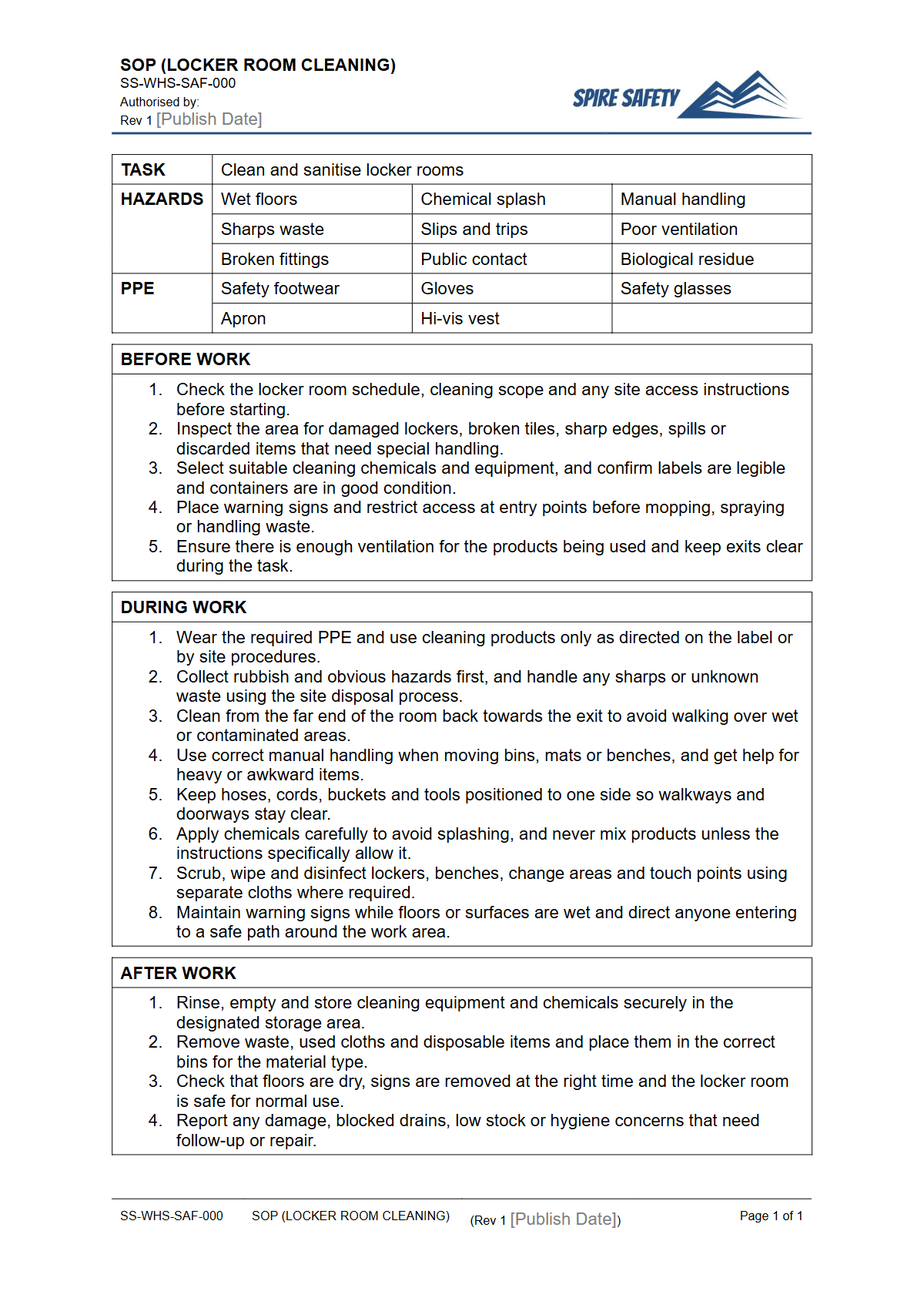
This Free Safe Operating Procedure (Locker Room Cleaning) Template provides a structured framework for documenting the specific steps, risks, and controls associated with this routine but critical task.
Using a formal SOP helps ensure consistency in cleaning standards and safety practices. It addresses common hazards such as slips and trips from wet floors, manual handling injuries from moving equipment, and exposure to cleaning chemicals.
By clearly defining the required Personal Protective Equipment (PPE), chemical handling protocols, and emergency procedures, you create a safer system of work for your cleaning staff and a healthier environment for all facility users.
Implementing documented procedures is a key part of demonstrating due diligence under Australian WHS laws. It also serves as a vital training tool for new employees and a reference for experienced staff, promoting a proactive safety culture.
In addition to task-specific safety, it's important to consider the overall preparedness of your facility, which includes having a documented safe operating procedure for defibrillator operation readily available.
Video walkthrough
How to use the Free Safe Operating Procedure (Locker Room Cleaning) Template
This template is provided as a starting point in both DOCX and PDF formats. To make it an effective tool for your organisation, you must customise it to reflect the specific environment, equipment, and chemicals used in your workplace.
Download the DOCX file and adapt the sections to your needs.
Follow these steps to implement the SOP effectively:
- Conduct a Risk Assessment: Before finalising the SOP, perform a thorough risk assessment for the locker room cleaning task. Identify all potential hazards and determine appropriate control measures.
- Consult with Workers: Involve your cleaning staff in the development and review process. Their firsthand experience is invaluable for creating a practical and effective procedure they will understand and follow.
- Specify Details: Replace all placeholder text with your site-specific information. This includes listing the exact cleaning chemicals used (and referencing their Safety Data Sheets), the types of PPE required, machinery details, and your emergency contact information. If cleaning involves working at height, such as on top of lockers, ensure your procedures are robust and consider using our free Step Ladder SOP to guide safe practices.
- Train Your Team: Once finalised, formally train all relevant employees on the SOP. Ensure they understand every step, particularly the safety controls and emergency responses. Keep records of this training.
- Review and Update: The SOP should be a living document. Review it regularly (e.g., annually), after any incident, or when a process, chemical, or piece of equipment changes. Regular reviews are a core component of effective WHS management systems.
Please note: This is a template only. We are not responsible for its implementation or for any safety outcomes at your workplace.
You must adapt it to your specific operational context and ensure it aligns with your overall safety management system.
When to use it
This Safe Operating Procedure should be the primary reference document for all locker room cleaning activities. It is intended for use during routine daily or weekly cleaning schedules, periodic deep cleaning, and in response to specific incidents like spills.
The SOP should be integrated into your employee induction and ongoing training programs to ensure all new and existing staff are competent in the task.
It is also a critical document to have available during safety audits and inspections. A well-maintained SOP demonstrates a systematic approach to managing health and safety risks.
If you need assistance verifying the effectiveness of your implemented procedures, consider engaging experts for a WHS compliance auditing service.
Who should use it
This SOP is designed for use by all personnel involved in the cleaning and maintenance of locker rooms. This includes dedicated cleaning staff, facility maintenance teams, and supervisors responsible for overseeing these tasks.
WHS managers and officers should also use this document as part of their risk management and compliance framework.
Business owners and managers in industries with employee locker rooms (such as manufacturing, construction, healthcare, and fitness centres) will find this template essential for establishing and communicating safe work standards. For organisations needing assistance to integrate such documents into their broader safety strategy, our professional WHS consulting services can provide expert guidance.
You can explore our entire catalogue of document templates in our free WHS resources library for more tools to support your safety system.
Common mistakes
Common mistakes to avoid
- Using the template without customising it with site-specific hazards, chemicals, and equipment.
- Failing to consult with cleaning staff during the drafting and review process.
- Not providing the specific Personal Protective Equipment (PPE) listed in the SOP.
- Treating the SOP as a one-time document instead of reviewing and updating it regularly.
Legal references
Legal considerations
The following legal requirements may be relevant to this type of work.
- Work Health and Safety Act (Harmonised) — Provides the primary duties for protecting workers and other people from work health and safety risks.
- Work Health and Safety Regulations (Harmonised) — Sets out requirements supporting the management of workplace hazards and risks.
The following codes may be relevant to this type of work.
- Managing WHS Risks Code of Practice — Provides practical guidance on identifying hazards, assessing risks and applying effective controls.
- Work Health and Safety Consultation, Cooperation and Coordination Code of Practice — Provides practical guidance on consulting workers and coordinating with other duty holders.
- Managing the Work Environment and Facilities Code of Practice — Provides practical guidance on safe work environments, workplace facilities and related controls.
Did you know
Slips, Trips, and Falls
Slips, trips, and falls are a leading cause of serious workplace injuries in Australia, with contaminated and wet floors being a major contributing factor.
Chemical Safety
Using a stronger concentration of a cleaning chemical than recommended by the manufacturer does not usually improve performance and can significantly increase health risks and damage surfaces.
FAQ
Frequently asked questions
01What are the main hazards when cleaning a locker room?
02How often should a Safe Operating Procedure for cleaning be reviewed?
03Do I need to train my staff on this locker room cleaning SOP?
04Can this SOP template be used for cleaning other areas like kitchens or bathrooms?
Share this resource
Free Safe Operating Procedure (Locker Room Cleaning) Template
Browse Categories
How To Use It
- 1Download and open in Word or PDF.
- 2Replace the placeholders with your business details.
- 3Get it reviewed by a WHS specialist before rollout.
Need it customised?
Our WHS consultants can adapt this template to your site, run a gap analysis, or audit what you already have in place.
Book a Free Consultation WHS consulting servicesor call 1300 156 382
Related templates
- Free Safe Operating Procedure (Lockformer Machine) Template
- Free Safe Operating Procedure (Lockout Tagout) Template
- Free Safe Operating Procedure (Log Grapple) Template
- Free Safe Operating Procedure (Log Loader) Template
- Free Safe Operating Procedure (Log Loading) Template
- Free Safe Operating Procedure (Log Splitter) Template