
Free Safe Operating Procedure (Meal Cart Cleaning) Template
Establish clear, safe work instructions for cleaning meal carts in healthcare, hospitality, or aged care settings. Download our free template to get started.
Free Safe Operating Procedure (Meal Cart Cleaning) Template
DOCX • 126 KB + PDF
Updated Oct 2026
No signup required
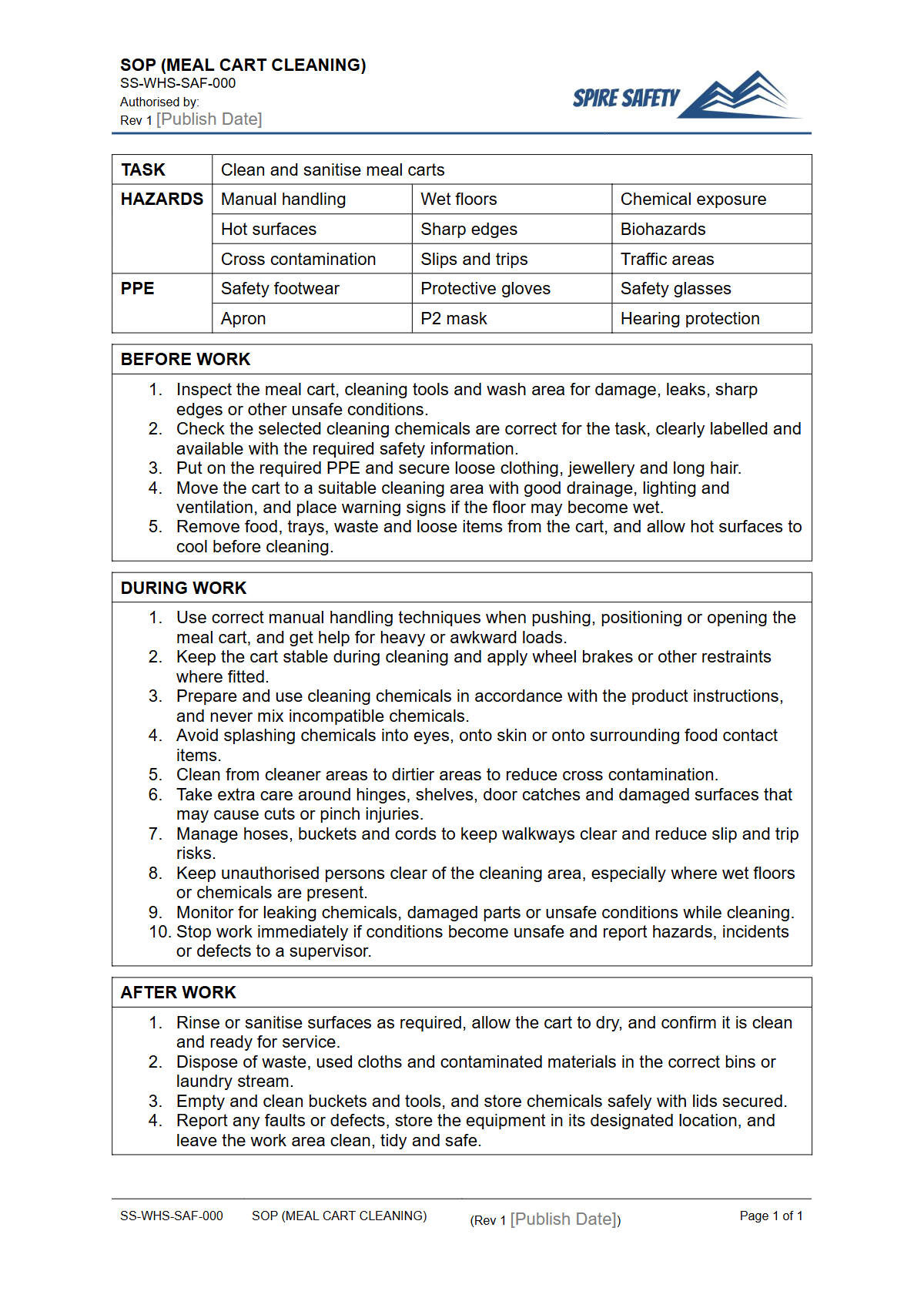
Purpose of the Free Safe Operating Procedure (Meal Cart Cleaning) Template
This Free Safe Operating Procedure (Meal Cart Cleaning) Template provides a structured framework for outlining the required steps to clean and sanitise meal delivery carts safely and effectively. In settings like hospitals, aged care facilities, and large-scale hospitality, improper cleaning can lead to significant health risks, including foodborne illnesses and cross-contamination.
This SOP helps organisations manage these risks by standardising the cleaning process.
A documented procedure ensures that workers are protected from hazards associated with the task, such as exposure to cleaning chemicals, manual handling injuries from moving heavy carts, and slips on wet floors. Implementing a clear SOP is a fundamental part of a proactive approach to workplace health and safety. It also forms a critical part of your overall quality and hygiene control measures, which is a key component of a robust WHS management system.
Hazards in Meal Cart Cleaning
Cleaning meal carts may seem like a simple task, but it involves several potential hazards that must be controlled. These include:
- Biological Hazards: Exposure to bacteria, viruses, and other pathogens from leftover food and used utensils.
- Chemical Hazards: Skin contact, eye irritation, or respiratory issues from detergents, sanitisers, and disinfectants.
- Musculoskeletal Injuries: Strains and sprains from pushing, pulling, and manoeuvring heavy or poorly maintained carts.
- Slip, Trip, and Fall Hazards: Wet floors during the cleaning process can increase the risk of falls.
Video walkthrough
How to use the Free Safe Operating Procedure (Meal Cart Cleaning) Template
To effectively use the Free Safe Operating Procedure (Meal Cart Cleaning) Template, you must adapt it to the specific context of your workplace. The template is provided in both DOCX and PDF formats, allowing for easy customisation to align with your operational requirements, the specific types of carts you use, and the cleaning agents approved for your site.
Please note: This document is a template and must be customised to suit your specific equipment, chemicals, and workplace environment. We recommend a competent person conducts a risk assessment and reviews the final document before implementation.
If you need assistance with customising SOPs or conducting risk assessments, our WHS consulting services can provide expert guidance.
Steps for Implementation:
- Download the DOCX version of the template.
- Enter all site-specific information, including company details, the specific cart models, and the names of the approved cleaning and sanitising chemicals.
- Consult with workers who perform the task to ensure the procedure reflects practical, on-the-ground reality and that they have an opportunity to contribute.
- Review the PPE requirements to ensure they match the recommendations in the Safety Data Sheets (SDS) for your chosen chemicals.
- Once finalised, have the SOP approved by a manager or supervisor.
- Induct and train all relevant workers on the final procedure, ensuring they understand every step and its importance.
When to use it
This Safe Operating Procedure should be the go-to document for all routine and non-routine cleaning of meal carts. It should be used:
- As the primary guide for the daily or per-use cleaning schedule.
- As a training document for new employees or for refresher training.
- As a reference point following a hygiene incident or near miss to review and reinforce correct procedure.
- During workplace inspections and safety observations to verify that tasks are being performed as required.
The consistent application of this SOP is crucial for maintaining high standards of food safety and worker health. Regular WHS compliance auditing can help verify that procedures like this are being followed correctly and remain effective over time.
Who should use it
This SOP is intended for several key groups within an organisation. Primary users are the workers directly responsible for cleaning and maintaining the meal carts, such as kitchen hands, catering assistants, patient services assistants, and cleaning staff.
They will follow the step-by-step instructions to perform the task safely.
Supervisors and managers should also use this document to train staff, monitor performance, and ensure consistent adherence to safety and hygiene standards. Additionally, WHS officers and committees can use the template as a foundational document when developing broader hygiene protocols and risk management strategies.
Explore our free WHS resources library to find other templates that can support your safety management framework.
Common mistakes
Common mistakes to avoid
- Using incorrect or incompatible cleaning chemicals, leading to damaged equipment or toxic fumes.
- Failing to allow sufficient contact time for sanitisers and disinfectants to work effectively.
- Neglecting to clean and inspect wheels, handles, and other high-touch or hard-to-reach areas of the cart.
- Poor manual handling techniques when moving heavy or awkward carts, leading to musculoskeletal injuries.
Legal references
Legal considerations
The following legal requirements may be relevant to this type of work.
- Work Health and Safety Act (Harmonised) — Provides the primary duties for protecting workers and other people from work health and safety risks.
- Work Health and Safety Regulations (Harmonised) — Sets out requirements supporting the management of workplace hazards and risks.
The following codes may be relevant to this type of work.
- Managing WHS Risks Code of Practice — Provides practical guidance on identifying hazards, assessing risks and applying effective controls.
- Work Health and Safety Consultation, Cooperation and Coordination Code of Practice — Provides practical guidance on consulting workers and coordinating with other duty holders.
- Managing the Work Environment and Facilities Code of Practice — Provides practical guidance on safe work environments, workplace facilities and related controls.
Did you know
Cross-Contamination Risk
Meal carts can be a significant vector for cross-contamination in healthcare and food service settings. Bacteria can easily transfer from dirty trays to clean surfaces if cleaning procedures are not strictly followed.
Chemical Contact Time
For disinfectants to be effective, they must remain on a surface for a specific 'contact time' as specified by the manufacturer. Wiping a surface dry too quickly can render the disinfection process ineffective.
FAQ
Frequently asked questions
01What is the main purpose of an SOP for cleaning meal carts?
02Who is responsible for developing and reviewing a Meal Cart Cleaning SOP?
03How often should training on this SOP be conducted?
04Can this template be used for other kitchen equipment?
Share this resource
Free Safe Operating Procedure (Meal Cart Cleaning) Template
Browse Categories
How To Use It
- 1Download and open in Word or PDF.
- 2Replace the placeholders with your business details.
- 3Get it reviewed by a WHS specialist before rollout.
Need it customised?
Our WHS consultants can adapt this template to your site, run a gap analysis, or audit what you already have in place.
Book a Free Consultation WHS consulting servicesor call 1300 156 382
Related templates
- Free Safe Operating Procedure (Meal Cart Handling) Template
- Free Safe Operating Procedure (Meal Delivery Rounds) Template
- Free Safe Operating Procedure (Meal Service Setup) Template
- Free Safe Operating Procedure (Meat Hook Handling) Template
- Free Safe Operating Procedure (Meat Slicer) Template
- Free Safe Operating Procedure (Meat Tenderiser) Template