
Free Safe Operating Procedure (Meal Service Setup) Template
Formalise your kitchen processes with our free Safe Operating Procedure for meal service setup. This template helps outline key safety steps and controls.
Free Safe Operating Procedure (Meal Service Setup) Template
DOCX • 126 KB + PDF
Updated Oct 2026
No signup required
Purpose of the Free Safe Operating Procedure (Meal Service Setup) Template
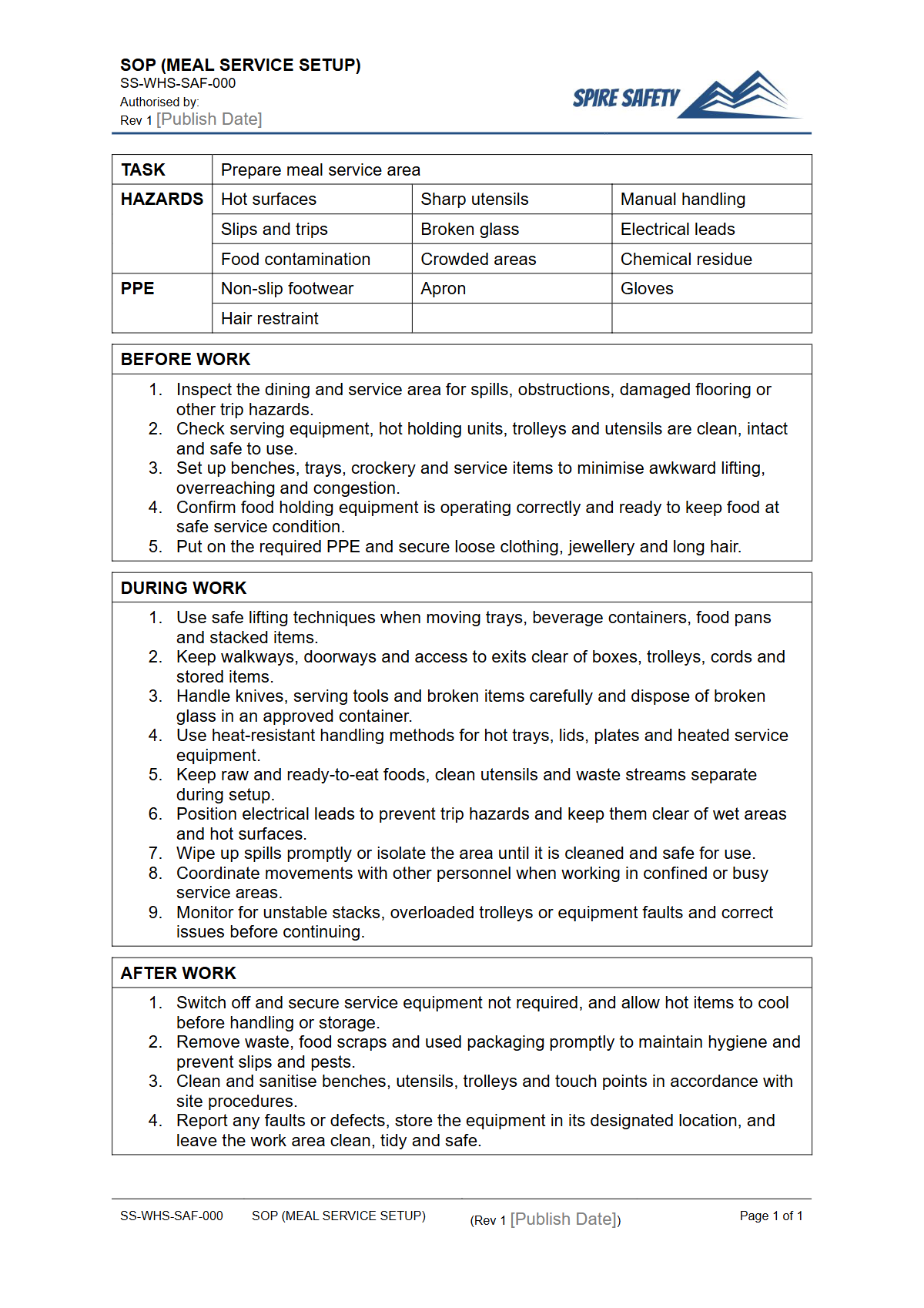
Establishing a safe and efficient meal service requires consistent processes that every team member can follow. This free Safe Operating Procedure (Meal Service Setup) template provides a structured framework for outlining the required safety measures in a commercial kitchen, aged care facility, or hospitality environment.
The primary purpose of this SOP is to minimise risks associated with setting up serveries, bain-maries, and food preparation areas. It helps to control common hazards such as burns from hot surfaces, cuts from knives, slips on wet floors, manual handling injuries from lifting trays, and exposure to cleaning chemicals.
By documenting a step-by-step process, you create a clear, repeatable standard for all workers. This not only enhances safety but also improves operational efficiency and food hygiene.
A well-defined SOP is a fundamental component of proactive risk management and forms a crucial part of broader comprehensive WHS management systems, demonstrating a commitment to worker health and safety.
Video walkthrough
How to use the Free Safe Operating Procedure (Meal Service Setup) Template
This template is provided in both DOCX and PDF formats for your convenience. The DOCX file is fully editable, allowing you to tailor the content directly to your operational needs.
Simply download the document and open it in a compatible word processor to begin customisation. We recommend involving workers who perform the tasks in the review process to ensure the procedure is practical and accurately reflects the work performed.
IMPORTANT: This document is a template and must be customised to your specific workplace. Every worksite has unique equipment, chemicals, layouts, and risks.
You must conduct your own risk assessment and adapt this SOP to reflect the specific hazards and control measures relevant to your operations. Spire Safety is not liable for any incidents arising from the use of this template.
Once customised, the SOP should be formally approved, and all relevant personnel must be trained on its contents. You can confirm the effective implementation of your procedures through periodic reviews or by engaging professionals for a WHS compliance audit.
Key Elements to Include in Your SOP
When customising the template, ensure you address the core components of a safe work procedure for meal service setup. These should include:
- Required Personal Protective Equipment (PPE): Specify necessary PPE such as heat-resistant gloves, non-slip footwear, aprons, and eye protection for handling chemicals.
- Pre-Operational Checks: Detail the checks required before starting, such as inspecting bain-marie water levels, checking temperature gauges, and ensuring the work area is clean and clear of trip hazards.
- Step-by-Step Procedure: Break down the setup process into clear, logical steps. This includes everything from turning on equipment and filling food trays to transporting items from the kitchen to the servery.
- Waste Disposal and Cleaning: Outline the correct procedures for disposing of food waste and cleaning equipment and surfaces after setup to maintain hygiene standards.
- Emergency Procedures: Detail the immediate actions to take in case of an emergency, such as a burn, cut, or equipment malfunction.
When to use this Safe Operating Procedure
A Safe Operating Procedure for meal service setup is not a document that should be filed away. It is an active tool used to guide daily work and reinforce safe behaviours.
It should be used during the pre-service period each day as a guide for all staff involved in setting up the dining or service area. It serves as an essential training resource for new employees, ensuring they learn the correct, safe method from their first day.
The SOP should also be referenced for refresher training to prevent complacency among experienced staff. Furthermore, it is a critical document to review following any incident or near miss to determine if procedural gaps contributed to the event.
While this SOP covers manual setup, larger facilities with automated systems like dishwashing lines may need a specific conveyer system safe operating procedure to manage associated mechanical risks.
Who should use this document
This SOP template is designed for use by anyone with responsibility for safety in a food service environment. This includes Kitchen Managers, Head Chefs, and Food and Beverage Managers who are typically responsible for drafting, implementing, and reviewing such procedures.
WHS Managers and Coordinators in the hospitality, healthcare, or aged care sectors will find it a useful starting point for formalising workplace processes.
Ultimately, the finalised SOP is for the workers who perform the task daily. It must be readily accessible to them at or near the work area, providing a constant reference for safe work practices.
If your organisation lacks the internal expertise to develop and implement robust safety documentation, seeking external guidance from a WHS consulting service can provide valuable support and ensure your procedures are practical and effective. Developing and maintaining such documents is also a key practice for organisations seeking to align with international safety standards, a process often guided by ISO 45001 consulting.
This resource is just one of many templates we offer to help Australian businesses improve their safety management. You can explore our complete free WHS resources library for more downloadable procedures, checklists, and forms.
Common mistakes
Common mistakes to avoid
- Using the generic template without customising it for site-specific equipment and risks.
- Failing to adequately train all relevant workers on the finalised SOP's contents.
- Not reviewing or updating the SOP after an incident, near miss, or change in process.
- Storing the SOP in an office instead of making it easily accessible to workers at the point of use.
Legal references
Legal considerations
The following legal requirements may be relevant to this type of work.
- Work Health and Safety Act (Harmonised) — Provides the primary duties for protecting workers and other people from work health and safety risks.
- Work Health and Safety Regulations (Harmonised) — Sets out requirements supporting the management of workplace hazards and risks.
The following codes may be relevant to this type of work.
- Managing WHS Risks Code of Practice — Provides practical guidance on identifying hazards, assessing risks and applying effective controls.
- Work Health and Safety Consultation, Cooperation and Coordination Code of Practice — Provides practical guidance on consulting workers and coordinating with other duty holders.
- Managing the Work Environment and Facilities Code of Practice — Provides practical guidance on safe work environments, workplace facilities and related controls.
Did you know
A Common Cause of Injury
According to Safe Work Australia, slips, trips, and falls are one of the most common causes of serious workers' compensation claims in the accommodation and food services industry.
Procedure and Hygiene
Clear, documented procedures for tasks like meal service setup are crucial for preventing cross-contamination, a leading cause of foodborne illness.
FAQ
Frequently asked questions
01What hazards are covered in a meal service setup SOP?
02How often should a meal service setup SOP be reviewed?
03Is this meal service setup SOP suitable for aged care facilities?
04Who is responsible for implementing the SOP?
Share this resource
Free Safe Operating Procedure (Meal Service Setup) Template
Browse Categories
How To Use It
- 1Download and open in Word or PDF.
- 2Replace the placeholders with your business details.
- 3Get it reviewed by a WHS specialist before rollout.
Need it customised?
Our WHS consultants can adapt this template to your site, run a gap analysis, or audit what you already have in place.
Book a Free Consultation WHS consulting servicesor call 1300 156 382
Related templates
- Free Safe Operating Procedure (Meat Hook Handling) Template
- Free Safe Operating Procedure (Meat Slicer) Template
- Free Safe Operating Procedure (Meat Tenderiser) Template
- Free Safe Operating Procedure (Meat Tray Handling) Template
- Free Safe Operating Procedure (Meat Trimming) Template
- Free Safe Operating Procedure (Mechanical Isolation) Template