
Free Safe Operating Procedure (Medication Fridge Clean) Template
Establish a clear, safe process for cleaning medication fridges to prevent contamination and ensure temperature integrity. Download your free template today.
Free Safe Operating Procedure (Medication Fridge Clean) Template
DOCX • 126 KB + PDF
Updated Oct 2026
No signup required
Purpose of the Free Safe Operating Procedure (Medication Fridge Clean) Template
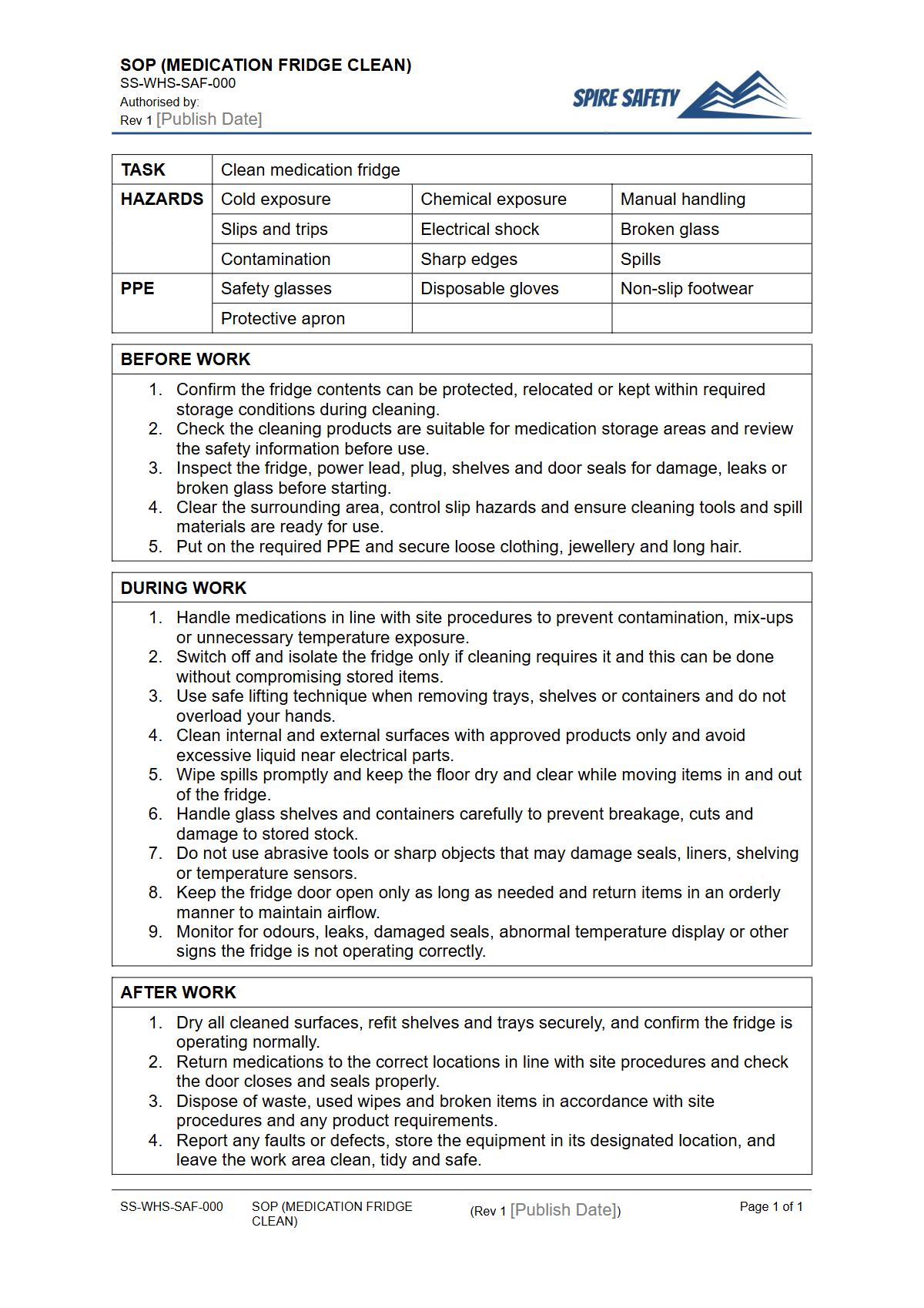
Maintaining the cleanliness and integrity of a medication fridge is a critical task in healthcare, pharmacy, and aged care settings. This Free Safe Operating Procedure (Medication Fridge Clean) Template provides a structured starting point for documenting the required steps to perform this task safely and effectively.
The primary purpose is to minimise health and safety risks for workers and prevent contamination of sensitive pharmaceuticals. Using a formal SOP helps ensure the cold chain is maintained, temperature excursions are minimised, and staff are protected from potential biological or chemical hazards.
A documented procedure forms a vital part of your overall WHS management systems, demonstrating a commitment to safety and quality control.
Key Objectives of this Safe Operating Procedure:
- To define the step-by-step process for cleaning and sanitising a medication refrigerator.
- To outline the specific Personal Protective Equipment (PPE) required to protect staff.
- To specify the correct cleaning agents and equipment to be used, preventing damage to the unit or contamination of its contents.
- To ensure procedures are in place for the temporary, safe storage of medications during the cleaning process.
- To establish a clear record-keeping process for cleaning and temperature monitoring.
Video walkthrough
How to use the Free Safe Operating Procedure (Medication Fridge Clean) Template
This template, available in both DOCX and PDF formats, is designed as a foundation for your organisation’s specific needs. It is not a complete, out-of-the-box solution.
You must adapt the content to reflect the unique equipment, chemicals, and processes used within your workplace. A generic procedure is not sufficient to control site-specific risks.
If you require assistance with tailoring this document or conducting the necessary risk assessments, our WHS consulting team can provide expert guidance.
IMPORTANT: We have created this document as a starting point. You must customise it with your company details, site-specific information, and the relevant risk controls identified for your workplace.
Just like our deep fryer cleaning SOP, this template requires your input to be effective and relevant.
Customisation Steps:
- Conduct a Risk Assessment: Before using this SOP, identify all potential hazards associated with the task, such as electrical shock, manual handling (moving the fridge), chemical exposure, and biological contamination.
- Insert Specific Details: Add the make and model of your medication fridge(s), the exact names of the approved cleaning and sanitising chemicals, and the location of safety data sheets (SDS).
- Define PPE: Update the PPE section to list the specific items required, such as gloves (type), safety glasses, and aprons.
- Outline Emergency Procedures: Detail the steps to take in case of a chemical spill, temperature excursion, or equipment failure. Include emergency contact numbers.
- Review and Approve: Have the customised SOP reviewed and approved by a competent person, such as a WHS manager or department head, before implementation.
When to use it
This Safe Operating Procedure should be used consistently whenever a medication fridge requires cleaning. The frequency of cleaning should be determined by a risk assessment but is typically guided by manufacturer recommendations and industry standards. Triggers for using this SOP include:
- Routine Scheduled Cleaning: Performing regular cleans (e.g., weekly, fortnightly, or monthly) to maintain hygiene standards.
- After a Spill: Immediate use following any spillage of medication or biological material inside the unit to prevent cross-contamination.
- Before and After Maintenance: Cleaning the unit before service technicians work on it and after the work is complete.
- Decommissioning or Relocation: Thoroughly cleaning the fridge before it is moved, put into storage, or disposed of.
Who should use it
This Safe Operating Procedure is intended for personnel who have been trained and deemed competent to perform the task. The specific roles may vary between organisations but generally include:
- Pharmacists and Pharmacy Technicians
- Registered Nurses and Clinical Staff
- Aged Care Workers
- Laboratory Assistants
- Trained Cleaning or Facilities Management Staff
Supervisors and managers are responsible for ensuring that staff have received adequate training on this procedure, understand the risks involved, and have access to the required PPE and equipment. Regular reviews and audits of the process are essential to ensure ongoing adherence and effectiveness.
These reviews can be part of a broader WHS compliance auditing program to verify that workplace procedures align with documented policies. This SOP also serves as a crucial training document for new employees.
By implementing and consistently following a detailed SOP, your organisation can significantly improve safety outcomes and ensure the quality and efficacy of stored medications. Browse our free WHS resources library for other templates and tools to support your safety management system.
Common mistakes
Common mistakes to avoid
- Using incorrect cleaning agents that damage the fridge interior or seals.
- Failing to monitor and log fridge temperatures before, during, and after the cleaning process.
- Not having a clear, pre-planned strategy for temporarily relocating medications to another temperature-controlled environment.
- Inadequate training for staff on the specific risks and procedures, leading to inconsistent application.
Legal references
Legal considerations
The following legal requirements may be relevant to this type of work.
- Work Health and Safety Act (Harmonised) — Provides the primary duties for protecting workers and other people from work health and safety risks.
- Work Health and Safety Regulations (Harmonised) — Sets out requirements supporting the management of workplace hazards and risks.
The following codes may be relevant to this type of work.
- Managing WHS Risks Code of Practice — Provides practical guidance on identifying hazards, assessing risks and applying effective controls.
- Work Health and Safety Consultation, Cooperation and Coordination Code of Practice — Provides practical guidance on consulting workers and coordinating with other duty holders.
- Managing the Work Environment and Facilities Code of Practice — Provides practical guidance on safe work environments, workplace facilities and related controls.
Did you know
Temperature Integrity
The 'cold chain' for pharmaceuticals requires most refrigerated medications to be stored between 2°C and 8°C. A temperature deviation for even a short period can render them ineffective or unsafe.
Cross-Contamination Risk
Improper cleaning can spread microorganisms or residue from spills, potentially contaminating sterile medications. This creates significant health risks for patients and potential chemical exposure risks for staff.
FAQ
Frequently asked questions
01Why do I need a specific SOP for cleaning a medication fridge?
02What should be included in a medication fridge cleaning procedure?
03How often should a medication fridge be cleaned?
04Can I use regular household cleaning products on a medication fridge?
Share this resource
Free Safe Operating Procedure (Medication Fridge Clean) Template
Browse Categories
How To Use It
- 1Download and open in Word or PDF.
- 2Replace the placeholders with your business details.
- 3Get it reviewed by a WHS specialist before rollout.
Need it customised?
Our WHS consultants can adapt this template to your site, run a gap analysis, or audit what you already have in place.
Book a Free Consultation WHS consulting servicesor call 1300 156 382
Related templates
- Free Safe Operating Procedure (Mesh Bender) Template
- Free Safe Operating Procedure (Mesh Cutter) Template
- Free Safe Operating Procedure (Metal Detector) Template
- Free Safe Operating Procedure (Metal Locator) Template
- Free Safe Operating Procedure (Metal Pickling) Template
- Free Safe Operating Procedure (Meter Installation) Template