
Free Safe Operating Procedure (Park Bench Cleaning) Template
Looking for a structured way to manage park bench cleaning tasks safely? Our free, editable template helps you document procedures and control hazards.
Free Safe Operating Procedure (Park Bench Cleaning) Template
DOCX • 126 KB + PDF
Updated Oct 2026
No signup required
Purpose of the Free Safe Operating Procedure (Park Bench Cleaning) Template
Developing a consistent and safe method for cleaning public furniture is essential for local councils, maintenance contractors, and property managers. This Free Safe Operating Procedure (Park Bench Cleaning) Template provides a structured framework for documenting the process, helping to ensure worker safety and service quality.
Using a clear SOP minimises risks associated with manual tasks, chemical handling, and working in public spaces. It serves as a vital tool for training new employees and serves as a reference for experienced staff, promoting a consistent standard of work across your organisation.
An effective SOP is a cornerstone of a compliant safety system. It demonstrates that your organisation has considered the hazards of a task and implemented controls to manage them.
Systematically documenting procedures like this is a key part of developing robust WHS management systems that protect both your workers and the public. This template helps you formalise your processes, moving from informal knowledge to a documented, auditable procedure.
Video walkthrough
How to Use the Free Safe Operating Procedure (Park Bench Cleaning) Template
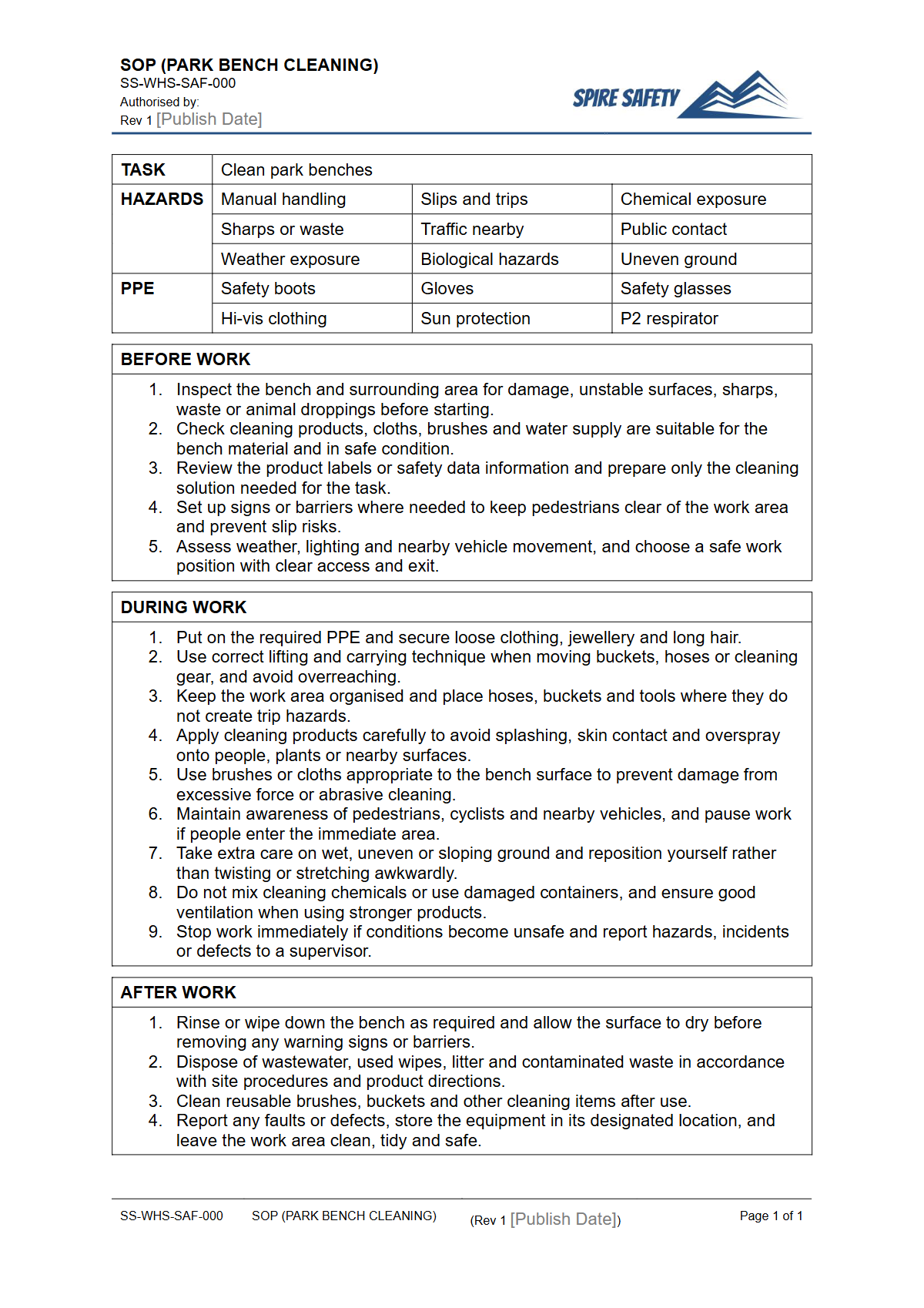
Our template is available as a DOCX file for easy editing in Microsoft Word or other word processors, and a PDF for quick reference. To use it, simply download the format you prefer and begin customising it to reflect the specific equipment, chemicals, and environmental conditions of your workplace.
The document is pre-populated with common sections found in a standard SOP, such as required Personal Protective Equipment (PPE), a step-by-step procedure, potential hazards, and emergency responses. Your task is to review each section and populate it with details relevant to your operations.
For example, you will need to specify the exact cleaning agents used, the type of benches being cleaned (wood, metal, plastic), and the unique hazards of the locations where your team works (e.g., traffic, pedestrians, uneven ground).
Important: This is a template, not a finished document. To be effective, you must adapt it to your specific needs.
We have not been to your worksite, assessed your workers, or seen your equipment. It is your responsibility to ensure the final SOP is accurate and reflects the reality of the work being performed.
Consultation with the workers who actually perform the cleaning is critical to creating a practical and effective procedure.
When to Use This Safe Operating Procedure
This Safe Operating Procedure should be used every time a worker is assigned to clean park benches or similar public seating. It is relevant for both routine cleaning schedules and reactive maintenance, such as removing graffiti or dealing with specific spills.
The SOP should be a key part of the job planning process, consulted before work begins to ensure all necessary equipment and PPE are on hand.
It also serves as a primary training document for new staff, ensuring they understand the approved, safe method for the task from day one. For established team members, it acts as a consistent reference point, particularly for steps that are not performed every day, like procedures for handling specific types of contamination or waste.
If your safety systems are ever reviewed, having a library of up-to-date SOPs is a key indicator of a mature safety culture. A periodic review by external experts, through a WHS compliance auditing process, can help identify gaps and ensure your procedures remain aligned with current standards.
Who Should Use It
This SOP is designed for use by any Person Conducting a Business or Undertaking (PCBU) whose workers perform cleaning and maintenance in public or private spaces. This includes:
- Local government and council maintenance teams
- Parks and recreation authorities
- Private maintenance and cleaning contractors
- Facility managers for universities, shopping centres, and corporate campuses
- Body corporates responsible for common areas
Supervisors and team leaders are responsible for implementing the SOP, ensuring workers are trained on its contents, and monitoring that the procedure is being followed correctly. Workers themselves are the primary end-users; they must understand and apply the steps outlined in the SOP to keep themselves and the public safe.
For organisations needing broader guidance on implementing safety documentation, engaging external WHS consulting services can provide valuable direction and support. While this SOP covers a specific manual task, organisations often manage a wide range of activities requiring similar documentation, which can all be organised within your free WHS resources library.
Common mistakes
Common mistakes to avoid
- Using a generic SOP without customising it for site-specific hazards like uneven ground, traffic, or public interaction.
- Failing to provide or use the specific Personal Protective Equipment (PPE) listed in the procedure.
- Inadequate training, where workers sign a document but do not fully understand the steps or the reasons for them.
- Not having the Safety Data Sheet (SDS) for cleaning chemicals readily available to workers.
Legal references
Legal considerations
The following legal requirements may be relevant to this type of work.
- Work Health and Safety Act (Harmonised) — Provides the primary duties for protecting workers and other people from work health and safety risks.
- Work Health and Safety Regulations (Harmonised) — Sets out requirements supporting the management of workplace hazards and risks.
The following codes may be relevant to this type of work.
- Managing WHS Risks Code of Practice — Provides practical guidance on identifying hazards, assessing risks and applying effective controls.
- Work Health and Safety Consultation, Cooperation and Coordination Code of Practice — Provides practical guidance on consulting workers and coordinating with other duty holders.
- Managing the Work Environment and Facilities Code of Practice — Provides practical guidance on safe work environments, workplace facilities and related controls.
Did you know
Slips, Trips and Falls
Slips, trips and falls are a leading cause of workplace injury in Australia, particularly for outdoor and mobile workers. A wet surface from cleaning, or equipment left in a walkway, can create a significant hazard for both workers and the public.
FAQ
Frequently asked questions
01What should be included in a park bench cleaning SOP?
02Are cleaning chemicals a hazard I need to address in the SOP?
03How often should I review my Safe Operating Procedure for park bench cleaning?
04Can I use this template for cleaning other types of street furniture?
Share this resource
Free Safe Operating Procedure (Park Bench Cleaning) Template
Browse Categories
How To Use It
- 1Download and open in Word or PDF.
- 2Replace the placeholders with your business details.
- 3Get it reviewed by a WHS specialist before rollout.
Need it customised?
Our WHS consultants can adapt this template to your site, run a gap analysis, or audit what you already have in place.
Book a Free Consultation WHS consulting servicesor call 1300 156 382
Related templates
- Free Safe Operating Procedure (Park Furniture Repair) Template
- Free Safe Operating Procedure (Park Gate Maintenance) Template
- Free Safe Operating Procedure (Park Path Cleaning) Template
- Free Safe Operating Procedure (Park Sign Cleaning) Template
- Free Safe Operating Procedure (Parking Bay Cleaning) Template
- Free Safe Operating Procedure (Parts Washer) Template