
Free Safe Operating Procedure (Parking Bay Cleaning) Template
Download our free Safe Operating Procedure (Parking Bay Cleaning) Template to manage hazards like slips, trips, and chemical exposure.
Free Safe Operating Procedure (Parking Bay Cleaning) Template
DOCX • 126 KB + PDF
Updated Oct 2026
No signup required
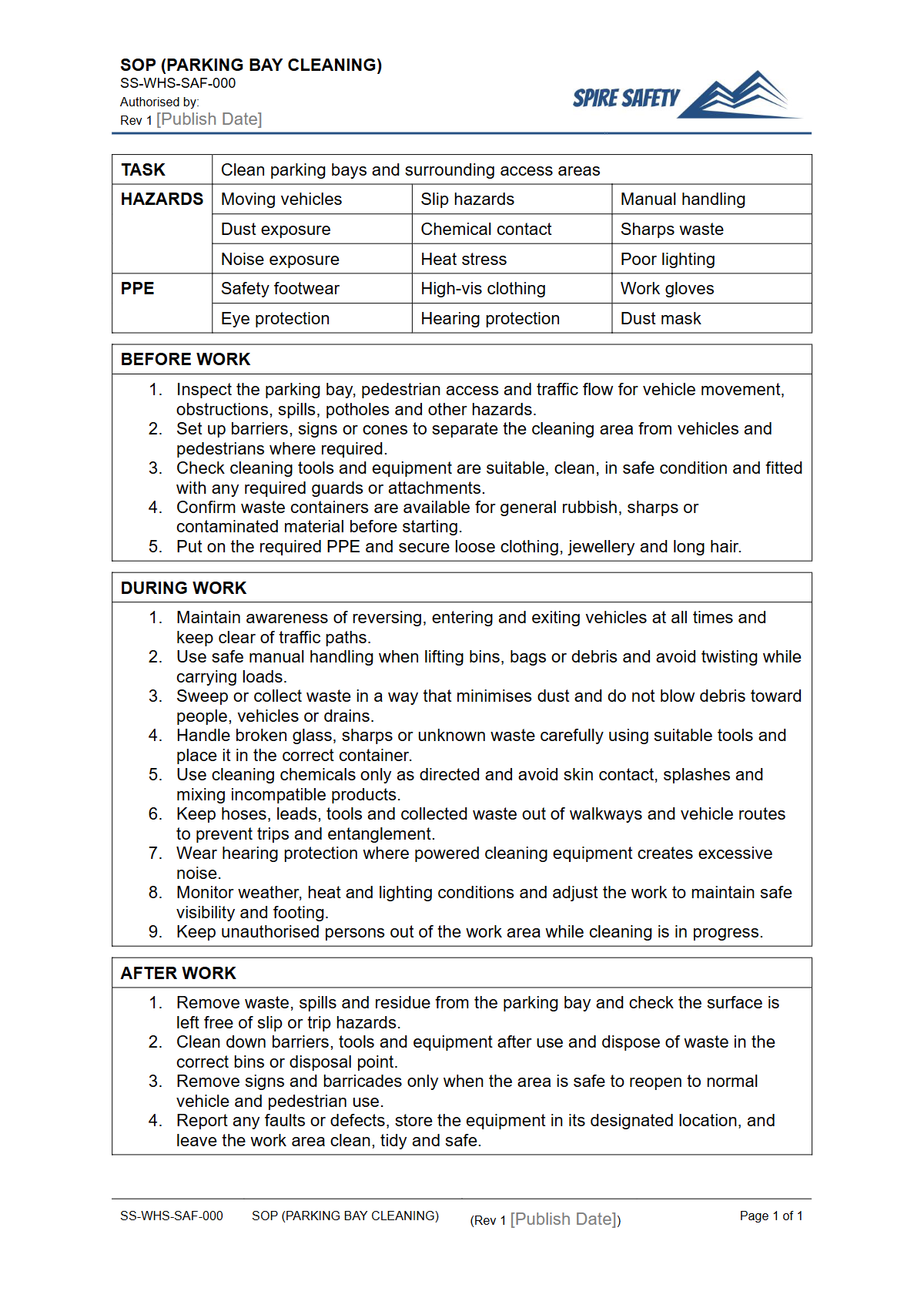
Purpose of the Free Safe Operating Procedure (Parking Bay Cleaning) Template
Parking bay and car park cleaning involves a range of hazards that can lead to serious injury if not properly managed. This Free Safe Operating Procedure (Parking Bay Cleaning) Template provides a structured framework for identifying and controlling these risks.
It guides users in establishing a documented, repeatable process for tasks like pressure washing, sweeping, and managing waste, helping to prevent incidents related to slips, trips, chemical exposure, manual handling, and vehicle interaction. A well-defined SOP is a critical component of robust WHS management systems, demonstrating a commitment to worker safety.
Video walkthrough
How to use the Free Safe Operating Procedure (Parking Bay Cleaning) Template
This resource is available as a fully editable DOCX file and a print-ready PDF. The DOCX version is designed to be adapted to the specific conditions of your workplace.
You can add your company logo, site-specific details, and modify the steps to reflect the exact equipment and chemicals you use. It is crucial to review and customise the procedure before implementation to ensure it is relevant and effective for your operations.
Important: This is a template that requires customisation. We have provided a foundation aligned with Australian WHS principles, but you must adapt it to your unique site, equipment, and processes.
This includes referencing the specific Safety Data Sheets (SDS) for your cleaning chemicals, outlining your site's traffic management plan, and listing emergency contact details. Without this customisation, the document will not adequately control your specific risks.
For example, if your process involves using compressed air for debris removal, you may need to consult a resource like our free Air Compressor SOP to supplement your procedures.
Key Hazards in Parking Bay Cleaning
A comprehensive SOP must address all foreseeable hazards associated with the task. When customising this template, pay close attention to the following common risks:
Slips, Trips and Falls
Wet surfaces from pressure washing or spills are a primary slip hazard. Hoses, electrical leads, and cleaning equipment can create trip hazards.
The procedure should mandate the use of warning signs, proper management of hoses and leads, and selection of appropriate non-slip footwear.
Chemical Exposure
Cleaning agents, degreasers, and detergents can cause skin irritation, respiratory issues, or chemical burns. Your SOP must specify the required Personal Protective Equipment (PPE) based on the Safety Data Sheet (SDS) for each chemical, ensure adequate ventilation, and outline first aid measures for exposure.
Plant and Vehicle Interaction
Cleaning in an active or partially active car park creates a significant risk of collision between workers and vehicles. The procedure must include steps for isolating the work area with barriers, cones, and signage.
In some environments with heavy machinery, awareness of other plant operations, such as those covered in a Telehandler SOP, is crucial for overall site safety.
Manual Tasks
Lifting heavy equipment like pressure washers, pulling long lengths of hose, and performing repetitive sweeping or scrubbing can lead to musculoskeletal injuries. Control measures should include using equipment with wheels, team lifting for heavy items, and ensuring workers take regular breaks.
When to Use This Safe Operating Procedure
An SOP is a versatile document used throughout the safety lifecycle. It should be used to formally induct and train new workers on the established safe method for cleaning parking bays.
It also serves as a valuable resource for pre-start meetings or toolbox talks to review hazards before work begins. Following any incident or near-miss, the SOP should be reviewed as part of the investigation to identify any procedural gaps.
Regular reviews, often prompted by WHS compliance auditing, ensure the procedure remains current with new equipment or regulations.
Who Should Use It
This Safe Operating Procedure is intended for anyone involved in the management or execution of parking bay cleaning tasks. This includes:
- Persons Conducting a Business or Undertaking (PCBUs): To fulfil their primary duty of care to provide safe systems of work.
- Managers and Supervisors: To train workers, enforce procedures, and ensure resources like PPE and correct equipment are available.
- Workers and Cleaning Staff: To understand the risks and follow the step-by-step process for performing their job safely.
- WHS Advisors: To integrate the procedure into the organisation's overall safety framework. For additional guidance, you can explore our complete free WHS resources library.
Common mistakes
Common mistakes to avoid
- Using a generic template without customising it for site-specific hazards and equipment.
- Failing to properly barricade the work area from vehicle and pedestrian traffic.
- Neglecting to consult the Safety Data Sheet (SDS) for each cleaning chemical being used.
- Skipping pre-use inspections on equipment like pressure washers, hoses, and nozzles.
Legal references
Legal considerations
The following legal requirements may be relevant to this type of work.
- Work Health and Safety Act (Harmonised) — Provides the primary duties for protecting workers and other people from work health and safety risks.
- Work Health and Safety Regulations (Harmonised) — Sets out requirements supporting the management of workplace hazards and risks.
The following codes may be relevant to this type of work.
- Managing WHS Risks Code of Practice — Provides practical guidance on identifying hazards, assessing risks and applying effective controls.
- Work Health and Safety Consultation, Cooperation and Coordination Code of Practice — Provides practical guidance on consulting workers and coordinating with other duty holders.
- Managing the Work Environment and Facilities Code of Practice — Provides practical guidance on safe work environments, workplace facilities and related controls.
Did you know
Slips, Trips, and Falls
According to Safe Work Australia, slips, trips, and falls are the second leading cause of serious workers' compensation claims, highlighting the importance of managing wet and cluttered work areas during cleaning.
Signage is a Control
Using clear, visible safety signs to warn of wet floors and restricted areas is not just a suggestion; it's a recognised administrative control measure under the hierarchy of risk control.
FAQ
Frequently asked questions
01What should be included in a parking bay cleaning SOP?
02How often should a Safe Operating Procedure for cleaning be reviewed?
03Is a Safe Work Method Statement (SWMS) required for parking bay cleaning?
04What PPE is typically required for cleaning a parking bay?
Share this resource
Free Safe Operating Procedure (Parking Bay Cleaning) Template
Browse Categories
How To Use It
- 1Download and open in Word or PDF.
- 2Replace the placeholders with your business details.
- 3Get it reviewed by a WHS specialist before rollout.
Need it customised?
Our WHS consultants can adapt this template to your site, run a gap analysis, or audit what you already have in place.
Book a Free Consultation WHS consulting servicesor call 1300 156 382
Related templates
- Free Safe Operating Procedure (Parts Washer) Template
- Free Safe Operating Procedure (Passenger Lift) Template
- Free Safe Operating Procedure (Passenger Ramp Setup) Template
- Free Safe Operating Procedure (Passenger Stairs) Template
- Free Safe Operating Procedure (Pastry Roller) Template
- Free Safe Operating Procedure (Path Edge Trimming) Template