
Free Safe Operating Procedure (Potting Bench Cleaning) Template
Clearly define the steps for safely cleaning potting benches in your horticultural or nursery business. Download our free, customisable template to get started.
Free Safe Operating Procedure (Potting Bench Cleaning) Template
DOCX • 126 KB + PDF
Updated Oct 2026
No signup required
Purpose of the Free Safe Operating Procedure (Potting Bench Cleaning) Template
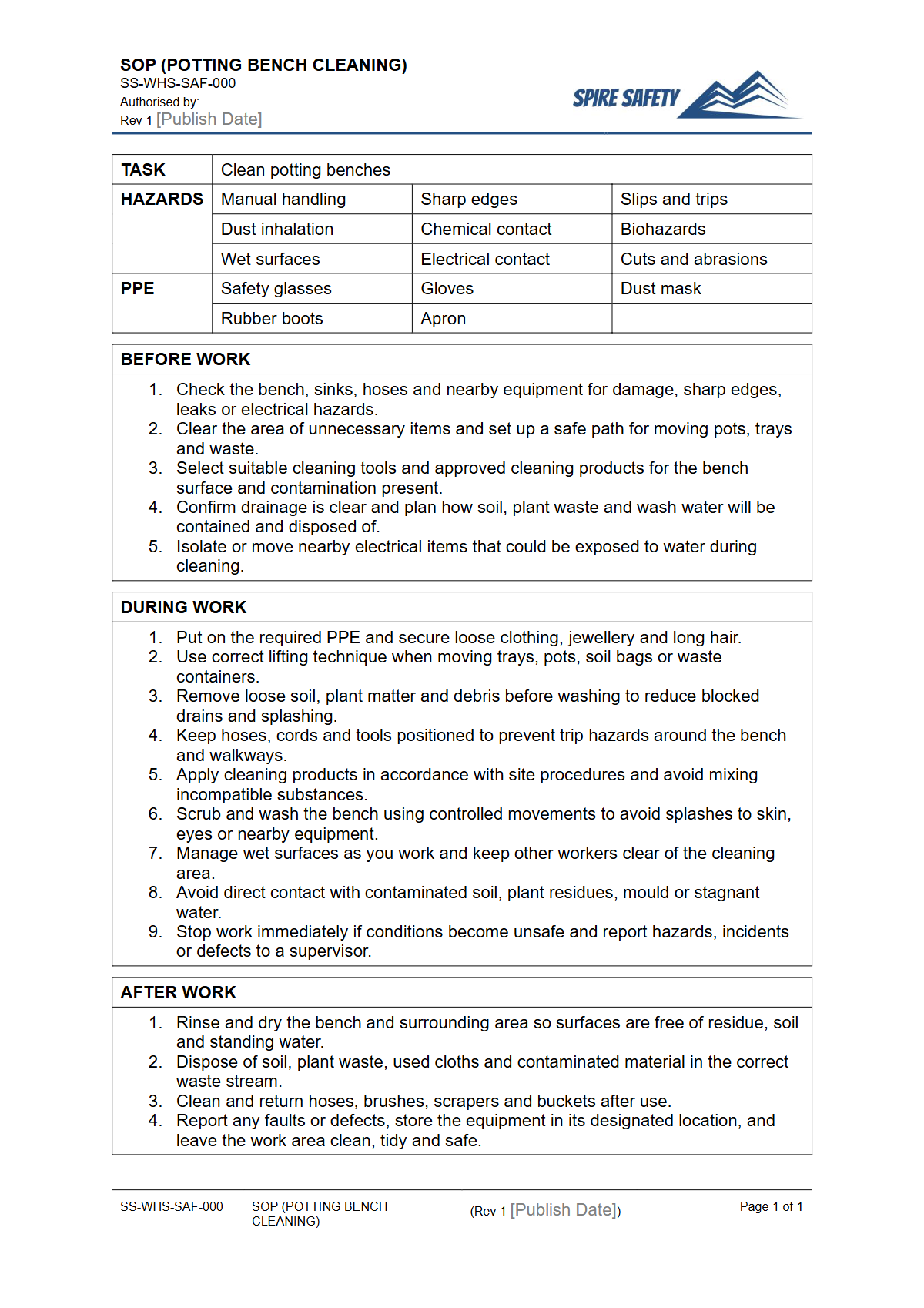
This Free Safe Operating Procedure (Potting Bench Cleaning) Template provides a structured framework for businesses to document a safe and consistent method for cleaning work surfaces in horticultural and nursery environments. Potting benches can harbour biological hazards like bacteria and fungi, residues from fertilisers and pesticides, and present ergonomic risks during cleaning.
A formal SOP helps mitigate these risks, ensuring workers are protected and hygiene standards are maintained to prevent plant cross-contamination.
Using a standardised procedure minimises guesswork, reduces the chance of injury from chemical exposure or manual handling, and provides a clear reference for training and supervision. Integrating this SOP into your broader WHS management systems helps demonstrate a commitment to worker safety and operational consistency.
It formalises risk control measures and provides a clear, auditable record of your organisation’s safety protocols for this routine but essential task.
Video walkthrough
How to use the Free Safe Operating Procedure (Potting Bench Cleaning) Template
Our Safe Operating Procedure for potting bench cleaning is designed as a user-friendly template, available in both DOCX and PDF formats. To get started, download the file and open it to begin customisation.
The document includes sections for you to detail the specific hazards, required Personal Protective Equipment (PPE), a step-by-step cleaning process, and emergency response actions relevant to your operation.
Important: This template provides a foundation based on common Australian WHS practice. It is not a complete, ready-to-use document.
You must consult with your team and a competent person to adapt the content to your specific worksite. This includes identifying the exact cleaning chemicals used, the type of potting media, workplace layout, and waste disposal methods.
We strongly recommend a thorough risk assessment is conducted before finalising and implementing this procedure.
When to Use a Potting Bench Cleaning SOP
A Safe Operating Procedure for cleaning potting benches should be used as the primary guide for this task every time it is performed. It is particularly valuable for establishing routine cleaning schedules, such as daily wipe-downs, end-of-week deep cleans, or sanitation between different plant batches to prevent the spread of disease.
It also serves as a critical training tool for new employees, ensuring they learn the correct, safe method from their first day. The SOP should be readily accessible near the work area for quick reference.
If your operations also involve mechanised planting, you may find our FREE Planter SOP Template a useful addition to your safety documentation.
Who Should Use This Safe Operating Procedure?
This SOP is intended for all personnel involved in using and maintaining potting areas. This primarily includes nursery hands, horticulturalists, and groundskeepers who perform the cleaning task.
Supervisors and team leaders should also use the document to conduct training, verify correct procedures are being followed, and lead toolbox talks on related safety topics. Furthermore, WHS managers and business owners can use the finalised SOP as evidence of a safe system of work.
If you are unsure how to implement SOPs effectively or conduct the necessary risk assessments, engaging with WHS consulting services can provide expert guidance.
Key Elements of an Effective Potting Bench Cleaning SOP
A comprehensive SOP for this task should be clear, concise, and cover all stages of the process. Our template prompts you to include:
- Hazard Identification: Listing all potential hazards, such as exposure to cleaning chemicals, biological contaminants in soil, manual handling strains, and slip risks from wet floors.
- Control Measures: Specifying the controls to mitigate identified risks, including required PPE (e.g., chemical-resistant gloves, safety glasses), ventilation, and safe work techniques.
- Step-by-Step Instructions: A logical sequence of actions from preparation (gathering tools) to the final clean-up (storing equipment and disposing of waste).
- Chemical Handling: Clear instructions on the correct dilution, application, and contact time for any disinfectants or cleaning agents used.
- Emergency Procedures: Information on what to do in case of a chemical splash, slip, or other incident.
This structured approach ensures no critical safety step is overlooked. For tasks involving powered equipment often found in similar settings, such as an air compressor for cleaning tools, refer to our Free Air Compressor SOP Template for a comparable structured approach.
By implementing a detailed procedure, you create a safer working environment and improve operational hygiene. This document is one of many tools available to help you build a robust safety framework.
Explore our complete free WHS resources library for more templates, checklists, and guides to support your safety management system.
Common mistakes
Common mistakes to avoid
- Using incorrect or improperly diluted cleaning chemicals, reducing effectiveness or creating new hazards.
- Failing to wear appropriate PPE, especially chemical-resistant gloves and eye protection.
- Forgetting to allow sufficient contact time for disinfectants to properly sanitise the surface.
- Leaving the floor wet and without signage, creating a serious slip-and-fall risk for others.
Legal references
Legal considerations
The following legal requirements may be relevant to this type of work.
- Work Health and Safety Act (Harmonised) — Provides the primary duties for protecting workers and other people from work health and safety risks.
- Work Health and Safety Regulations (Harmonised) — Sets out requirements supporting the management of workplace hazards and risks.
The following codes may be relevant to this type of work.
- Managing WHS Risks Code of Practice — Provides practical guidance on identifying hazards, assessing risks and applying effective controls.
- Work Health and Safety Consultation, Cooperation and Coordination Code of Practice — Provides practical guidance on consulting workers and coordinating with other duty holders.
- Managing the Work Environment and Facilities Code of Practice — Provides practical guidance on safe work environments, workplace facilities and related controls.
Did you know
Hidden Dangers in Potting Mix
Legionella longbeachae, a bacterium that can cause the serious respiratory illness Legionnaires' disease, is naturally found in soil and commercial potting mixes. Wearing a mask and gloves when handling potting mix and washing hands thoroughly afterwards are key controls.
FAQ
Frequently asked questions
01What are the main hazards when cleaning a potting bench?
02Is an SOP for potting bench cleaning legally required in Australia?
03What PPE is typically needed for cleaning a potting bench?
04How often should a Safe Operating Procedure be reviewed?
Share this resource
Free Safe Operating Procedure (Potting Bench Cleaning) Template
Browse Categories
How To Use It
- 1Download and open in Word or PDF.
- 2Replace the placeholders with your business details.
- 3Get it reviewed by a WHS specialist before rollout.
Need it customised?
Our WHS consultants can adapt this template to your site, run a gap analysis, or audit what you already have in place.
Book a Free Consultation WHS consulting servicesor call 1300 156 382
Related templates
- Free Safe Operating Procedure (Potting Mix Handling) Template
- Free Safe Operating Procedure (Poultry Feeding) Template
- Free Safe Operating Procedure (Poultry Litter Change) Template
- Free Safe Operating Procedure (Powder Coating) Template
- Free Safe Operating Procedure (Power File) Template
- Free Safe Operating Procedure (Power Scraper) Template