
Free Safe Operating Procedure (Pump Priming) Template
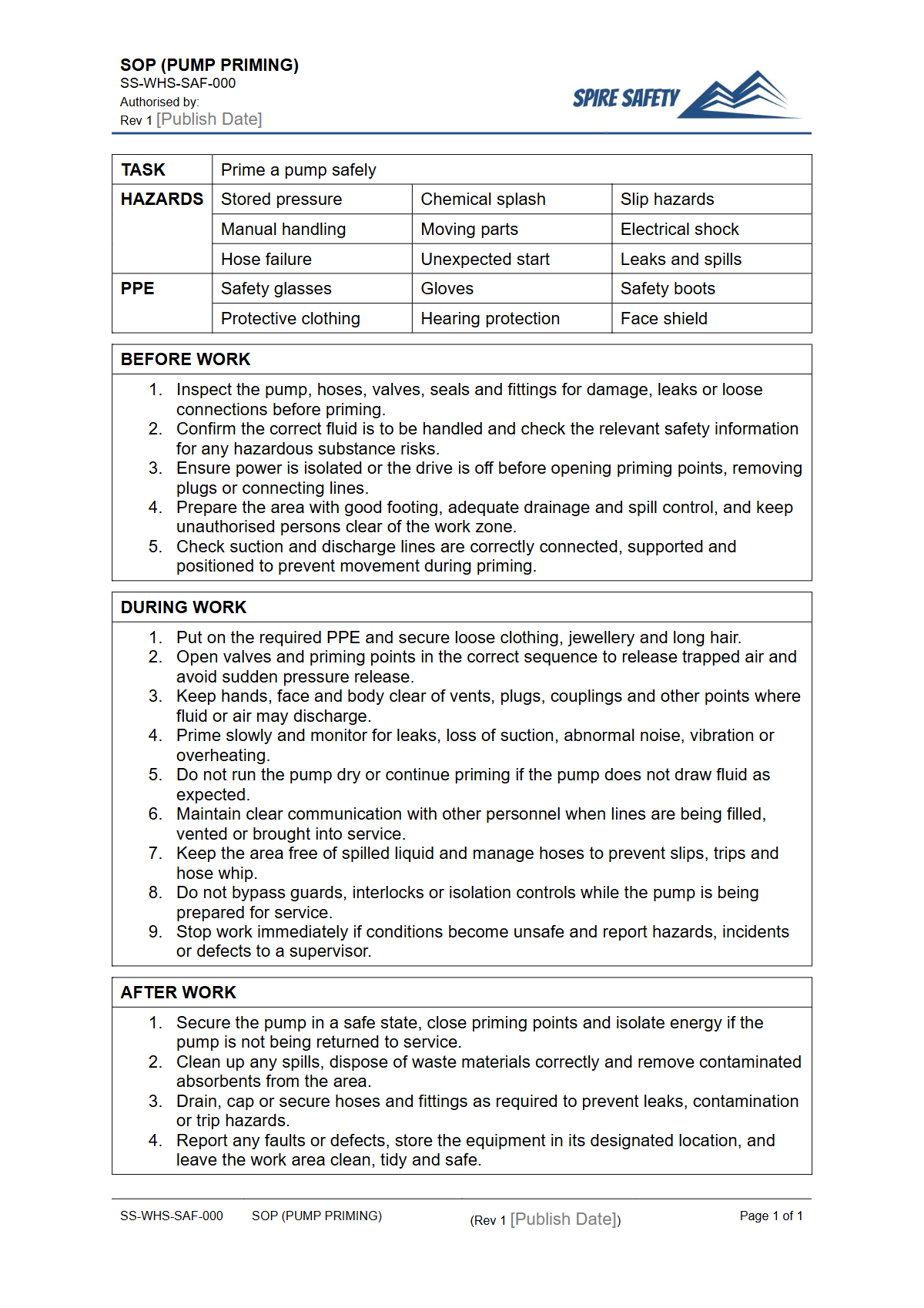
Download our free Safe Operating Procedure (Pump Priming) template to formalise your safety processes.
Free Safe Operating Procedure (Pump Priming) Template
DOCX • 126 KB + PDF
Updated Oct 2026
No signup required
Purpose of the Free Safe Operating Procedure (Pump Priming) Template
Pump priming is a common but potentially hazardous task across many industries, including construction, agriculture, and manufacturing. This Free Safe Operating Procedure (Pump Priming) Template provides a structured framework for documenting the safest method to perform this task.
Formalising your process helps to identify and control risks such as exposure to hazardous substances, high-pressure fluid injection, and musculoskeletal injuries. By clearly defining the steps, required PPE, and emergency responses, you create a consistent and safe system of work for all operators.
This SOP forms a critical part of a broader safety framework, helping your organisation meet its duty of care obligations.
Using a standardised template ensures all critical safety information is captured and communicated effectively. This process is a fundamental element in building a robust safety culture and developing comprehensive WHS management systems that protect your workers from harm.
The document guides you through risk assessment, control implementation, and procedural steps, making it an invaluable tool for supervisors and safety managers.
Video walkthrough
How to Use the Free Safe Operating Procedure (Pump priming) Template
Our template is provided as a customisable DOCX file, designed to be adapted to the specific equipment and conditions at your worksite. To effectively implement this Safe Operating Procedure, follow these steps:
- Download: Get your copy of the template in either DOCX for easy editing or PDF for reference.
- Customise: This is the most critical step. You must edit the document to reflect the specific types of pumps you use (e.g., centrifugal, diaphragm, vacuum), the fluids being pumped (water, chemicals, slurry), and the unique environment of your workplace. We cannot know your specific site conditions, so it is your responsibility to ensure the final document is accurate and comprehensive.
- Consult: Discuss the draft procedure with the workers who actually perform the task. Their direct experience is essential for creating a practical and effective SOP that addresses real-world challenges.
- Train: Once finalised, formally train all relevant operators on the procedure. Ensure they understand every step, the associated hazards, and the required controls. Keep records of this training.
- Review: Schedule regular reviews of the SOP (e.g., annually or after any incident) to ensure it remains current and effective. A key part of WHS compliance auditing involves verifying that documented procedures are followed correctly and are still fit for purpose.
Key Elements of a Pump Priming SOP
A thorough Safe Operating Procedure for pump priming should cover several key areas to be effective. This template prompts you to detail specific information for each section, ensuring a comprehensive final document. Key elements include:
- Hazard Identification: Listing all potential hazards associated with the task, such as chemical exposure, high pressure, noise, and manual handling risks.
- Required PPE: Specifying the exact Personal Protective Equipment needed, such as safety glasses, chemical-resistant gloves, hearing protection, and steel-capped boots.
- Pre-Operational Checks: A checklist of steps to take before starting, including inspecting hoses for damage, verifying isolation and lockout, and ensuring the work area is clear. A similar systematic approach is vital when using other plant, as outlined in our Free Air Compressor SOP Template.
- Step-by-Step Procedure: A clear, logical sequence of actions for safely priming the pump, from initial setup to verifying successful priming.
- Emergency Procedures: Instructions on how to respond to common emergencies, such as spills, equipment failure, or personal injury.
When Is This SOP Required?
This Safe Operating Procedure should be used as a primary reference document whenever pump priming activities are conducted. It is a critical tool during worker induction and task-specific training, ensuring new and existing employees understand the approved, safe method.
The SOP should also be readily accessible in the work area for quick reference. Furthermore, it becomes an essential document during incident investigations, helping to determine if procedural deviations contributed to the event. For complex machinery that incorporates pumps, such as concrete pumps, having specific procedures is vital, just as it is for our FREE Boom Pump SOP (Safe Operating Procedure) Template.
Who Should Use This SOP?
This document is intended for use by several key roles within an organisation:
- Persons Conducting a Business or Undertaking (PCBUs): To meet their primary duty of care by providing a safe system of work.
- Managers and Supervisors: To train workers, supervise the task, and enforce the documented safety procedures.
- Workers and Operators: To understand and follow the approved procedure to ensure their own safety and the safety of their colleagues.
- WHS Professionals: To integrate the procedure into the overall safety management system and use it as a basis for risk assessments and audits. Documenting procedures for all types of machinery, including those detailed in our FREE Trencher SOP Template, is a cornerstone of good safety practice.
For organisations needing further assistance in developing bespoke safety documentation, Spire Safety offers expert WHS consulting to help tailor solutions for your specific operational needs. If you require other templates, you can browse our complete free WHS resources library.
Common mistakes
Common mistakes to avoid
- Failing to de-pressurise and isolate the system before starting any priming work.
- Using an incorrect fluid for priming, leading to process contamination or hazardous chemical reactions.
- Neglecting to wear appropriate Personal Protective Equipment (PPE), especially eye protection and chemical-resistant gloves.
- Not verifying that the pump is fully primed before starting normal operation, leading to damage or failure.
Legal references
Legal considerations
The following legal requirements may be relevant to this type of work.
- Work Health and Safety Act (Harmonised) — Provides the primary duties for protecting workers and other people from work health and safety risks.
- Work Health and Safety Regulations (Harmonised) — Sets out requirements supporting the management of workplace hazards and risks.
The following codes may be relevant to this type of work.
- Managing WHS Risks Code of Practice — Provides practical guidance on identifying hazards, assessing risks and applying effective controls.
- Work Health and Safety Consultation, Cooperation and Coordination Code of Practice — Provides practical guidance on consulting workers and coordinating with other duty holders.
- Managing the Work Environment and Facilities Code of Practice — Provides practical guidance on safe work environments, workplace facilities and related controls.
Did you know
Cavitation Risk
Priming failures can lead to cavitation, where vapour bubbles form and collapse inside the pump. This process generates intense shockwaves that can cause severe damage to pump components like the impeller.
Stored Energy Hazard
Pumps and their associated lines can retain dangerous levels of pressure even when switched off. This stored energy poses a significant hazard if not properly released before maintenance or priming begins.
FAQ
Frequently asked questions
01What is pump priming and why is it a hazard?
02Does this pump priming SOP template cover all types of pumps?
03Who is responsible for creating and implementing a Safe Operating Procedure?
04How often should a Safe Operating Procedure for pump priming be reviewed?
Share this resource
Free Safe Operating Procedure (Pump Priming) Template
Browse Categories
How To Use It
- 1Download and open in Word or PDF.
- 2Replace the placeholders with your business details.
- 3Get it reviewed by a WHS specialist before rollout.
Need it customised?
Our WHS consultants can adapt this template to your site, run a gap analysis, or audit what you already have in place.
Book a Free Consultation WHS consulting servicesor call 1300 156 382
Related templates
- Free Safe Operating Procedure (Pump Seal Change) Template
- Free Safe Operating Procedure (Pump Station Check) Template
- Free Safe Operating Procedure (Pump Test Rig) Template
- Free Safe Operating Procedure (Punch Press) Template
- Free Safe Operating Procedure (Quad Bike - Standard Operation) Template
- Free Safe Operating Procedure (Radial Arm Saw) Template