
Free Safe Operating Procedure (Security Shift Handover) Template
Formalise your security handover process with our free Safe Operating Procedure template. Download this customisable DOCX and PDF to improve safety and communication.
Free Safe Operating Procedure (Security Shift Handover) Template
DOCX • 126 KB + PDF
Updated Oct 2026
No signup required
Purpose of the Free Safe Operating Procedure (Security Shift Handover) Template
A security shift handover is a critical control point in maintaining a safe and secure environment. Inconsistent or incomplete handovers can lead to missed information, unaddressed threats, and a breakdown in safety protocols.
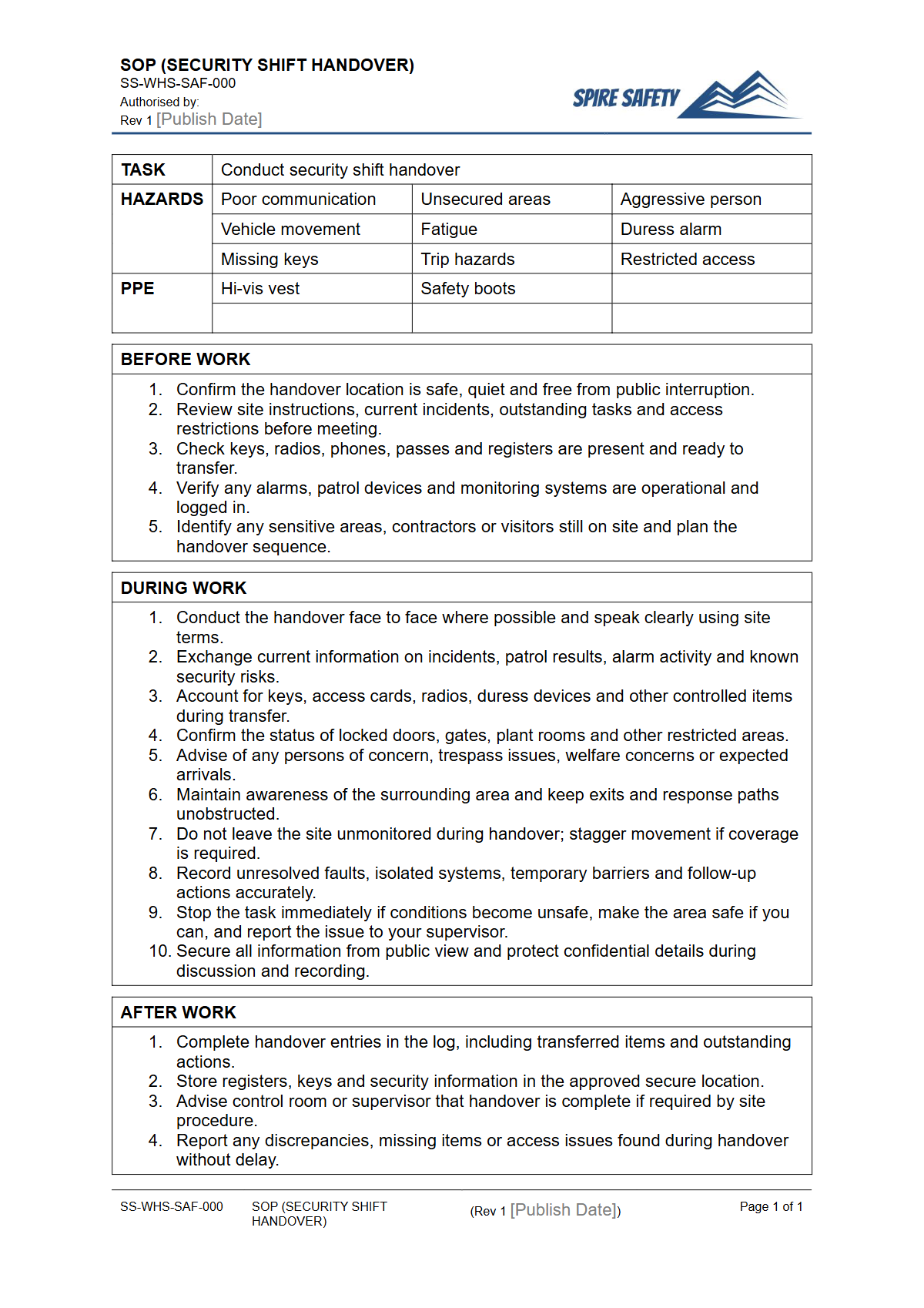
This Free Safe Operating Procedure (Security Shift Handover) Template provides a structured framework to ensure all vital information is accurately communicated and documented between outgoing and incoming security personnel. It standardises the process, reduces the risk of human error, and creates a clear record of accountability.
Implementing formalised SOPs is a cornerstone of effective WHS management systems. This procedure helps a Person Conducting a Business or Undertaking (PCBU) meet their primary duty of care by establishing a safe system of work. It ensures continuity of operations, highlights unresolved issues, and briefs incoming staff on any changes to the risk landscape.
Using standardised documents like this also supports organisations aiming for ISO 45001 certification by demonstrating a commitment to systematic safety management.
Video walkthrough
How to use the Free Safe Operating Procedure (Security Shift Handover) Template
This document is a template designed as a starting point. It must be adapted to the specific context of your workplace, including its unique layout, assets, risks, and emergency procedures. Download the DOCX file and follow these steps:
- Customise: Add your company name, logo, and site-specific details. Fill in the sections for specific posts, required equipment checks (e.g., CCTV, alarms, vehicles), key registers, and emergency contact lists.
- Review and Consult: Review the draft with your security team and other relevant workers. Consultation is a key part of WHS legislation and ensures the procedure is practical and effective for those who will use it.
- Approve and Train: Once finalised, have the SOP formally approved by management. All security personnel must be trained on the procedure to ensure they understand their responsibilities during a handover.
- Implement and Monitor: Integrate the SOP into daily operations. Regularly check that it is being followed correctly and is achieving its purpose.
Important Note: This is a generic template. We are not WHS lawyers, and this document does not constitute legal advice.
You must customise this Safe Operating Procedure to address the specific hazards and control measures relevant to your site. If you need assistance, consider engaging professional WHS consulting services.
When to use a Security Shift Handover Procedure
A Safe Operating Procedure for security shift handovers should be used every time responsibility for a site or post is transferred from one security officer or team to another. This includes:
- The end of a standard shift (e.g., day shift to night shift).
- Handover for meal breaks or other shorter periods of relief.
- Change of personnel at static guard posts, mobile patrols, or control room operations.
- When handing over responsibility for specific items, such as keys, access cards, or valuable assets.
Using the SOP consistently ensures that no handover, regardless of its duration or perceived importance, becomes a point of failure in your security and safety program.
Who should use this Safe Operating Procedure
This SOP is intended for use by all personnel involved in security operations. Key users include:
- Security Officers: The primary users who conduct the handover, completing the checklist and signing off on the transfer of responsibility.
- Security Supervisors and Team Leaders: Responsible for overseeing the handover process, ensuring compliance with the SOP, and verifying that documentation is completed correctly.
- Site and Facility Managers: Responsible for ensuring an effective handover procedure is in place as part of the site's overall security and WHS plan. They may also review completed handover logs to identify trends or recurring issues.
The effectiveness of this SOP relies on regular review and continuous improvement. The performance of the procedure should be assessed periodically, for instance, through internal reviews or formal WHS compliance auditing, to ensure it remains relevant and effective. You can find more templates and tools in our complete free WHS resources library to support your safety systems.
Common mistakes
Common mistakes to avoid
- Assuming a verbal 'all clear' is sufficient without documenting key events and equipment status.
- Failing to physically check the operational status of critical systems like alarms, CCTV, and access control.
- Not customising the template to include site-specific posts, unique risks, and emergency contact details.
- Forgetting to brief the incoming shift on subtle changes, suspicious behaviour, or non-critical maintenance issues.
Legal references
Legal considerations
The following legal requirements may be relevant to this type of work.
- Work Health and Safety Act (Harmonised) — Provides the primary duties for protecting workers and other people from work health and safety risks.
- Work Health and Safety Regulations (Harmonised) — Sets out requirements supporting the management of workplace hazards and risks.
The following codes may be relevant to this type of work.
- Managing WHS Risks Code of Practice — Provides practical guidance on identifying hazards, assessing risks and applying effective controls.
- Work Health and Safety Consultation, Cooperation and Coordination Code of Practice — Provides practical guidance on consulting workers and coordinating with other duty holders.
- Managing the Work Environment and Facilities Code of Practice — Provides practical guidance on safe work environments, workplace facilities and related controls.
Did you know
Communication Breakdown
Investigations into workplace incidents frequently identify communication failures during shift changes as a significant contributing factor. A structured, documented handover is a key administrative control to mitigate this risk.
Beyond Security
Effective shift handovers don't just transfer security information. They are also a vital opportunity to communicate potential safety hazards observed during a shift, directly contributing to the site's overall WHS culture.
FAQ
Frequently asked questions
01What information should be included in a security shift handover?
02Why is a verbal handover not enough for security teams?
03How often should a security handover SOP be reviewed?
04Is this security handover SOP template suitable for all industries?
Share this resource
Free Safe Operating Procedure (Security Shift Handover) Template
Browse Categories
How To Use It
- 1Download and open in Word or PDF.
- 2Replace the placeholders with your business details.
- 3Get it reviewed by a WHS specialist before rollout.
Need it customised?
Our WHS consultants can adapt this template to your site, run a gap analysis, or audit what you already have in place.
Book a Free Consultation WHS consulting servicesor call 1300 156 382
Related templates
- Free Safe Operating Procedure (Security Tag Removal) Template
- Free Safe Operating Procedure (Seed Cleaning) Template
- Free Safe Operating Procedure (Seed Hand Treatment) Template
- Free Safe Operating Procedure (Seedling Handling) Template
- Free Safe Operating Procedure (Seedling Transplanting) Template
- Free Safe Operating Procedure (Self Retracting Lifeline) Template