
Free Safe Operating Procedure (Sewer Overflow Cleanup) Template
Manage the significant health risks of sewer overflows with our structured template. Download your free Safe Operating Procedure for sewer overflow cleanup now.
Free Safe Operating Procedure (Sewer Overflow Cleanup) Template
DOCX • 126 KB + PDF
Updated Oct 2026
No signup required
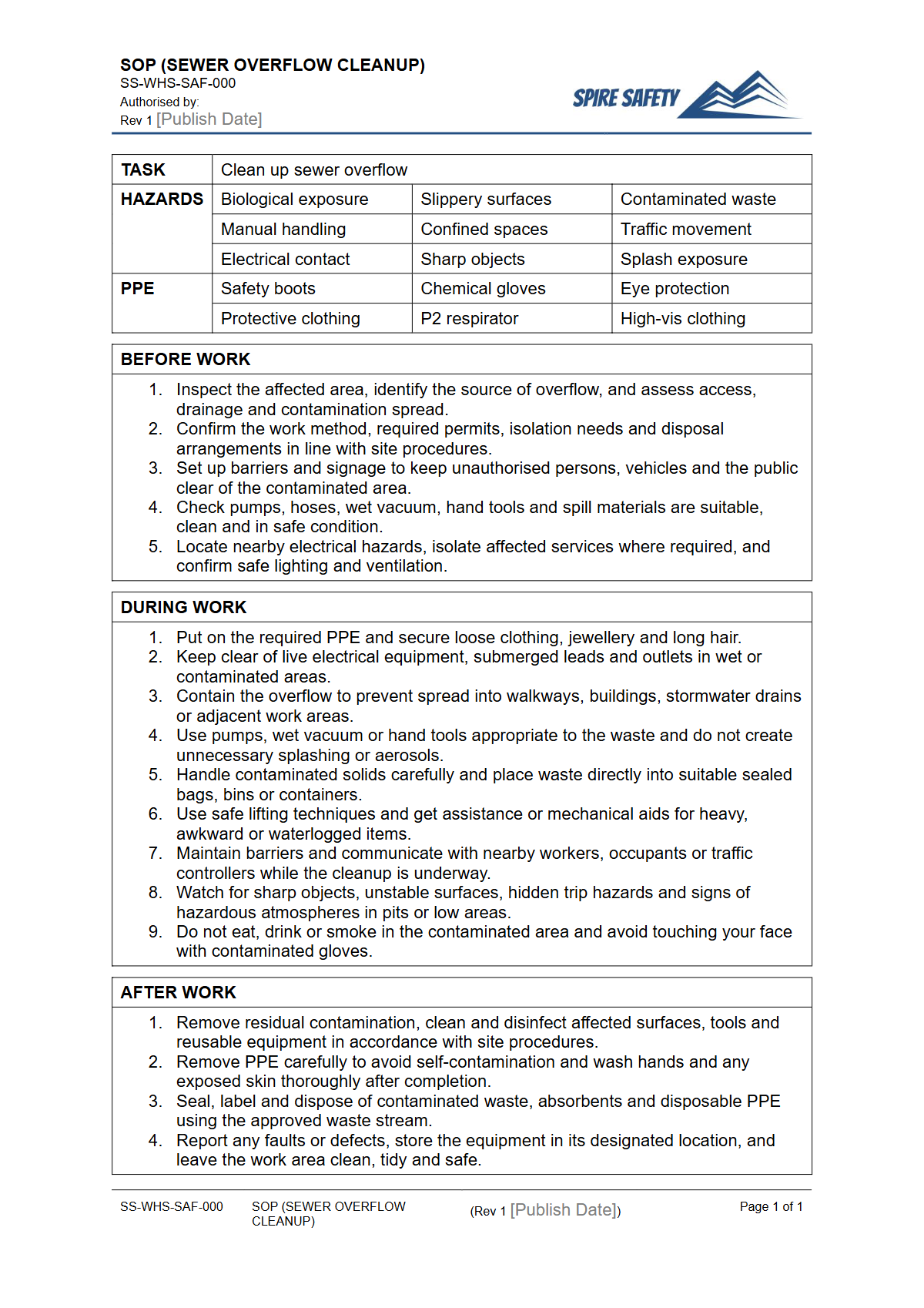
Purpose of the Free Safe Operating Procedure (Sewer Overflow Cleanup) Template
Managing a sewer overflow is a high-risk task that exposes workers to serious biological hazards, including bacteria, viruses, and parasites. This free Safe Operating Procedure (Sewer Overflow Cleanup) Template provides a structured framework for businesses to control these risks effectively.
It outlines a clear, step-by-step process designed to protect workers, prevent the spread of contamination, and ensure the affected area is returned to a safe condition. By documenting a standardised process, you can ensure that cleanup activities are performed consistently and safely every time.
Integrating this SOP is a critical component of developing and maintaining robust WHS management systems that address biohazardous risks.
Video walkthrough
How to use the Free Safe Operating Procedure (Sewer Overflow Cleanup) Template
Our template is provided in both DOCX and PDF formats for your convenience. Download the DOCX file to edit and tailor the procedure to your specific operational needs.
This Safe Operating Procedure should be developed in consultation with your workers and health and safety representatives. It's crucial to incorporate details specific to your site, including the types of cleaning agents used, the exact models of equipment available, and unique environmental factors.
A generic procedure is not sufficient for compliance or safety.
Important: This document is a template only. We have provided a foundational structure aligned with Australian WHS principles, but you must customise it to reflect the specific hazards, risks, and control measures relevant to your workplace.
The final responsibility for ensuring the SOP is complete and suitable rests with the Person Conducting a Business or Undertaking (PCBU).
When to use this Safe Operating Procedure
This SOP should be implemented immediately following any uncontrolled release of sewage or contaminated wastewater from a sanitary sewer system. Common triggers include pipe blockages, pump station failures, excessive rainfall overwhelming the system, or structural damage to sewer lines.
It is designed for non-emergency, controlled cleanup operations once the source of the overflow has been stopped. It provides the methodology for remediation, from initial site assessment and containment through to final disinfection and clearance.
For particularly complex or large-scale spills, you may need to engage specialist WHS consulting to ensure all risks are managed.
Who should use it
This procedure is intended for use by trained and competent personnel tasked with cleaning up sewer overflows. This includes maintenance staff, specialist cleaning contractors, plumbers, and facilities management teams.
It is also an essential tool for supervisors and managers responsible for overseeing these tasks, as it provides a clear benchmark for safe work practice. Furthermore, Health and Safety Representatives (HSRs) and PCBUs can use this template to fulfil their duties in providing safe systems of work and consulting on health and safety matters.
Regular reviews of this and other procedures can be incorporated into your internal WHS compliance auditing program to ensure ongoing effectiveness.
Key Stages in Sewer Overflow Cleanup
A thorough cleanup process involves several critical stages, each detailed within the template:
- Initial Assessment and Site Control: Securing the area to prevent unauthorised access, identifying the extent of contamination, and assessing immediate hazards like electrical risks or slip, trip, and fall hazards.
- Hazardous Material Removal: Safely removing solid and liquid waste using appropriate equipment, such as wet vacuums and pumps.
- Cleaning and Disinfection: Applying suitable detergents to clean surfaces, followed by a thorough application of a hospital-grade disinfectant to eliminate harmful microorganisms.
- Drying and Ventilation: Ensuring the area is completely dry to prevent mould growth, using fans and dehumidifiers as needed.
- Waste Disposal: Correctly bagging, labelling, and disposing of all contaminated materials, including PPE, in accordance with local environmental and health regulations.
By following a structured approach, you can significantly reduce the health risks associated with this hazardous work. For more procedural documents and safety checklists, explore our free WHS resources library.
Common mistakes
Common mistakes to avoid
- Underestimating the required level of Personal Protective Equipment (PPE).
- Failing to properly contain the spill area, leading to cross-contamination of clean zones.
- Using improper cleaning agents that don't effectively disinfect biohazards.
- Neglecting to create and file a formal incident report after the cleanup is complete.
Legal references
Legal considerations
The following legal requirements may be relevant to this type of work.
- Work Health and Safety Act (Harmonised) — Provides the primary duties for protecting workers and other people from work health and safety risks.
- Work Health and Safety Regulations (Harmonised) — Sets out requirements supporting the management of workplace hazards and risks.
The following codes may be relevant to this type of work.
- Managing WHS Risks Code of Practice — Provides practical guidance on identifying hazards, assessing risks and applying effective controls.
- Work Health and Safety Consultation, Cooperation and Coordination Code of Practice — Provides practical guidance on consulting workers and coordinating with other duty holders.
- Managing the Work Environment and Facilities Code of Practice — Provides practical guidance on safe work environments, workplace facilities and related controls.
Did you know
A Microbial Hotspot
Raw sewage is a complex mixture of harmful agents. A single gram can contain millions of bacteria, thousands of parasites, and countless viruses, including E. coli, Salmonella, and Hepatitis A.
FAQ
Frequently asked questions
01What PPE is required for sewer overflow cleanup?
02Is this sewer cleanup SOP suitable for residential and commercial sites?
03How do I correctly dispose of contaminated materials after cleanup?
04Why can't I just use bleach to clean a sewer overflow?
Share this resource
Free Safe Operating Procedure (Sewer Overflow Cleanup) Template
Browse Categories
How To Use It
- 1Download and open in Word or PDF.
- 2Replace the placeholders with your business details.
- 3Get it reviewed by a WHS specialist before rollout.
Need it customised?
Our WHS consultants can adapt this template to your site, run a gap analysis, or audit what you already have in place.
Book a Free Consultation WHS consulting servicesor call 1300 156 382
Related templates
- Free Safe Operating Procedure (Sewer Spill Response) Template
- Free Safe Operating Procedure (Sewer Vent Inspection) Template
- Free Safe Operating Procedure (Shackle Use) Template
- Free Safe Operating Procedure (Shade Cloth Installation) Template
- Free Safe Operating Procedure (Shale Shaker) Template
- Free Safe Operating Procedure (Sharps Disposal) Template