
Free Safe Operating Procedure (Shower Trolley Check) Template
Ensure safe patient handling with our structured Safe Operating Procedure for shower trolley checks. Download our customisable template to get started now.
Free Safe Operating Procedure (Shower Trolley Check) Template
DOCX • 126 KB + PDF
Updated Oct 2026
No signup required
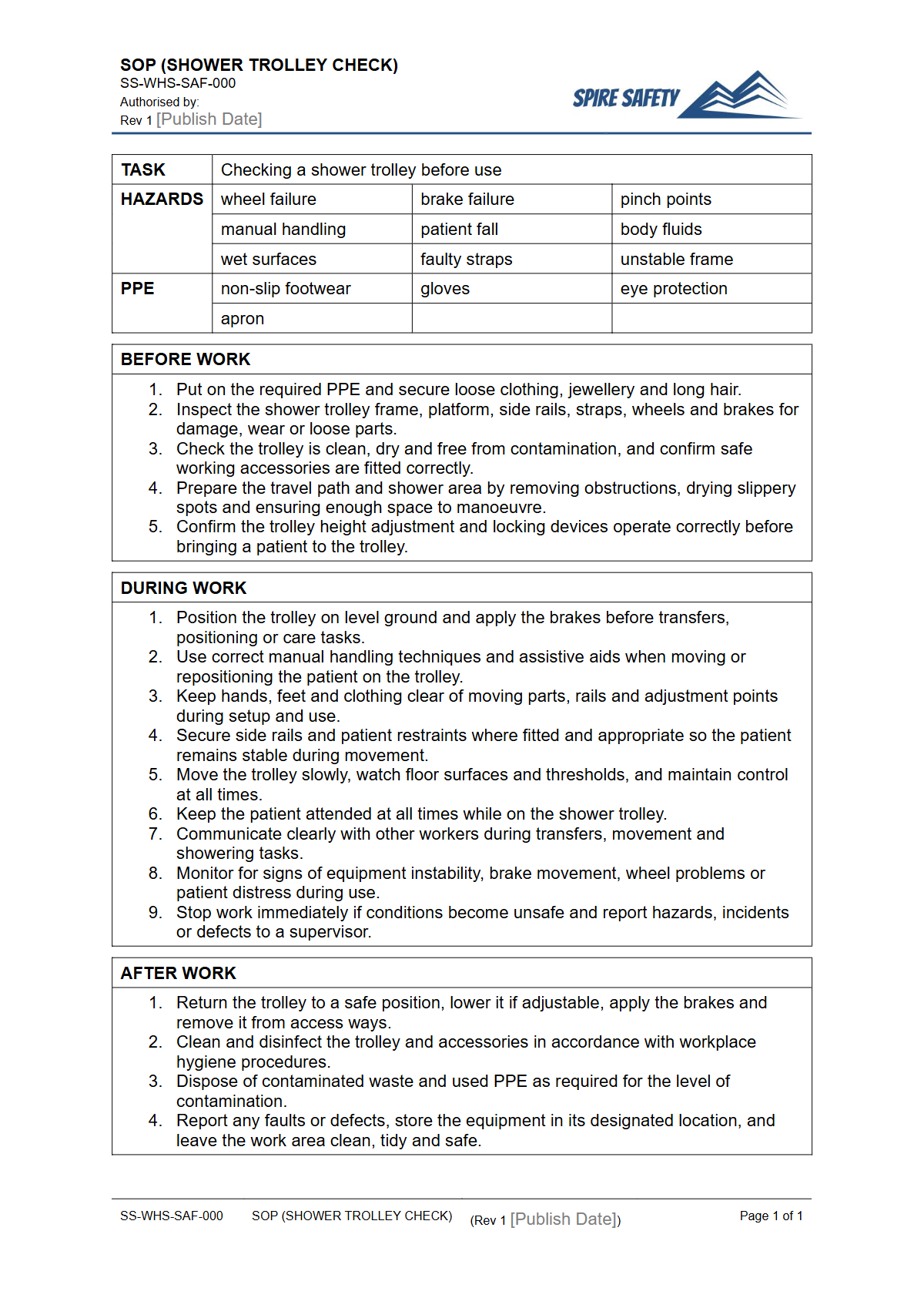
Purpose of the Free Safe Operating Procedure (Shower Trolley Check) Template
In aged care, disability support, and healthcare settings, the safe use of patient handling equipment is non-negotiable. Shower trolleys are essential for hygiene and care, but they also present significant risks if not managed correctly.
This Free Safe Operating Procedure (Shower Trolley Check) Template provides a structured framework for documenting the essential pre-operational checks and safety steps required to operate this equipment safely. Implementing a clear SOP helps prevent injuries to both residents or patients and the care staff who operate the equipment.
Using this template helps a Person Conducting a Business or Undertaking (PCBU) meet their primary duty of care under WHS legislation. It serves as a practical tool to control risks associated with hazardous manual tasks and the use of plant (equipment).
A well-defined procedure is a cornerstone of effective WHS management systems, demonstrating a commitment to a safe work environment.
Video walkthrough
How to use the Free Safe Operating Procedure (Shower Trolley Check) Template
This document is provided as a starting point in both DOCX and PDF formats. To implement it effectively, you must adapt it to your specific operational context.
Follow these steps:
- Download: Select the DOCX file for easy editing.
- Customise: Modify the content to reflect the specific make and model of your shower trolleys. Include details relevant to your workplace layout, patient or resident profiles, and internal communication protocols.
- Consult: Involve your workers in the customisation process. Their hands-on experience is invaluable for creating a practical and effective procedure.
- Train: Use the finalised SOP as a training tool for all relevant staff, ensuring they understand and can demonstrate every step.
- Implement: Integrate the SOP into your daily workflow, making the pre-use check a mandatory step before every use.
Important: This is a template only. We have provided a foundation, but you must customise it to suit the specific equipment, environment, and legislative requirements of your workplace.
For complex operations or high-risk environments, seeking expert guidance from a WHS consulting firm can ensure your procedures are robust and fit for purpose.
When to use it
A Safe Operating Procedure for a shower trolley is a dynamic document used in several key situations. Its primary function is as a pre-operational checklist that staff must complete before each use to verify the equipment is safe and fully functional.
It is also a critical training resource for new employee induction and for refresher training to ensure consistent, safe work practices. Furthermore, the SOP should be referenced during incident investigations to determine if procedural breaches contributed to the event.
Regularly reviewing the SOP ensures it remains current with any changes in equipment or work practices. These reviews can be integrated into your broader safety assurance activities, such as those verified during a WHS compliance auditing program.
Who should use it
This SOP is intended for a range of personnel within a healthcare or care-providing organisation. Frontline workers, including nurses, personal care assistants (PCAs), and allied health professionals, are the primary users who will follow the procedure daily.
Supervisors and team leaders are responsible for ensuring their staff adhere to the SOP and for providing necessary training. WHS managers and coordinators will use the template to develop and standardise safety documentation across the facility.
Maintenance staff may also use the SOP to understand operational safety checks when performing repairs or preventative maintenance. Documenting clear steps is a universal safety principle, whether you are formalising procedures for a free Air Compressor SOP in a workshop or detailing checks for patient care equipment.
Find more templates in our free WHS resources library to support your safety framework.
Common mistakes
Common mistakes to avoid
- Forgetting to check and engage wheel brakes and directional locks before patient transfers.
- Using the template without customising it for the specific make and model of the shower trolley in use.
- Failing to document checks, leading to no auditable record of equipment condition over time.
- Neglecting to train new, agency, or casual staff on the specific procedures for the equipment.
Legal references
Legal considerations
The following legal requirements may be relevant to this type of work.
- Work Health and Safety Act (Harmonised) — Provides the primary duties for protecting workers and other people from work health and safety risks.
- Work Health and Safety Regulations (Harmonised) — Sets out requirements supporting the management of workplace hazards and risks.
The following codes may be relevant to this type of work.
- Managing WHS Risks Code of Practice — Provides practical guidance on identifying hazards, assessing risks and applying effective controls.
- Work Health and Safety Consultation, Cooperation and Coordination Code of Practice — Provides practical guidance on consulting workers and coordinating with other duty holders.
- Managing the Work Environment and Facilities Code of Practice — Provides practical guidance on safe work environments, workplace facilities and related controls.
Did you know
Manual Task Risk
The healthcare and social assistance industry has one of the highest rates of serious workers' compensation claims in Australia, with hazardous manual tasks being a leading cause of injury.
FAQ
Frequently asked questions
01What are the key items to include in a shower trolley pre-use check?
02How often do shower trolleys need formal inspection and maintenance?
03Who is responsible for training staff on the safe use of shower trolleys?
04What are the primary risks associated with using shower trolleys?
Share this resource
Free Safe Operating Procedure (Shower Trolley Check) Template
Browse Categories
How To Use It
- 1Download and open in Word or PDF.
- 2Replace the placeholders with your business details.
- 3Get it reviewed by a WHS specialist before rollout.
Need it customised?
Our WHS consultants can adapt this template to your site, run a gap analysis, or audit what you already have in place.
Book a Free Consultation WHS consulting servicesor call 1300 156 382
Related templates
- Free Safe Operating Procedure (Shower Trolley Cleaning) Template
- Free Safe Operating Procedure (Shrink Wrapper) Template
- Free Safe Operating Procedure (Shrub Hand Pruning) Template
- Free Safe Operating Procedure (Shrub Planting) Template
- Free Safe Operating Procedure (Side Rail Adjustment) Template
- Free Safe Operating Procedure (Signage Cleaning) Template