
Free Safe Operating Procedure (Shrub Hand Pruning) Template
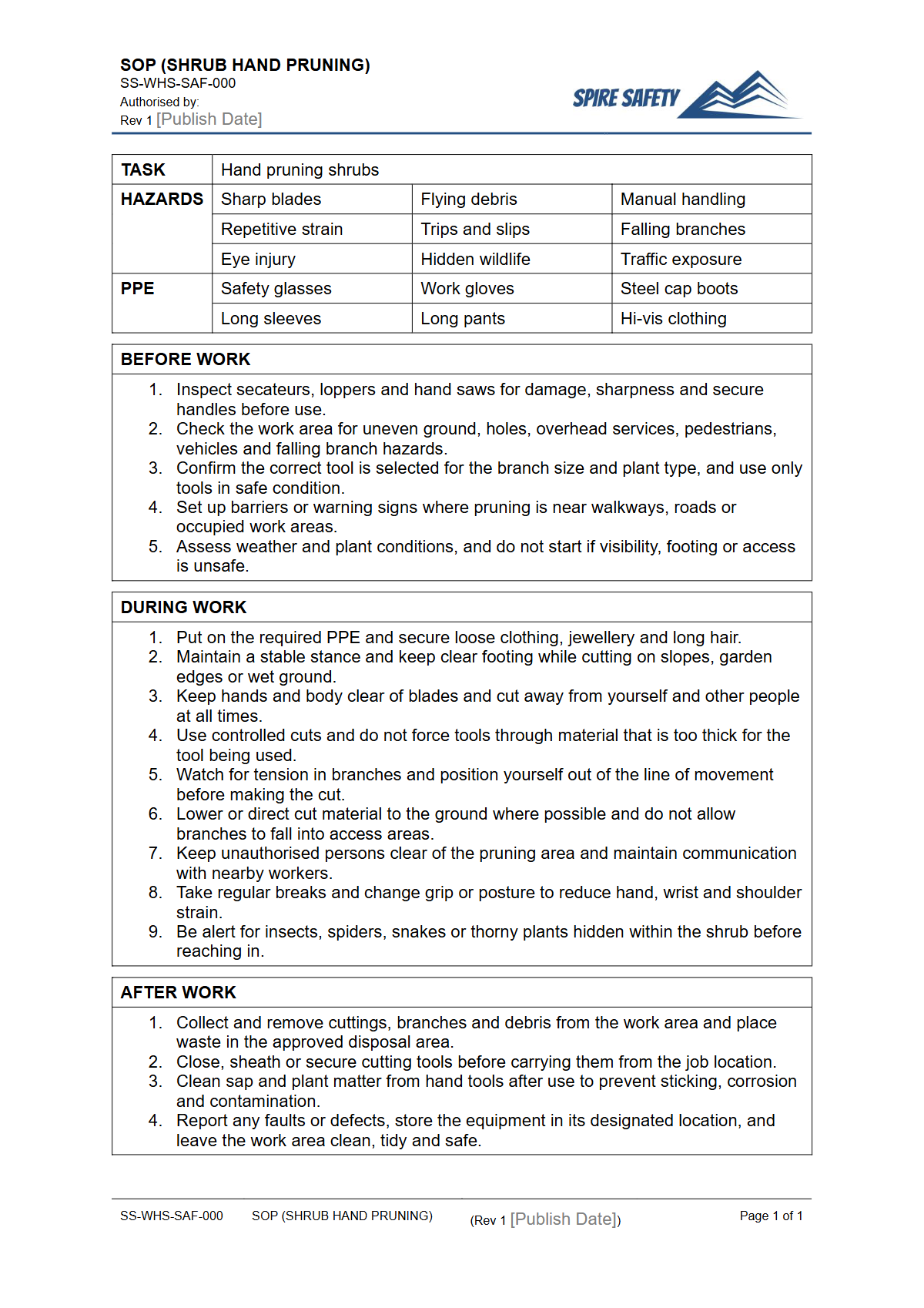
Download our free Safe Operating Procedure for shrub hand pruning. This template helps you document safe work methods and control risks for landscaping tasks.
Free Safe Operating Procedure (Shrub Hand Pruning) Template
DOCX • 126 KB + PDF
Updated Oct 2026
No signup required
Purpose of the Free Safe Operating Procedure (Shrub Hand Pruning) Template
This Free Safe Operating Procedure (Shrub Hand Pruning) Template provides a structured framework for documenting the risks and controls associated with manual pruning tasks in landscaping, horticulture, and grounds maintenance. A Safe Operating Procedure (SOP), sometimes called a Safe Work Procedure (SWP), is a crucial tool for any organisation.
It outlines a step-by-step process for performing a task safely, helping to meet WHS obligations, train workers, and minimise the risk of injury. By formalising procedures for common tasks like hand pruning, you can manage hazards such as musculoskeletal disorders, cuts from sharp tools, and eye injuries from flying debris.
Video walkthrough
How to use the Free Safe Operating Procedure (Shrub Hand Pruning) Template
To use this Free Safe Operating Procedure (Shrub Hand Pruning) Template, download the DOCX file and open it in Microsoft Word or a compatible program. The document is pre-formatted with sections covering potential hazards, required PPE, pre-operational checks, and a step-by-step procedure.
Fill in the details specific to your worksite, equipment, and personnel to create a comprehensive guide for your team.
Important: This is a template only. It is essential that you customise this document to reflect the specific hazards and control measures relevant to your workplace.
We are not liable for any incidents that may occur from the use of this template; you must conduct your own risk assessment.
What's in the Shrub Pruning SOP Template?
This template is structured to align with Australian WHS best practices and provides a clear format for you to complete. Key sections include:
- Hazard Identification: A checklist of common pruning hazards like sharp tools, awkward postures, and environmental factors.
- Risk Control Measures: Prompts for detailing how you will eliminate or minimise risks.
- Personal Protective Equipment (PPE): A section to specify required gear such as gloves, safety glasses, and sturdy footwear.
- Step-by-Step Procedure: A logical sequence from pre-start checks to clean-up and waste disposal.
- Emergency Procedures: Space to outline actions in case of injury or incident.
While this SOP covers manual hand tools, organisations using other landscaping equipment may find our free Trencher SOP template a useful reference for documenting other tasks.
When to use it
An SOP for shrub hand pruning should be developed and implemented before any workers undertake the task. It serves as a primary reference document during worker induction and ongoing training sessions.
The procedure should also be readily available at the worksite for quick reference. It is a living document that forms part of a continuous improvement cycle, often reviewed during safety meetings or after an incident. Regularly reviewing your SOPs is a key component of effective WHS management systems.
These reviews help ensure the procedure remains relevant and effective, a process that can be formally verified through independent WHS compliance auditing.
Who should use it
This template is designed for a broad range of users in the horticultural and property maintenance industries. This includes:
- Business Owners and Managers: To establish and enforce safe work standards across their organisation.
- WHS and Safety Officers: To develop and integrate task-specific procedures into the overall safety framework.
- Team Leaders and Supervisors: To train their teams and supervise work in accordance with agreed-upon safety standards.
- Landscape Gardeners, Horticulturalists, and Groundskeepers: To understand and follow the safest method for performing their daily tasks.
By systematically addressing the risks of hand pruning, you create a safer environment for your team and demonstrate a commitment to workplace health and safety. For businesses needing more comprehensive support, Spire Safety offers professional WHS consulting services.
You can find more templates and checklists like this one in our comprehensive free WHS resources library, including procedures for other common tools.
Common mistakes
Common mistakes to avoid
- Using blunt, damaged, or improperly maintained secateurs and loppers, which requires more force and increases strain.
- Neglecting to wear appropriate Personal Protective Equipment (PPE), especially wrap-around safety glasses and durable gloves.
- Failing to assess the immediate work area for trip hazards, uneven ground, insect nests, or overhead powerlines.
- Using a generic template without customising it to the specific site, task, and worker competency levels.
Legal references
Legal considerations
The following legal requirements may be relevant to this type of work.
- Work Health and Safety Act (Harmonised) — Provides the primary duties for protecting workers and other people from work health and safety risks.
- Work Health and Safety Regulations (Harmonised) — Sets out requirements supporting the management of workplace hazards and risks.
The following codes may be relevant to this type of work.
- Managing WHS Risks Code of Practice — Provides practical guidance on identifying hazards, assessing risks and applying effective controls.
- Work Health and Safety Consultation, Cooperation and Coordination Code of Practice — Provides practical guidance on consulting workers and coordinating with other duty holders.
- Managing the Work Environment and Facilities Code of Practice — Provides practical guidance on safe work environments, workplace facilities and related controls.
Did you know
Repetitive Strain
Musculoskeletal disorders from repetitive tasks are one of the most common types of workplace injuries in Australia. An SOP that encourages regular breaks and tool rotation can help mitigate this risk.
Eye Protection is Key
A significant percentage of eye injuries occur from seemingly low-risk activities like gardening and yard work. Small twigs, thorns, or debris can cause serious and permanent damage, making safety glasses essential PPE.
FAQ
Frequently asked questions
01What should be included in a Safe Operating Procedure for hand pruning?
02Is a Safe Operating Procedure legally required for pruning shrubs in Australia?
03How often should an SOP for shrub pruning be reviewed?
04Can this template be used for powered pruning tools?
Share this resource
Free Safe Operating Procedure (Shrub Hand Pruning) Template
Browse Categories
How To Use It
- 1Download and open in Word or PDF.
- 2Replace the placeholders with your business details.
- 3Get it reviewed by a WHS specialist before rollout.
Need it customised?
Our WHS consultants can adapt this template to your site, run a gap analysis, or audit what you already have in place.
Book a Free Consultation WHS consulting servicesor call 1300 156 382
Related templates
- Free Safe Operating Procedure (Shrub Planting) Template
- Free Safe Operating Procedure (Side Rail Adjustment) Template
- Free Safe Operating Procedure (Signage Cleaning) Template
- Free Safe Operating Procedure (Silage Cover Removal) Template
- Free Safe Operating Procedure (Silicone Application) Template
- Free Safe Operating Procedure (Silo Aeration Fan) Template