
Free Safe Operating Procedure (Stair Chair Operation) Template
Establish a clear, safe method for using stair chairs with our customisable template. Download your free Stair Chair Operation Safe Operating Procedure.
Free Safe Operating Procedure (Stair Chair Operation) Template
DOCX • 126 KB + PDF
Updated Oct 2026
No signup required
Purpose of the Free Safe Operating Procedure (Stair Chair Operation) Template
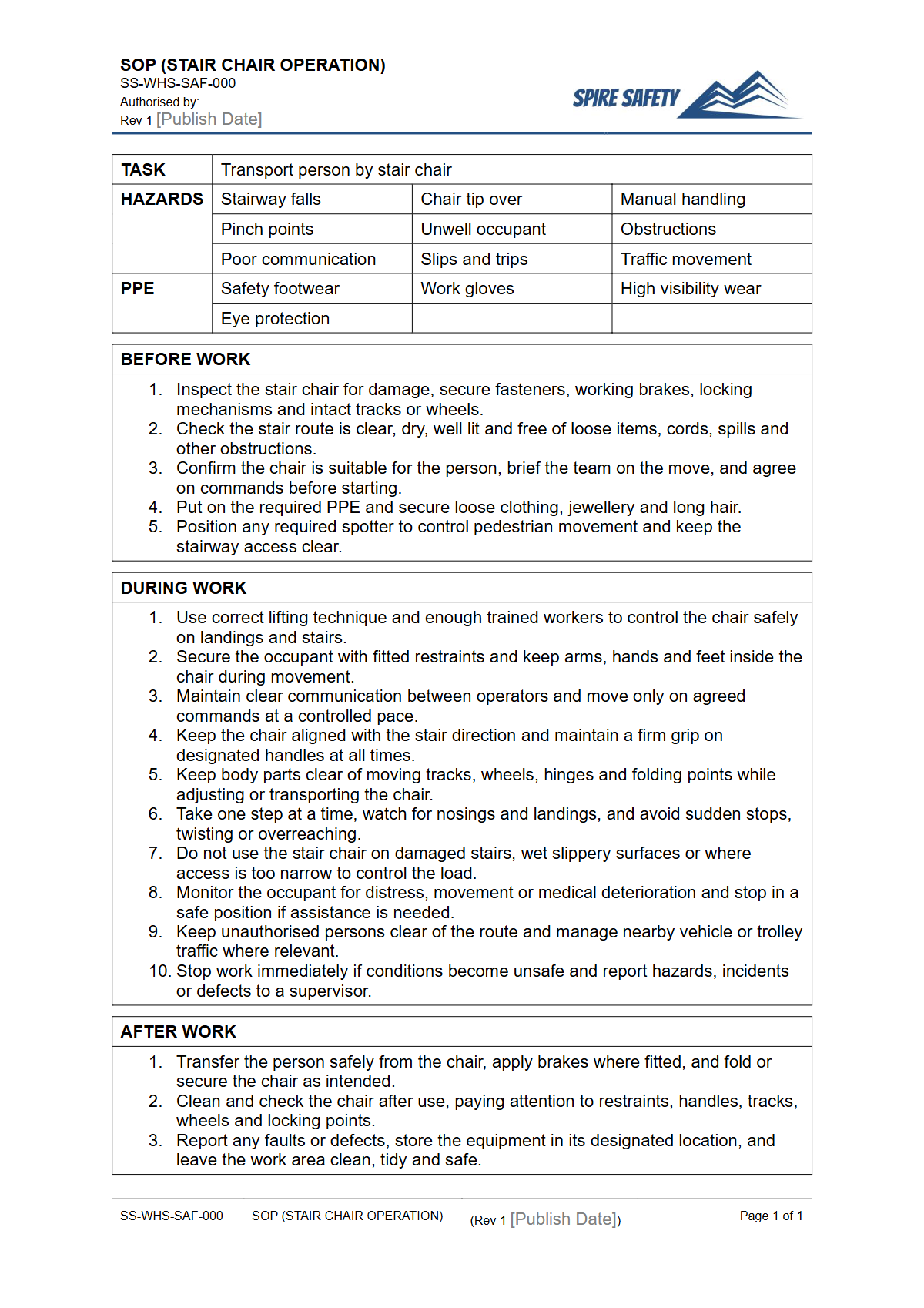
This Free Safe Operating Procedure (Stair Chair Operation) Template provides a structured framework for businesses to document the required process for safely moving a person up or down stairs. Using a stair chair, while an effective manual handling aid, presents significant risks of injury to both operators and the individual being transported if not performed correctly.
An SOP formalises the procedure, helping to mitigate risks such as musculoskeletal injuries for operators and falls or discomfort for the passenger. By establishing a clear, repeatable process, organisations can ensure consistency in training and operational execution.
This document serves as a critical component within a comprehensive WHS management system, demonstrating a proactive approach to managing hazardous manual tasks.
Video walkthrough
How to use the Free Safe Operating Procedure (Stair Chair Operation) Template
To get started, download the template in your preferred format (DOCX for easy editing or PDF). This Safe Operating Procedure for stair chair operation is designed as a foundational document that requires customisation to reflect your specific operational context.
It is essential to tailor the content to the model of stair chair used, the layout of your facility, and the specific needs of the people you transport.
IMPORTANT: This is a template that we have created as a starting point. It must be adapted to your specific workplace.
We recommend you consult with operators, review the stair chair manufacturer's instructions, and conduct a site-specific risk assessment to ensure the final SOP is comprehensive and relevant to your needs. The effectiveness of this procedure should be verified through practical drills and reviewed as part of regular WHS compliance audits to ensure its ongoing suitability.
When to use it
A Safe Operating Procedure for stair chair use is necessary whenever this equipment is designated for moving people between floors. Common scenarios include:
- Emergency building evacuations for individuals with mobility impairments.
- Non-emergency transport in healthcare settings, residential aged care facilities, and apartment buildings where lift access is unavailable.
- Planned movements during building maintenance or power outages that affect lift operation.
- Any situation identified in a risk assessment where using a stair chair is the determined control measure for transporting a person on stairs.
Implementing an SOP ensures that these infrequent but high-risk tasks are carried out with a consistent and pre-approved methodology, reducing the likelihood of errors or injuries.
Who should use it
This template is designed for use by individuals responsible for workplace health and safety. This includes:
- WHS Managers and Safety Officers
- Facility and Building Managers
- Aged Care and Healthcare Coordinators
- Emergency Wardens and Response Teams
- Persons Conducting a Business or Undertaking (PCBUs)
Essentially, anyone tasked with creating, implementing, or overseeing safety protocols for manual handling and person movement will find this template valuable. If you are unsure how to conduct the necessary risk assessments or tailor this procedure effectively, seeking specialist WHS consulting services can provide expert guidance and ensure your safety documentation is robust and fit-for-purpose.
Key Elements of an Effective Stair Chair SOP
Our template prompts you to consider all critical stages of the operation, ensuring a thorough and safe process. A robust procedure should always include the following sections.
Pre-Operational Checks
Before any use, the equipment must be inspected. This includes checking the chair's frame for damage, ensuring all straps and buckles are functional, verifying that handles lock securely in place, and checking the condition of wheels and friction belts.
This simple step prevents equipment failure during a critical transfer.
Operational Procedure
The core of the SOP, this section details the step-by-step process. It should specify the minimum number of operators required (typically two), communication protocols between operators, the method for safely transferring and securing the person in the chair, and the correct body mechanics and technique for ascending or descending stairs.
It also covers navigating landings and final positioning.
Post-Operational Actions
After the task is complete, the procedure isn't over. This part of the SOP outlines requirements for cleaning and decontaminating the chair, conducting a post-use inspection, logging any faults or damage, and returning the equipment to its designated, accessible storage location.
Developing clear procedures is a cornerstone of a safe workplace. For more tools to help manage risk, you can explore our complete free WHS resources library, which contains a wide range of templates and guides.
Common mistakes
Common mistakes to avoid
- Failing to perform pre-operational checks on the chair, straps, and handles.
- Attempting the operation with an insufficient number of trained operators.
- Poor communication between operators during the movement, especially on landings.
- Not properly securing the person in the chair with all available safety straps before moving.
Legal references
Legal considerations
The following legal requirements may be relevant to this type of work.
- Work Health and Safety Act (Harmonised) — Provides the primary duties for protecting workers and other people from work health and safety risks.
- Work Health and Safety Regulations (Harmonised) — Sets out requirements supporting the management of workplace hazards and risks.
The following codes may be relevant to this type of work.
- Managing WHS Risks Code of Practice — Provides practical guidance on identifying hazards, assessing risks and applying effective controls.
- Work Health and Safety Consultation, Cooperation and Coordination Code of Practice — Provides practical guidance on consulting workers and coordinating with other duty holders.
- Managing the Work Environment and Facilities Code of Practice — Provides practical guidance on safe work environments, workplace facilities and related controls.
Did you know
Manual Handling Risk
Hazardous manual tasks are a leading cause of workplace injury in Australia, accounting for a significant portion of serious workers' compensation claims. Using aids like stair chairs correctly is vital to managing this risk.
FAQ
Frequently asked questions
01What is a stair chair and why is an SOP needed?
02Who is responsible for training workers on stair chair operation?
03How often should a stair chair SOP be reviewed?
04Can this template be used for powered stair chairs?
Share this resource
Free Safe Operating Procedure (Stair Chair Operation) Template
Browse Categories
How To Use It
- 1Download and open in Word or PDF.
- 2Replace the placeholders with your business details.
- 3Get it reviewed by a WHS specialist before rollout.
Need it customised?
Our WHS consultants can adapt this template to your site, run a gap analysis, or audit what you already have in place.
Book a Free Consultation WHS consulting servicesor call 1300 156 382
Related templates
- Free Safe Operating Procedure (Stair Handrail Clean) Template
- Free Safe Operating Procedure (Stair Tread Cleaning) Template
- Free Safe Operating Procedure (Stand Up Paddleboard) Template
- Free Safe Operating Procedure (Standing Aid Check) Template
- Free Safe Operating Procedure (Standing Aid Cleaning) Template
- Free Safe Operating Procedure (Static Line Use) Template