
Free Safe Operating Procedure (Tanning Bed Cleaning) Template
Ensure consistent and safe cleaning practices in your salon. Download our free Safe Operating Procedure for tanning bed cleaning to get started.
Free Safe Operating Procedure (Tanning Bed Cleaning) Template
DOCX • 126 KB + PDF
Updated Oct 2026
No signup required
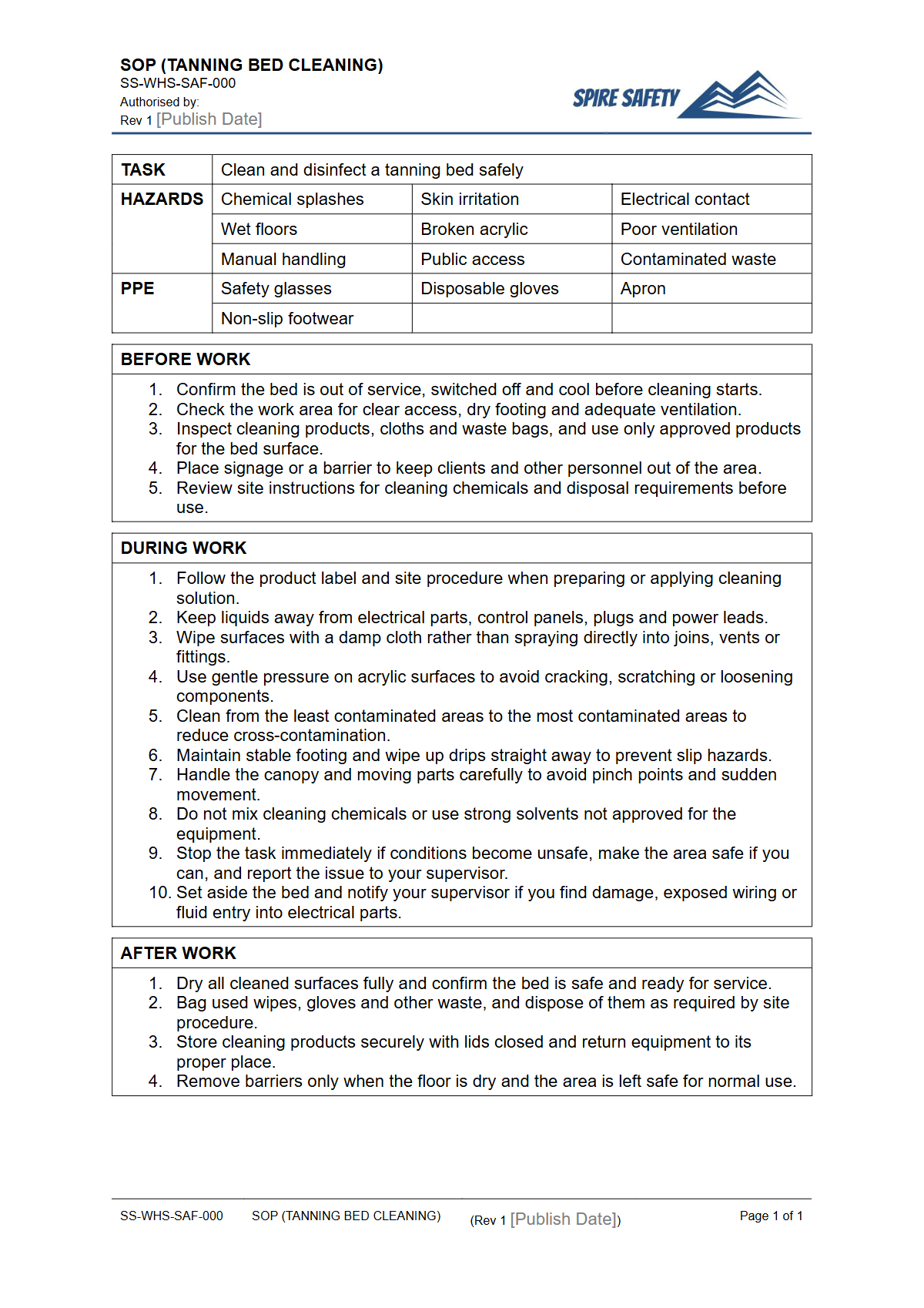
Purpose of the Free Safe Operating Procedure (Tanning Bed Cleaning) Template
Proper cleaning of tanning beds is critical not only for client hygiene and satisfaction but also for the health and safety of your workers. This Free Safe Operating Procedure (Tanning Bed Cleaning) Template provides a structured framework to document the required steps for sanitising equipment safely and effectively.
Using a standardised procedure helps minimise risks associated with chemical exposure, electrical hazards, and biological contamination. It also assists in prolonging the life of expensive equipment by ensuring correct products and methods are used.
A documented SOP is a fundamental component of a safe system of work. It forms part of your evidence in demonstrating due diligence and is a key element within broader WHS management systems. This template helps you outline the process from start to finish, ensuring every staff member performs the task to the same high standard, every time.
Video walkthrough
How to use the Free Safe Operating Procedure (Tanning Bed Cleaning) Template
Our Safe Operating Procedure for tanning bed cleaning is available as a fully editable DOCX file and a print-ready PDF. To use it, simply download your preferred format and begin tailoring it to your business.
The document includes sections for you to detail the specific hazards, personal protective equipment (PPE), and step-by-step instructions relevant to your operations. You should add details of the specific tanning bed models you use and the approved cleaning chemicals you have on-site.
Important: This document is a template and must be customised for your workplace. We provide this as a starting point, but you must adapt it to your specific equipment, chemicals, and internal processes.
It is your responsibility as the PCBU to ensure the information is accurate and sufficient for your needs. If you require assistance in developing site-specific documentation, consider our WHS consulting services.
When to use this Safe Operating Procedure
A Safe Operating Procedure for tanning bed cleaning should be used consistently as part of daily operations. It serves as a practical guide for workers performing the cleaning task and is an essential resource for training and induction.
The SOP should be readily accessible near the equipment for easy reference. It should be applied after every client use to ensure sanitation between sessions, as well as during more thorough end-of-day or weekly deep cleans.
Formal procedures are vital for any task involving chemical handling or specific safety steps, whether it's in a salon or a commercial kitchen. For example, our deep fryer SOP outlines similar principles of safety and process for a different environment, demonstrating the universal importance of documented procedures.
Who should use this Safe Operating Procedure
This SOP is intended for all personnel involved in the operation and maintenance of tanning facilities. This includes:
- Salon Workers/Technicians: The primary users who will follow the step-by-step instructions to clean the equipment.
- Supervisors and Managers: Responsible for ensuring workers are trained on the SOP, have access to the required PPE and cleaning agents, and follow the procedure correctly.
- Cleaners: If dedicated cleaning staff are employed, they must be trained specifically on this SOP, as cleaning tanning beds requires specific products and precautions.
- Business Owners (PCBUs): Accountable for providing a safe work environment, which includes developing, implementing, and reviewing safe work procedures. Regular reviews can be verified through internal checks or formal WHS compliance auditing.
Key Elements of a Tanning Bed Cleaning SOP
A robust SOP for this task should clearly address several key areas to be effective. When customising your template, ensure you cover the following points in detail.
Hazards and Risk Controls
Identify all potential hazards. This includes electrical risks (the unit must be unplugged), exposure to hazardous cleaning chemicals (inhalation or skin contact), slip and fall risks from spills, and ergonomic risks from awkward postures.
For each hazard, list the control measures, such as de-energising equipment, ensuring adequate ventilation, and using correct manual handling techniques.
Required Personal Protective Equipment (PPE)
List all mandatory PPE required to perform the cleaning task safely. This will almost certainly include chemical-resistant gloves and safety glasses or goggles to protect from splashes.
Depending on the chemicals used and the ventilation in the area, a specific type of respirator may also be required. Be specific about the standards the PPE must meet (e.g., AS/NZS 1337.1 for eye protection).
Step-by-Step Cleaning Process
This is the core of the SOP. Detail the sequence of actions in a clear, logical, and unambiguous way.
Number each step. Include actions like: gathering all necessary equipment, disconnecting the power supply, removing any towels, applying the approved cleaning solution, observing the required contact time for disinfection, wiping down all surfaces (including handles and controls), and performing a final inspection. Find more guidance and templates in our free WHS resources library.
Common mistakes
Common mistakes to avoid
- Using household glass cleaner or other unapproved chemicals that damage acrylic surfaces.
- Failing to unplug the tanning bed from the power source before cleaning begins.
- Not allowing sufficient contact time for disinfectant solutions to work effectively.
- Neglecting to document training for all staff who are required to perform the cleaning task.
Legal references
Legal considerations
The following legal requirements may be relevant to this type of work.
- Work Health and Safety Act (Harmonised) — Provides the primary duties for protecting workers and other people from work health and safety risks.
- Work Health and Safety Regulations (Harmonised) — Sets out requirements supporting the management of workplace hazards and risks.
The following codes may be relevant to this type of work.
- Managing WHS Risks Code of Practice — Provides practical guidance on identifying hazards, assessing risks and applying effective controls.
- Work Health and Safety Consultation, Cooperation and Coordination Code of Practice — Provides practical guidance on consulting workers and coordinating with other duty holders.
- Managing the Work Environment and Facilities Code of Practice — Provides practical guidance on safe work environments, workplace facilities and related controls.
Did you know
Acrylic Damage
The acrylic shields on tanning beds can be permanently damaged by incorrect cleaning chemicals like ammonia-based cleaners, reducing their UV transparency and potentially leading to cracks.
Contact Time is Key
For disinfectants to be effective, they must remain wet on the surface for a specific 'contact time' as specified by the manufacturer, often several minutes. Simply spraying and wiping immediately is not sufficient to kill germs.
FAQ
Frequently asked questions
01What should be included in a tanning bed cleaning SOP?
02How often should a tanning bed be cleaned?
03Are there specific chemicals required for cleaning tanning beds?
04Who is responsible for ensuring the SOP is followed?
Share this resource
Free Safe Operating Procedure (Tanning Bed Cleaning) Template
Browse Categories
How To Use It
- 1Download and open in Word or PDF.
- 2Replace the placeholders with your business details.
- 3Get it reviewed by a WHS specialist before rollout.
Need it customised?
Our WHS consultants can adapt this template to your site, run a gap analysis, or audit what you already have in place.
Book a Free Consultation WHS consulting servicesor call 1300 156 382
Related templates
- Free Safe Operating Procedure (Tea Urn Cleaning) Template
- Free Safe Operating Procedure (Temperature Calibrator) Template
- Free Safe Operating Procedure (Temporary Handrail) Template
- Free Safe Operating Procedure (Temporary Power) Template
- Free Safe Operating Procedure (Tender Boat Operation) Template
- Free Safe Operating Procedure (Tennis Court Cleaning) Template