
Free Safe Operating Procedure (Vet Cage Waste Cleanup) Template
Manage biological hazards safely with our free Safe Operating Procedure (Vet Cage Waste Cleanup) Template. Download this customisable starting point now.
Free Safe Operating Procedure (Vet Cage Waste Cleanup) Template
DOCX • 126 KB + PDF
Updated Oct 2026
No signup required
Purpose of the Free Safe Operating Procedure (Vet Cage Waste Cleanup) Template
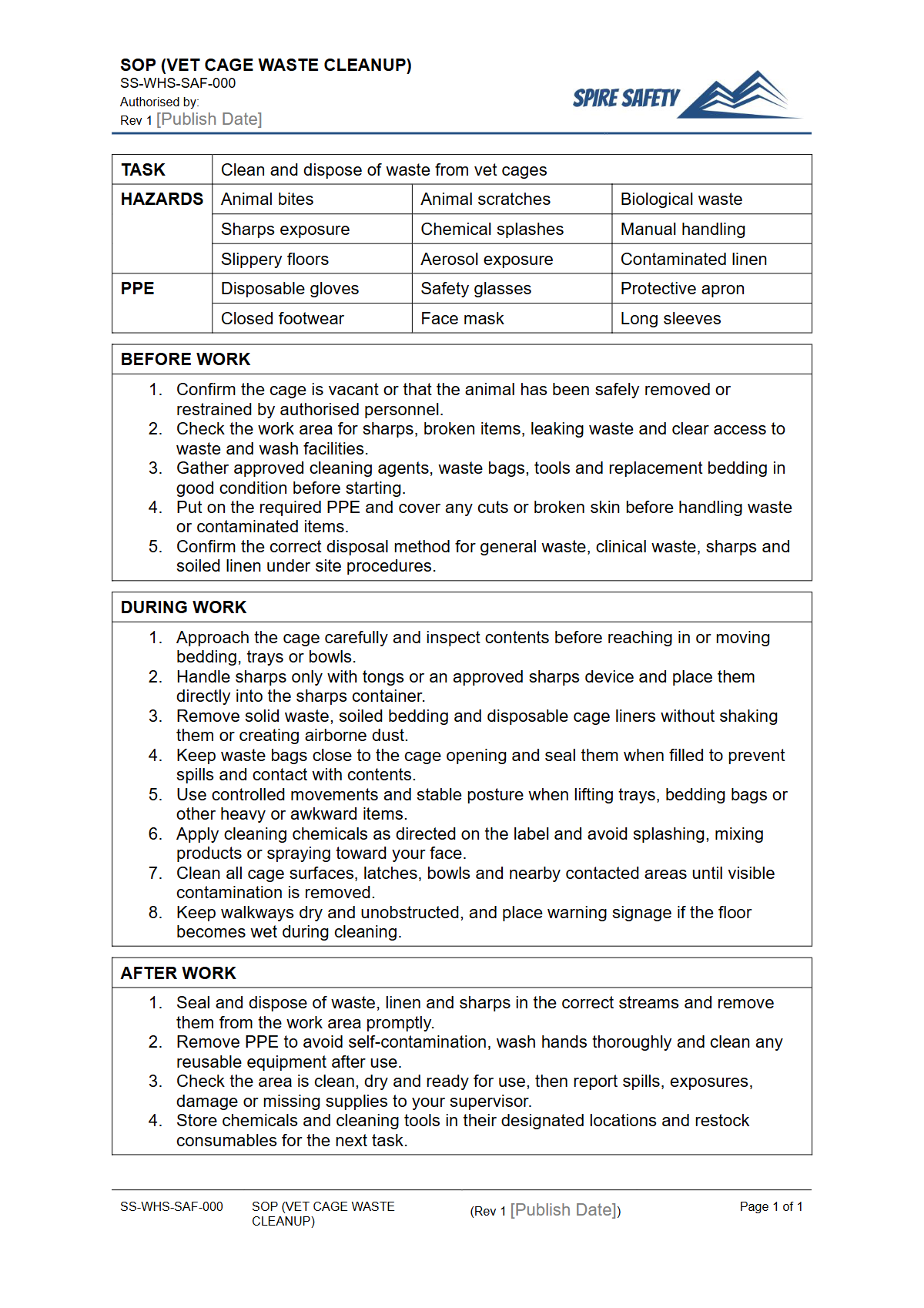
Working in a veterinary environment involves frequent contact with animals, their waste, and potent cleaning agents. This free Safe Operating Procedure (Vet Cage Waste Cleanup) Template provides a structured framework for outlining the safe methods required to clean and disinfect animal enclosures.
Properly documenting this process is crucial for minimising risks to your team, including exposure to zoonotic diseases, hazardous chemicals, and potential musculoskeletal injuries from manual tasks. A clear, accessible SOP ensures every team member follows the same safe, effective steps, promoting a consistent standard of hygiene and safety within your practice.
A well-defined procedure helps your organisation meet its primary duty of care under Australian WHS laws. It serves as a critical training tool for new and existing staff, clearly communicating the hazards and the control measures required to manage them.
Implementing formalised procedures for high-risk tasks is a fundamental component of effective WHS management systems, demonstrating a commitment to proactive safety management.
Video walkthrough
How to use the Free Safe Operating Procedure (Vet Cage Waste Cleanup) Template
This Safe Operating Procedure for vet cage waste cleanup is provided as a user-friendly template in both DOCX and PDF formats. The DOCX file is fully editable, allowing you to tailor the content to the specific context of your veterinary clinic or animal care facility.
You can add your company logo, specify the exact cleaning agents and equipment used, detail your waste disposal protocols, and list emergency contacts.
Important: This document is a template and must be customised to your specific workplace. We recommend a competent person reviews and adapts the document to reflect your unique equipment, chemicals, PPE requirements, tasks, and control measures.
It does not constitute a complete risk assessment on its own. It should be developed in consultation with the workers who will be performing the task and reviewed regularly.
When to use this Safe Operating Procedure
This SOP should be implemented as the standard procedure for all routine and non-routine cleaning of animal cages, kennels, and enclosures. It is relevant for daily cleaning tasks between patients, as well as for terminal disinfection after an animal with a known infectious disease has been discharged.
The procedure should be referenced during staff inductions, refresher training, and whenever a new cleaning product or piece of equipment is introduced. It also serves as a vital benchmark when investigating any incidents or near misses related to cleaning tasks, helping to identify gaps in your process.
For complex scenarios or developing multiple procedures, our WHS consulting services can provide expert guidance.
Who should use this Safe Operating Procedure
This template is designed for anyone responsible for the safety and operations within an animal care environment. This includes:
- Practice Managers: To establish and enforce standardised, safe work practices across their clinic.
- WHS/OHS Officers: As a tool to control identified risks associated with biological hazards, chemicals, and manual handling.
- Veterinary Nurses and Technicians: As a direct guide for performing their daily cleaning duties safely and effectively.
- Animal Care Assistants and Kennel Hands: To ensure they are properly trained and competent in crucial hygiene and safety protocols.
Using this SOP helps demonstrate that workers have been provided with clear instructions on how to work safely. Periodically checking that procedures are followed is a key part of safety assurance, which can be verified through internal reviews or WHS compliance auditing.
Key Hazards and Control Measures
Cleaning animal cages involves several significant hazards. A thorough risk assessment should identify these, and your SOP should detail the controls. Key hazards include:
- Biological Hazards: Exposure to bacteria, viruses, fungi, and parasites in animal waste, blood, or saliva, which can cause zoonotic diseases. Controls include using appropriate PPE, following correct hand hygiene protocols, and using approved disinfectants.
- Hazardous Chemicals: Skin contact, eye splashes, or inhalation of vapours from detergents, disinfectants, and sanitisers. Controls involve proper dilution, ensuring adequate ventilation, using correct PPE (gloves, goggles), and providing Safety Data Sheets (SDS).
- Manual Tasks: Musculoskeletal injuries from lifting heavy animals, moving cages, bending, and reaching. Controls include ergonomic design of enclosures, using trolleys, team lifting, and providing manual handling training.
- Sharps: Puncture wounds from needles, broken glass, or sharp fragments in bedding. Controls require using designated sharps containers and careful handling of waste.
This SOP is just one example of the many documents available. You can explore our complete free WHS resources library for more templates and guides to support your safety initiatives.
Common mistakes
Common mistakes to avoid
- Using incorrect dilution ratios for concentrated disinfectants, reducing their effectiveness or increasing their hazardous properties.
- Failing to allow sufficient 'contact time' for a disinfectant to work before wiping it away.
- Neglecting to wear eye protection, leaving staff vulnerable to chemical splashes.
- Poor manual handling techniques when moving animals or heavy equipment, leading to sprains and strains.
Legal references
Legal considerations
The following legal requirements may be relevant to this type of work.
- Work Health and Safety Act (Harmonised) — Provides the primary duties for protecting workers and other people from work health and safety risks.
- Work Health and Safety Regulations (Harmonised) — Sets out requirements supporting the management of workplace hazards and risks.
The following codes may be relevant to this type of work.
- Managing WHS Risks Code of Practice — Provides practical guidance on identifying hazards, assessing risks and applying effective controls.
- Work Health and Safety Consultation, Cooperation and Coordination Code of Practice — Provides practical guidance on consulting workers and coordinating with other duty holders.
- Managing the Work Environment and Facilities Code of Practice — Provides practical guidance on safe work environments, workplace facilities and related controls.
Did you know
Zoonotic Disease Risk
According to Safe Work Australia, there are over 200 diseases that can be transmitted from animals to humans, known as zoonoses, making biosecurity procedures in vet clinics critically important.
Chemical Safety
Mixing common cleaning chemicals like bleach and ammonia-based products can create toxic chloramine gas, which causes severe respiratory irritation and can be life-threatening in high concentrations.
FAQ
Frequently asked questions
01What PPE is typically required for cleaning vet cages?
02How should veterinary clinical waste be disposed of?
03What is the difference between cleaning, sanitising, and disinfecting?
04How often should a Safe Operating Procedure be reviewed?
Share this resource
Free Safe Operating Procedure (Vet Cage Waste Cleanup) Template
Browse Categories
How To Use It
- 1Download and open in Word or PDF.
- 2Replace the placeholders with your business details.
- 3Get it reviewed by a WHS specialist before rollout.
Need it customised?
Our WHS consultants can adapt this template to your site, run a gap analysis, or audit what you already have in place.
Book a Free Consultation WHS consulting servicesor call 1300 156 382
Related templates
- Free Safe Operating Procedure (Vet Kennel Cleaning) Template
- Free Safe Operating Procedure (Vet Laundry Handling) Template
- Free Safe Operating Procedure (Vet Room Cleaning) Template
- Free Safe Operating Procedure (Vet Waiting Room Clean) Template
- Free Safe Operating Procedure (Vet Waste Handling) Template
- Free Safe Operating Procedure (Vibrating Screed) Template