
Free Safe Operating Procedure (Vet Room Cleaning) Template
Download our free Safe Operating Procedure (Vet Room Cleaning) Template to manage hazards in veterinary clinics. Get your customisable DOCX and PDF now.
Free Safe Operating Procedure (Vet Room Cleaning) Template
DOCX • 126 KB + PDF
Updated Oct 2026
No signup required
Purpose of the Free Safe Operating Procedure (Vet Room Cleaning) Template
Veterinary clinics are dynamic environments filled with unique workplace hazards. From biological risks and zoonotic diseases to chemical exposure and sharps injuries, maintaining a clean and safe space is paramount.
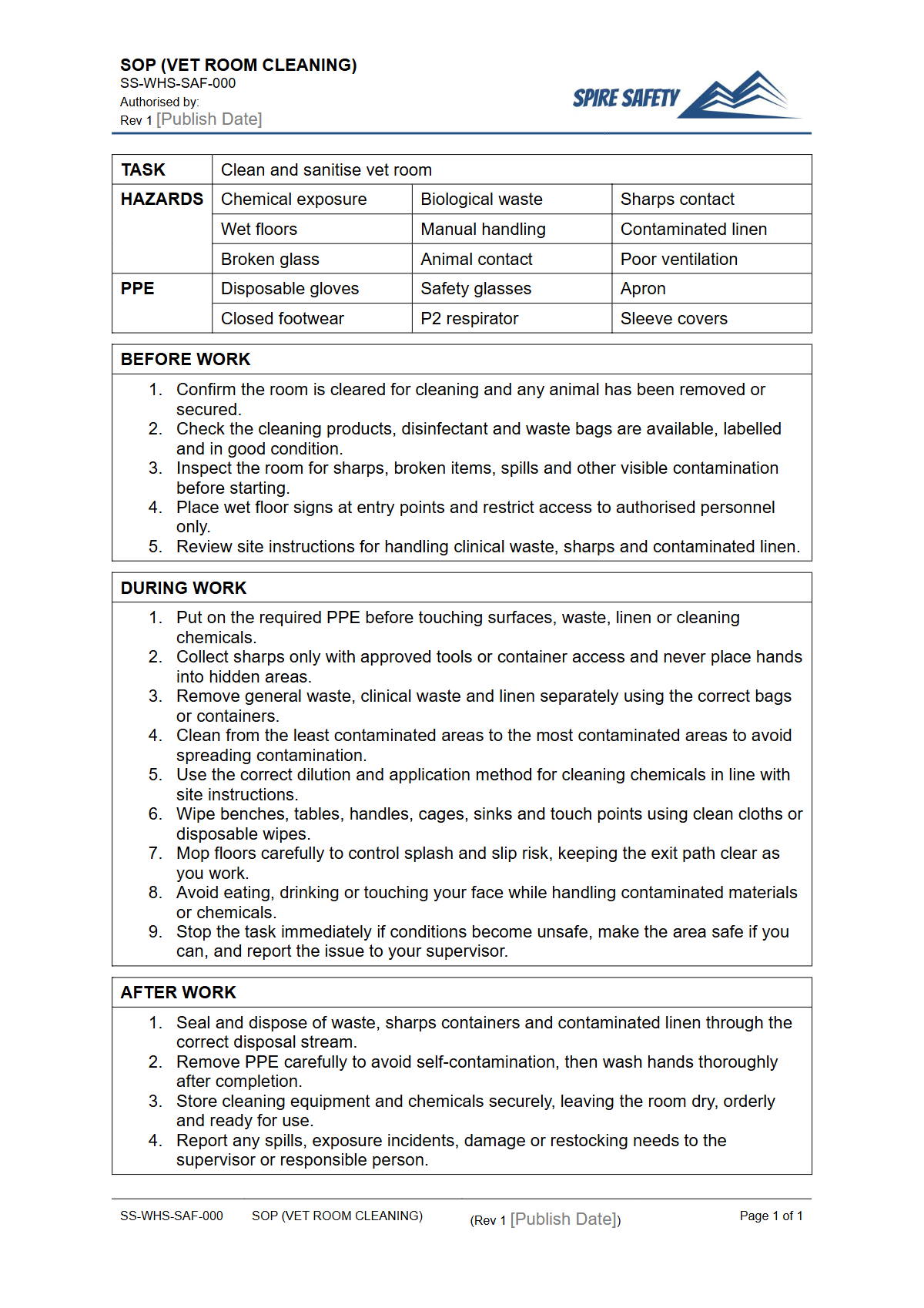
This Free Safe Operating Procedure (Vet Room Cleaning) Template provides a structured framework for standardising cleaning tasks in consultation rooms, treatment areas, and other critical zones. By clearly documenting the required steps, PPE, and safety precautions, your organisation can significantly reduce the risk of injury and illness for your team.
A documented Safe Operating Procedure (SOP) is a fundamental tool for hazard management. It ensures that every team member performs the cleaning task consistently and safely, minimising variables that could lead to an incident.
This SOP helps control risks associated with disinfectants, animal waste, and contaminated surfaces, forming a key part of your overall safety management system. Similar principles of procedural safety are applied in other workplaces, such as commercial kitchens, as detailed in our free Safe Operating Procedure for deep fryer operation.
Video walkthrough
How to use the Free Safe Operating Procedure (Vet Room Cleaning) Template
This template is provided as a starting point in both DOCX and PDF formats. It is designed to be adapted to the specific chemicals, equipment, layout, and procedures of your veterinary practice.
Download the DOCX file and methodically work through each section, adding, removing, and editing details to reflect your operational reality. The most effective SOPs are developed in consultation with the workers who will be performing the task, as they have direct experience with the challenges and risks involved.
Important: This is a template only. It must be customised to suit your specific workplace.
We are not responsible for the outcomes if you use this template without tailoring it to your work environment, the equipment in use, and the specific hazards present. Consultation with your team is essential for creating a relevant and effective document.
A well-developed set of SOPs is a cornerstone of effective WHS management systems that protect your workers and ensure operational consistency.
Key Components of Your SOP
When customising the template, ensure you include detailed information on the following critical areas:
- Required PPE: Specify the exact gloves (e.g., nitrile, heavy-duty), eye protection, masks, and protective clothing required.
- Pre-Cleaning Checks: Outline steps like ensuring the room is vacant, checking for visible sharps, and preparing cleaning solutions.
- Step-by-Step Procedure: Detail the sequence of cleaning, from high-touch surfaces to floors, to prevent cross-contamination.
- Chemical Handling: List all cleaning agents and disinfectants. Include instructions on correct dilution, required contact time, and Safety Data Sheet (SDS) locations. Safe chemical management is a universal WHS requirement, much like in procedures outlined in our FREE Oxy Acetylene SOP Template.
- Waste Disposal: Provide clear instructions for disposing of general waste, cytotoxic materials, biological hazards, and sharps.
- Post-Cleaning Procedure: Detail steps for cleaning and storing equipment, doffing PPE, and personal hygiene (e.g., hand washing).
When to use this Safe Operating Procedure
A Safe Operating Procedure for vet room cleaning should be used consistently as part of daily operations. It is an essential reference document that should be readily accessible in the work area.
Key times to use the SOP include: training new staff members, conducting refresher training for existing employees, and as a guide during and after cleaning procedures. It also serves as crucial evidence of your documented safety processes during internal or external audits, which can be supported by professional WHS compliance auditing.
Who should use it
This SOP is intended for all personnel responsible for or involved in the cleaning of veterinary consultation and treatment rooms. This typically includes Veterinary Nurses, Animal Attendants, Technicians, and dedicated cleaning staff.
Clinic Managers and WHS Representatives should also be familiar with the procedure to ensure it is being followed correctly and remains adequate for controlling risks. Anyone performing the task must be trained on the contents of the final, customised SOP before undertaking the work.
Some veterinary practices have workshops for equipment repair, where other task-specific procedures, like a FREE Circular Saw SOP, would be necessary.
Review and Update
An SOP is a living document. It should be reviewed regularly—at least annually—or whenever there is a change in your workplace.
This includes the introduction of new cleaning chemicals, changes in procedure, new equipment, or following an incident or near miss. Regular reviews ensure the document remains relevant and effective.
If your organisation requires assistance with developing or reviewing your safety documentation, our WHS consulting team can provide expert guidance. For more templates and safety guides, explore our complete free WHS resources library.
Common mistakes
Common mistakes to avoid
- Using incorrect dilution ratios for concentrated disinfectants, making them ineffective or overly hazardous.
- Failing to wear appropriate Personal Protective Equipment (PPE), especially gloves and eye protection.
- Improper disposal of sharps and biological waste, creating a significant risk of injury and infection.
- Not allowing sufficient contact time for chemical disinfectants to kill pathogens on surfaces.
Legal references
Legal considerations
The following legal requirements may be relevant to this type of work.
- Work Health and Safety Act (Harmonised) — Provides the primary duties for protecting workers and other people from work health and safety risks.
- Work Health and Safety Regulations (Harmonised) — Sets out requirements supporting the management of workplace hazards and risks.
The following codes may be relevant to this type of work.
- Managing WHS Risks Code of Practice — Provides practical guidance on identifying hazards, assessing risks and applying effective controls.
- Work Health and Safety Consultation, Cooperation and Coordination Code of Practice — Provides practical guidance on consulting workers and coordinating with other duty holders.
- Managing the Work Environment and Facilities Code of Practice — Provides practical guidance on safe work environments, workplace facilities and related controls.
Did you know
Zoonotic Risk
According to Safe Work Australia, veterinary workers are at a high risk of contracting zoonotic diseases. Effective cleaning and disinfection protocols are a primary control measure in preventing transmission from animals to staff.
Chemical Contact Time
Many disinfectants require a specific 'contact time'—the period they must remain wet on a surface to be effective against pathogens. Skipping this step is a common failure point that can render cleaning ineffective.
FAQ
Frequently asked questions
01Why is a specific SOP for vet room cleaning necessary?
02What are the biggest risks when cleaning a veterinary consultation room?
03How often should a vet room cleaning SOP be reviewed?
04Can I use this template for cleaning other areas of a vet clinic, like surgical suites?
Share this resource
Free Safe Operating Procedure (Vet Room Cleaning) Template
Browse Categories
How To Use It
- 1Download and open in Word or PDF.
- 2Replace the placeholders with your business details.
- 3Get it reviewed by a WHS specialist before rollout.
Need it customised?
Our WHS consultants can adapt this template to your site, run a gap analysis, or audit what you already have in place.
Book a Free Consultation WHS consulting servicesor call 1300 156 382
Related templates
- Free Safe Operating Procedure (Vet Waiting Room Clean) Template
- Free Safe Operating Procedure (Vet Waste Handling) Template
- Free Safe Operating Procedure (Vibrating Screed) Template
- Free Safe Operating Procedure (Vibrating Screen) Template
- Free Safe Operating Procedure (Vibration Logger) Template
- Free Safe Operating Procedure (Vibration Meter) Template