
Free Safe Operating Procedure (Vet Laundry Handling) Template
Manage biological hazards and manual handling risks in your veterinary practice with our structured SOP template for laundry handling.
Free Safe Operating Procedure (Vet Laundry Handling) Template
DOCX • 126 KB + PDF
Updated Oct 2026
No signup required
Purpose of the Free Safe Operating Procedure (Vet Laundry Handling) Template
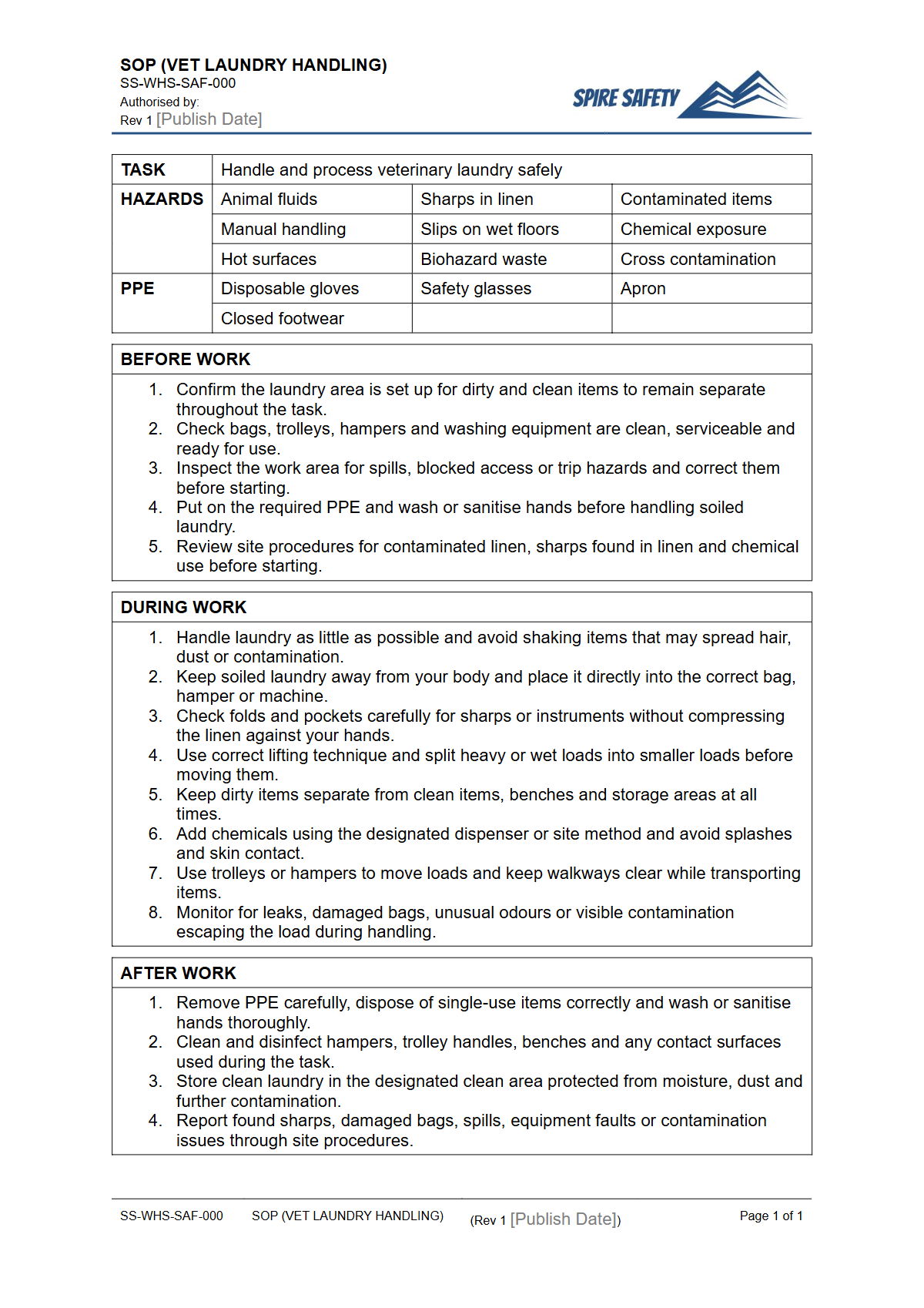
Handling laundry in a veterinary setting involves significant risks, including exposure to zoonotic pathogens, hazardous chemicals, and musculoskeletal injuries. This Free Safe Operating Procedure (Vet Laundry Handling) Template provides a structured framework for documenting the safest method to collect, transport, wash, and dry contaminated and general-purpose linen.
Implementing a clear SOP helps your organisation meet its duty of care by minimising the risk of cross-contamination, protecting workers from infection and injury, and ensuring the consistent, effective cleaning of all materials.
A well-defined SOP is a critical component of infection control within a clinic. It outlines specific steps for pre-soaking, stain removal, and the correct use of detergents and disinfectants.
Furthermore, it addresses manual handling risks associated with lifting heavy, wet laundry bags and operating commercial washing machines and dryers. By standardising this process, you create a safer, more efficient, and more professional working environment.
This document forms a vital part of a holistic safety framework, just as you would use a specific air compressor SOP template for managing risks associated with that particular piece of plant.
Video walkthrough
How to use the Free Safe Operating Procedure (Vet Laundry Handling) Template
This resource is available as a fully editable DOCX file and a print-ready PDF. To get started, download the template and begin customising it to reflect the specific realities of your workplace.
A generic procedure is not sufficient; an effective SOP must be tailored to your equipment, chemicals, and internal processes. This is a critical step in developing your site-specific WHS management system.
Important Note: This is a template only. We have provided a comprehensive starting point, but you must customise this document with your site-specific information. This includes adding details such as:
- The exact make and model of your washing machines and dryers.
- Names and Safety Data Sheets (SDS) for all cleaning chemicals and disinfectants used.
- Your clinic's specific bin, bag, or trolley system for transporting laundry.
- Specific Personal Protective Equipment (PPE) requirements (e.g., brand/type of gloves, aprons).
- Emergency contact details and procedures for chemical splashes or biohazard exposure.
The principle of documenting procedures for hazardous tasks applies across many areas. For example, a workshop within a larger veterinary hospital might also need an Oxy Acetylene SOP Template to manage risks associated with gas cutting and welding during maintenance tasks.
When to use a Safe Operating Procedure
An SOP for vet laundry handling should be a core part of your operational documentation. It is used to formally train new veterinary nurses, animal attendants, and cleaning staff, ensuring they understand the approved, safe method from their first day.
It should also be used for regular refresher training with existing team members to prevent complacency and reinforce best practices.
The SOP serves as a practical, on-the-floor reference guide that workers can consult at any time. It should be reviewed and updated annually, or whenever there is a change in equipment, chemicals, or processes.
It is also a key document to review following any incident or near-miss related to laundry handling. Having this procedure documented is essential for demonstrating due diligence during a safety inspection or a WHS compliance audit.
Who should use this template
This Safe Operating Procedure template is designed for anyone responsible for managing or performing laundry tasks in an animal care environment. This includes:
- Practice Managers and WHS Officers: To establish and formalise a safe and compliant system of work.
- Veterinarians and Head Nurses: To oversee the implementation of infection control protocols and train their teams.
- Veterinary Nurses, Technicians, and Animal Attendants: As the primary users who will follow the procedure daily to perform their tasks safely.
- Kennel Hands and Clinic Assistants: To understand their responsibilities regarding hygiene and personal safety.
Ultimately, anyone who may come into contact with soiled veterinary linen should be trained on the contents of this SOP. For help adapting this template or developing other critical safety documents, our WHS consulting services provide expert, hands-on support.
While the context is different, the core concept of a procedure for a specific machine is universal, as seen in documents like our deep fryer SOP, which also focuses on operational steps, heat, and cleaning. You can find many other useful documents in our complete free WHS resources library.
Common mistakes
Common mistakes to avoid
- Shaking or agitating soiled linen before washing, which can aerosolise infectious particles.
- Overloading washing machines, which compromises cleaning effectiveness and can damage the machine.
- Using incorrect water temperatures or chemical concentrations that fail to properly disinfect materials.
- Failing to separate heavily soiled or potentially infectious items from general laundry loads.
Legal references
Legal considerations
The following legal requirements may be relevant to this type of work.
- Work Health and Safety Act (Harmonised) — Provides the primary duties for protecting workers and other people from work health and safety risks.
- Work Health and Safety Regulations (Harmonised) — Sets out requirements supporting the management of workplace hazards and risks.
The following codes may be relevant to this type of work.
- Managing WHS Risks Code of Practice — Provides practical guidance on identifying hazards, assessing risks and applying effective controls.
- Work Health and Safety Consultation, Cooperation and Coordination Code of Practice — Provides practical guidance on consulting workers and coordinating with other duty holders.
- Managing the Work Environment and Facilities Code of Practice — Provides practical guidance on safe work environments, workplace facilities and related controls.
Did you know
Zoonotic Risk
The Australian Veterinary Association notes that over 70 diseases can be transmitted from animals to humans (zoonoses). Proper laundry handling and hygiene are key control measures in preventing their spread in a clinical setting.
Colour-Coding Systems
Many clinics use a colour-coded laundry system (e.g., red bags for infectious linen, blue for general bedding) to segregate materials and prevent cross-contamination between surgical, general, and known infectious items.
FAQ
Frequently asked questions
01What are the main hazards when handling veterinary laundry?
02How often should an SOP for vet laundry handling be reviewed?
03What is the minimum PPE for handling contaminated vet linen?
04Can I use this template for a pet grooming salon or boarding kennel?
Share this resource
Free Safe Operating Procedure (Vet Laundry Handling) Template
Browse Categories
How To Use It
- 1Download and open in Word or PDF.
- 2Replace the placeholders with your business details.
- 3Get it reviewed by a WHS specialist before rollout.
Need it customised?
Our WHS consultants can adapt this template to your site, run a gap analysis, or audit what you already have in place.
Book a Free Consultation WHS consulting servicesor call 1300 156 382
Related templates
- Free Safe Operating Procedure (Vet Room Cleaning) Template
- Free Safe Operating Procedure (Vet Waiting Room Clean) Template
- Free Safe Operating Procedure (Vet Waste Handling) Template
- Free Safe Operating Procedure (Vibrating Screed) Template
- Free Safe Operating Procedure (Vibrating Screen) Template
- Free Safe Operating Procedure (Vibration Logger) Template