
Free WHS Inspection (Cabinet Workshop) Template
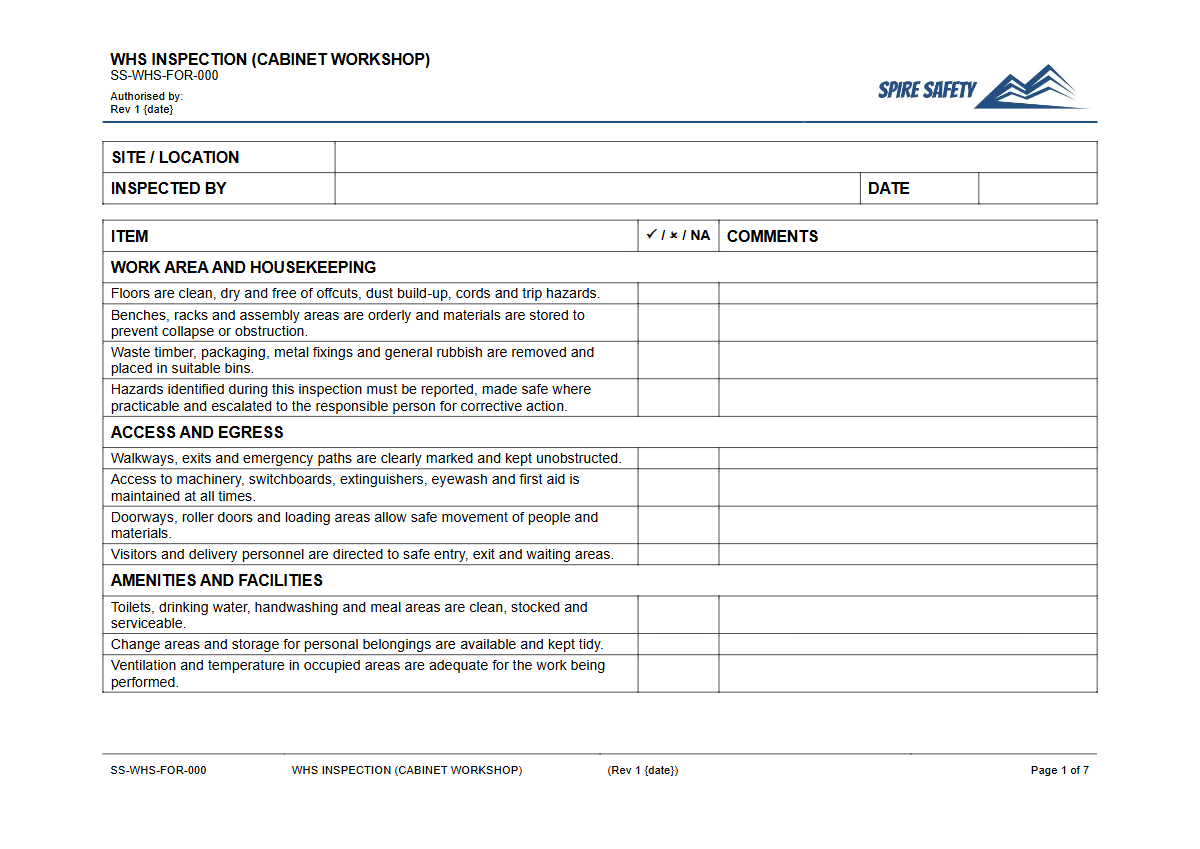
Download our Free WHS Inspection (Cabinet Workshop) Template (DOCX & PDF). A structured starting point to formalise safety checks in your workshop.
Free WHS Inspection (Cabinet Workshop) Template
DOCX • 128 KB + PDF
Updated Oct 2026
No signup required
Purpose of the Free WHS Inspection (Cabinet Workshop) Template
Cabinet making workshops present a unique combination of WHS hazards, from powerful machinery and sharp tools to hazardous substances and musculoskeletal risks. This Free WHS Inspection (Cabinet Workshop) Template provides a structured starting point for systematically identifying these hazards before they cause injury.
Regular inspections help a Person Conducting a Business or Undertaking (PCBU) meet their primary duty of care by proactively managing risks related to machine guarding, electrical safety, dust exposure, chemical storage, and general housekeeping.
Using a formal checklist ensures that inspections are consistent, thorough, and documented. This process is a critical part of hazard identification, which informs higher-level controls.
While an inspection identifies what is unsafe, a risk assessment and a Safe Work Method Statement will detail how to perform the work safely. For high-risk construction work associated with cabinet installation, our Free Cabinet Making SWMS (Safe Work Method Statement) Template is an essential companion document.
Video walkthrough
How to use the Free WHS Inspection (Cabinet Workshop) Template
To get started, download the template in your preferred format (DOCX for easy editing or PDF). The key to effective use is customisation.
Walk through your workshop and adapt the checklist to reflect the specific machinery, chemicals, and processes unique to your operations. Add, remove, or modify checklist items to ensure they are relevant.
Once customised, schedule the inspection and assign it to a competent person. During the inspection, they will walk through the designated areas, systematically checking each item.
Any identified hazards, non-conformances, or areas for improvement should be recorded on the form, along with a priority rating and a proposed corrective action. This template is an excellent tool, but it's most effective when integrated into your overall safety framework. For guidance on developing a comprehensive safety framework, explore our services for WHS management systems.
A Note on Customisation
This document is a template and not a complete solution. It is essential that you customise it to suit the specific circumstances of your workplace.
We are not responsible for any incidents or compliance breaches that may arise from the use of this template. It is your responsibility to ensure all hazards are identified and controlled.
When to use it
The frequency of workshop inspections depends on the level of risk and the nature of the work. Best practice suggests a tiered approach:
- Weekly or Fortnightly: General workplace inspections covering common areas, housekeeping, fire safety equipment, and first aid facilities.
- Monthly: More detailed inspections focusing on specific areas like machine guarding, dust extraction systems, and chemical storage.
- As-needed: Inspections should also be conducted after an incident, when new equipment is introduced, if processes change, or when concerns are raised by workers.
These routine inspections are part of your internal due diligence and are distinct from external, independent audits. A formal audit provides a high-level, periodic verification of your entire safety system, which can be valuable for assurance and certification.
Learn more about our professional WHS compliance auditing services to see how they differ.
Who should use it
Workplace inspections should be a collaborative effort. While a supervisor, WHS manager, or team leader typically leads the process, involving workers who operate the machinery and perform the tasks is crucial.
Their direct experience provides invaluable insight into the day-to-day hazards and the practicality of existing controls.
Key personnel who should use or be involved with this Inspection template include:
- Workshop Supervisors and Managers
- Health and Safety Representatives (HSRs)
- WHS Committee Members
- Workers with specific knowledge of the equipment being inspected
Engaging a range of personnel fosters a positive safety culture and ensures a more comprehensive hazard identification process. If your business needs support in establishing these roles and responsibilities, our WHS consulting team can provide expert advice tailored to your needs.
This template is just one of many tools we offer; you can explore our entire free WHS resources library for more checklists, templates, and guides.
Common mistakes
Common mistakes to avoid
- Using the template without customising it for the specific machinery and chemicals in the workshop.
- Failing to assign clear responsibility and deadlines for the corrective actions identified.
- Not training the person conducting the inspection on how to properly identify hazards.
- Completing the checklist as a paper-filling exercise without genuine observation or engagement.
Legal references
Legal considerations
The following legal requirements may be relevant to this type of work.
- Work Health and Safety Act (Harmonised) — Provides the primary duties for protecting workers and other people from work health and safety risks.
- Work Health and Safety Regulations (Harmonised) — Sets out requirements supporting the management of workplace hazards and risks.
The following codes may be relevant to this type of work.
- Managing WHS Risks Code of Practice — Provides practical guidance on identifying hazards, assessing risks and applying effective controls.
- Work Health and Safety Consultation, Cooperation and Coordination Code of Practice — Provides practical guidance on consulting workers and coordinating with other duty holders.
- Managing the Work Environment and Facilities Code of Practice — Provides practical guidance on safe work environments, workplace facilities and related controls.
Did you know
Wood Dust Hazard
Many types of wood dust, particularly from hardwoods, are classified as carcinogenic to humans. Effective dust extraction and the use of appropriate respiratory protective equipment (RPE) are critical controls in any workshop.
FAQ
Frequently asked questions
01What is the difference between a workshop inspection and a SWMS?
02How often should I inspect my cabinet making workshop?
03Who is responsible for fixing the hazards found during an inspection?
04Can I use this template for a different type of woodworking shop?
Share this resource
Free WHS Inspection (Cabinet Workshop) Template
Browse Categories
How To Use It
- 1Download and open in Word or PDF.
- 2Replace the placeholders with your business details.
- 3Get it reviewed by a WHS specialist before rollout.
Need it customised?
Our WHS consultants can adapt this template to your site, run a gap analysis, or audit what you already have in place.
Book a Free Consultation WHS consulting servicesor call 1300 156 382