
Free WHS Inspection (Cafe) Template
Download our free WHS Inspection (Cafe) Template to formalise your safety checks for hazards like slips, trips, burns, and food safety. Get started now.
Free WHS Inspection (Cafe) Template
DOCX • 127 KB + PDF
Updated Oct 2026
No signup required
Purpose of the Free WHS Inspection (Cafe) Template
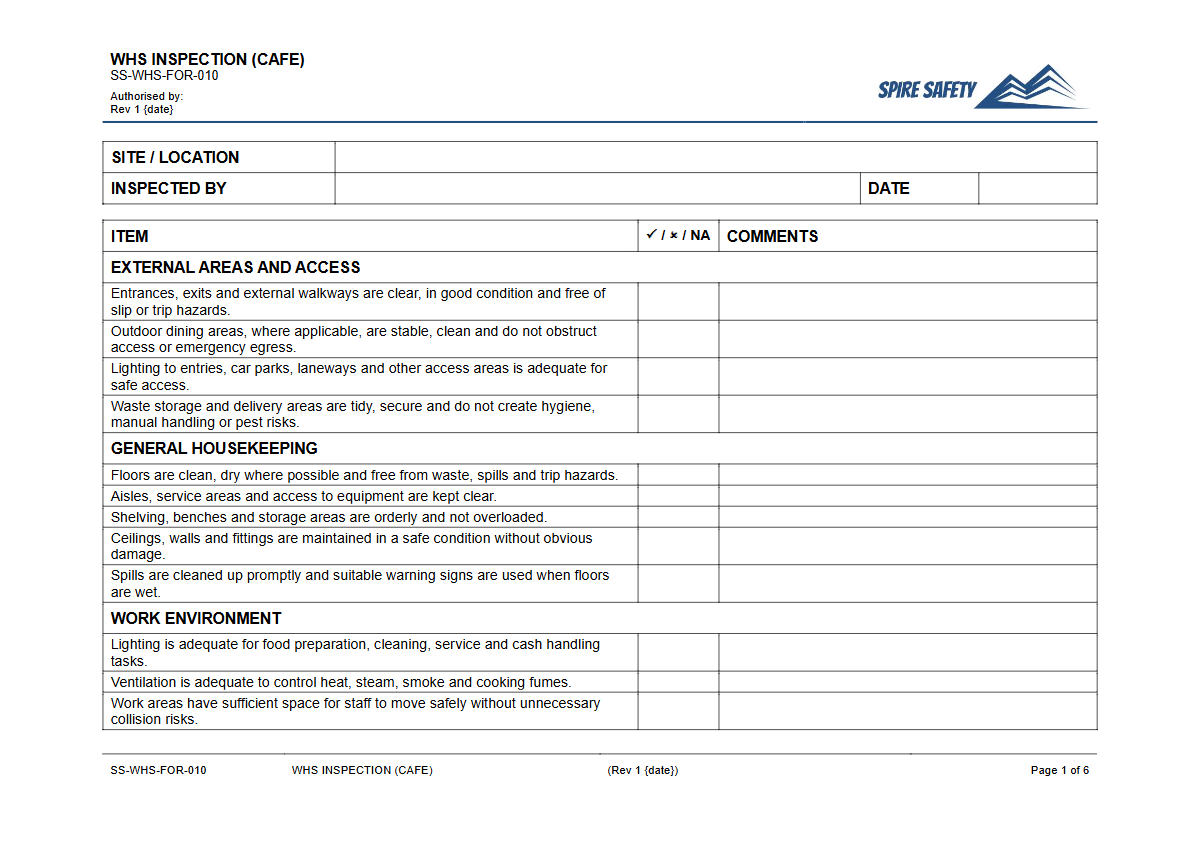
Running a successful cafe involves managing more than just coffee orders and customer service; it requires a steadfast commitment to workplace health and safety. Our Free WHS Inspection (Cafe) Template provides a structured starting point for identifying and controlling the unique hazards present in a bustling hospitality environment.
Available in DOCX and PDF formats, this checklist is designed to help cafe owners, managers, and safety representatives conduct thorough and regular safety walkthroughs.
The purpose of a systematic inspection is to proactively uncover unsafe conditions and at-risk behaviours before they lead to an incident. This template guides you through key areas of a cafe, including the front-of-house service area, kitchen, food preparation zones, storage rooms, and staff amenities.
Using a formal checklist helps ensure consistency, demonstrates due diligence, and creates a documented record of your safety efforts. Integrating such inspections is a fundamental part of developing robust WHS management systems that protect both your team and your patrons.
Common Cafe Hazards Covered
This inspection template prompts you to look for a range of common hospitality hazards, such as:
- Slips, Trips & Falls: Spills from drinks or food, wet floors from mopping, uneven surfaces, and obstructed walkways.
- Manual Handling: Lifting heavy items like milk crates, bags of coffee beans, or boxes of stock without proper technique or mechanical aids.
- Burns & Scalds: Contact with hot surfaces on grills and ovens, hot oil from deep fryers, or steam and hot water from coffee machines.
- Cuts & Lacerations: Using knives, food slicers, or a commercial blender, as well as handling broken glass or ceramic.
- Electrical Hazards: Damaged cords, overloaded power outlets, and equipment not tested and tagged.
- Chemical Safety: Improper storage or use of cleaning chemicals and sanitisers without adequate personal protective equipment (PPE).
- Food Safety & Storage: Checking that food is stored at correct temperatures in equipment like commercial fridges or by using a Freezer Pre-start Checklist to ensure it is functioning correctly.
Video walkthrough
How to use the Free WHS Inspection (Cafe) Template
To effectively use this resource, download the DOCX version and adapt it to your specific operational needs. A generic template cannot account for the unique layout, equipment, and processes of every workplace.
For it to be effective, you must invest time in customisation.
Important: This document is a starting point and must be customised for your specific workplace. The checklist items are general prompts, and we cannot guarantee they cover every potential hazard in your operation.
You should walk through your cafe and add, remove, or modify items to ensure the checklist is a true reflection of your environment and risks.
After customising the template, establish a schedule for its use. Train your supervisors or a designated safety champion to conduct the inspections.
The process should not end with a ticked box; create a clear procedure for reporting identified hazards and assigning corrective actions with deadlines. A critical part of this process involves checks on specific equipment; for your baristas, using our Free Pre-Start Checklist (Coffee Machine) Template can complement this broader workplace inspection.
When to use it
A cafe inspection should be a regular, scheduled activity. The ideal frequency depends on the size of your operation and the level of risk, but a monthly formal inspection is a common benchmark, supplemented by daily visual checks by staff. Consider using this inspection checklist:
- As part of your monthly or quarterly safety review process.
- After an incident or near-miss has occurred to re-evaluate workplace conditions.
- When introducing new equipment, work processes, or changing the physical layout of the cafe.
- As a practical tool during WHS induction for new employees to familiarise them with key hazards.
- To prepare for or supplement a formal WHS compliance auditing program.
Who should use it
Responsibility for safety is shared, and various roles within a cafe can and should use this template:
- Cafe Owners and PCBU's: To fulfil their primary duty of care by ensuring a systematic process for hazard identification is in place.
- Venue Managers and Supervisors: To manage day-to-day safety on the floor and ensure controls are working effectively.
- Health and Safety Representatives (HSRs): As a tool to conduct inspections on behalf of their work group and raise safety matters with management.
- WHS Professionals: Consultants can adapt this template as part of their service delivery when providing WHS consulting to businesses in the hospitality sector.
By formalising your inspection process, you move from a reactive to a proactive safety culture. For more tools to support your safety management, browse our complete free WHS resources library.
Common mistakes
Common mistakes to avoid
- Failing to customise the template for the specific cafe layout and equipment.
- Conducting the inspection but not documenting or following up on corrective actions.
- Not involving workers or HSRs in the inspection process, missing valuable insights from the front line.
- Only looking for obvious physical hazards and neglecting psychosocial risks like high workload or workplace bullying.
Legal references
Legal considerations
The following legal requirements may be relevant to this type of work.
- Work Health and Safety Act (Harmonised) — Provides the primary duties for protecting workers and other people from work health and safety risks.
- Work Health and Safety Regulations (Harmonised) — Sets out requirements supporting the management of workplace hazards and risks.
The following codes may be relevant to this type of work.
- Managing WHS Risks Code of Practice — Provides practical guidance on identifying hazards, assessing risks and applying effective controls.
- Work Health and Safety Consultation, Cooperation and Coordination Code of Practice — Provides practical guidance on consulting workers and coordinating with other duty holders.
- Managing the Work Environment and Facilities Code of Practice — Provides practical guidance on safe work environments, workplace facilities and related controls.
Did you know
Hospitality Injury Rates
The accommodation and food services industry has one of the highest rates of serious workers' compensation claims in Australia, with slips, trips, falls, and manual handling being major causes of injury.
The Cost of a Spill
A simple liquid spill is not just a slip hazard; if a customer is injured, it can lead to liability claims and reputational damage far exceeding the cost of a 'wet floor' sign and prompt cleanup.
FAQ
Frequently asked questions
01How often should I conduct a WHS inspection in my cafe?
02Is this template enough for WHS compliance?
03What's the difference between a pre-start check and a workplace inspection?
04Who is responsible for fixing hazards found during an inspection?
Share this resource
Free WHS Inspection (Cafe) Template
Browse Categories
How To Use It
- 1Download and open in Word or PDF.
- 2Replace the placeholders with your business details.
- 3Get it reviewed by a WHS specialist before rollout.
Need it customised?
Our WHS consultants can adapt this template to your site, run a gap analysis, or audit what you already have in place.
Book a Free Consultation WHS consulting servicesor call 1300 156 382