
Free WHS Inspection (Care Facility) Template
Proactively manage safety in your care facility with our structured WHS inspection template. Identify and control hazards unique to care settings.
Free WHS Inspection (Care Facility) Template
DOCX • 128 KB + PDF
Updated Oct 2026
No signup required
Purpose of the Free WHS Inspection (Care Facility) Template
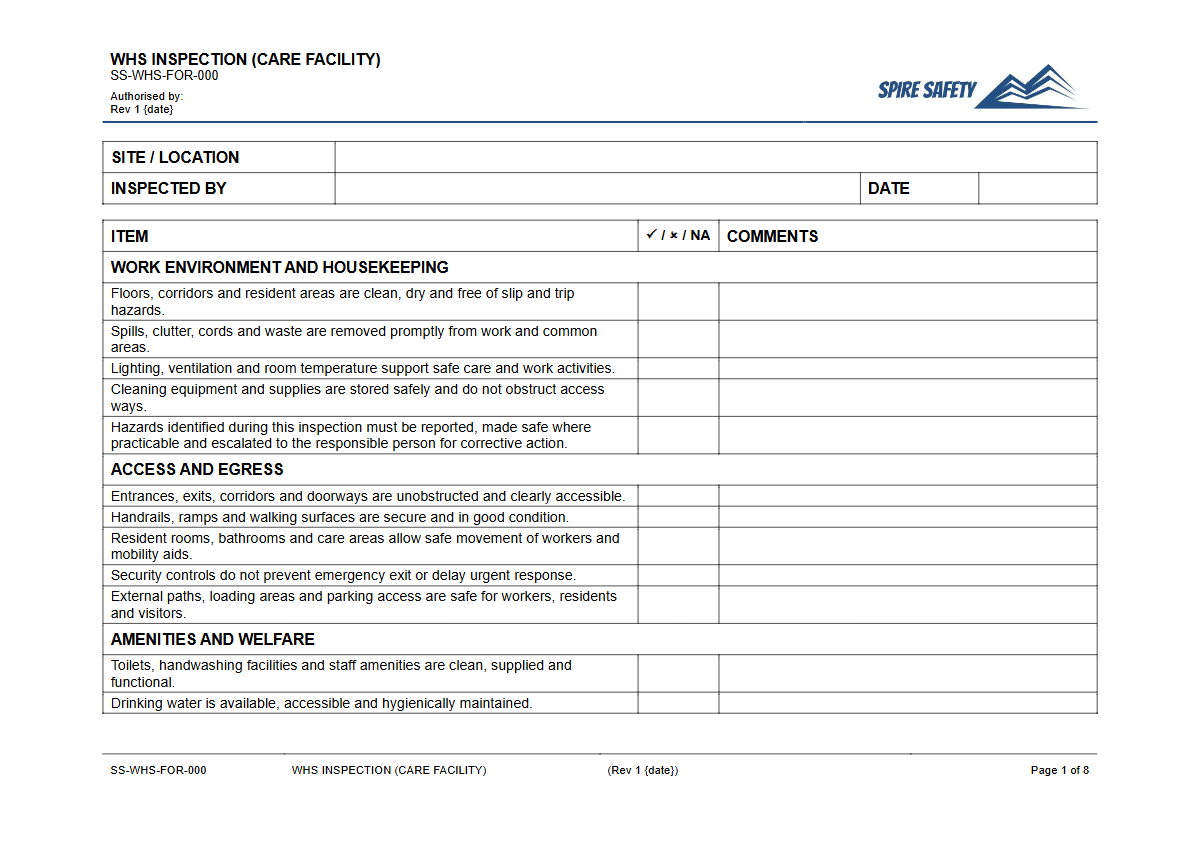
Regular safety inspections are a cornerstone of effective WHS management, especially in the dynamic environment of a care facility. This Free WHS Inspection (Care Facility) Template provides a structured starting point for systematically identifying potential hazards, assessing risks, and implementing control measures.
Using a formal checklist helps ensure that no area is overlooked, from resident rooms and common areas to kitchens, laundries, and outdoor spaces. It is designed to guide you through a thorough check of common risk areas in aged care, disability support, and other community care settings, such as slips, trips, and falls, manual handling, infection control, and equipment safety.
This template is aligned with Australian WHS principles and encourages a proactive approach to safety. By formalising your inspection process, you create a documented record of your safety efforts, which is crucial for demonstrating due diligence and continuous improvement.
It assists in moving beyond reactive incident response towards a preventative safety culture. A comprehensive inspection process is a key component of robust WHS management systems, helping to protect residents, staff, and visitors.
Video walkthrough
How to use the Free WHS Inspection (Care Facility) Template
Our template is provided as an easily editable DOCX file and a ready-to-print PDF. To get started, download the document and adapt it to the specific needs of your workplace.
This involves adding, removing, or modifying checklist items to reflect your facility's unique layout, services, equipment, and resident cohort. A generic checklist cannot cover all your specific risks.
Important: This template provides a general framework. It is essential that you customise it to reflect the specific hazards, equipment, and operational procedures of your unique care facility.
We cannot know your specific site risks. A critical part of any inspection is checking specialised equipment.
For example, if your facility uses patient lifting devices, you should integrate checks from a specific document like our Free Pre-Start Checklist (Patient Hoist) Template into your regular routine.
When to use it
The frequency of general workplace inspections should be determined by your risk assessment, but a common schedule is monthly or quarterly. However, inspections should also be conducted in specific circumstances, including:
- After a near miss or incident to identify contributing factors.
- When new equipment, substances, or work processes are introduced.
- When there are changes to the facility layout.
- Following concerns raised by workers or health and safety representatives.
- As part of a periodic review of your safety management system.
Regular, scheduled inspections are fundamental, but so is the ability to conduct ad-hoc reviews when circumstances change. This process can form part of a larger cycle of safety assurance, which may also include periodic, independent WHS compliance auditing to verify the effectiveness of your internal systems.
Who should use it
Workplace inspections should be a collaborative effort. While a facility manager, WHS officer, or team leader might lead the process, involving workers is critical.
The people performing the day-to-day tasks often have the most detailed knowledge of the hazards involved. This inspection template can be used by:
- Facility Managers and Site Supervisors
- Work Health and Safety (WHS) Representatives and Committee Members
- Team Leaders and Department Heads
- Maintenance and Groundskeeping Staff
Engaging a diverse team in the inspection process fosters a stronger safety culture and improves the quality of hazard identification. If your facility has extensive grounds, you may also need specific checklists for outdoor equipment, such as our Free Pre-Start Checklist (Lawn Tractor) Template, to ensure all areas are covered. For more complex safety challenges or establishing a new inspection program, engaging external WHS consulting services can provide expert guidance and support. You can also browse our complete free WHS resources library for more tools to support your safety program.
Common mistakes
Common mistakes to avoid
- Using a generic template without customising it for the facility's specific risks.
- Failing to document and track corrective actions for identified hazards.
- Neglecting to involve frontline care and support staff in the inspection process.
- Focusing only on physical hazards while ignoring psychosocial risks like stress and fatigue.
Legal references
Legal considerations
The following legal requirements may be relevant to this type of work.
- Work Health and Safety Act (Harmonised) — Provides the primary duties for protecting workers and other people from work health and safety risks.
- Work Health and Safety Regulations (Harmonised) — Sets out requirements supporting the management of workplace hazards and risks.
The following codes may be relevant to this type of work.
- Managing WHS Risks Code of Practice — Provides practical guidance on identifying hazards, assessing risks and applying effective controls.
- Work Health and Safety Consultation, Cooperation and Coordination Code of Practice — Provides practical guidance on consulting workers and coordinating with other duty holders.
- Managing the Work Environment and Facilities Code of Practice — Provides practical guidance on safe work environments, workplace facilities and related controls.
Did you know
Industry Risk
The Health Care and Social Assistance industry has one of the highest rates of serious workers' compensation claims in Australia, with body stressing and slips, trips and falls being the leading causes of injury.
FAQ
Frequently asked questions
01What are the most common hazards in a care facility?
02How often should I conduct WHS inspections in an aged care home?
03What is the difference between a WHS inspection and a WHS audit?
04Can I use this template for NDIS certification purposes?
Share this resource
Free WHS Inspection (Care Facility) Template
Browse Categories
How To Use It
- 1Download and open in Word or PDF.
- 2Replace the placeholders with your business details.
- 3Get it reviewed by a WHS specialist before rollout.
Need it customised?
Our WHS consultants can adapt this template to your site, run a gap analysis, or audit what you already have in place.
Book a Free Consultation WHS consulting servicesor call 1300 156 382