
Free WHS Inspection (Cinema) Template
Download our Free WHS Inspection (Cinema) Template to formalise safety checks for public areas, projection rooms, and staff facilities.
Free WHS Inspection (Cinema) Template
DOCX • 128 KB + PDF
Updated Oct 2026
No signup required
Purpose of the Free WHS Inspection (Cinema) Template
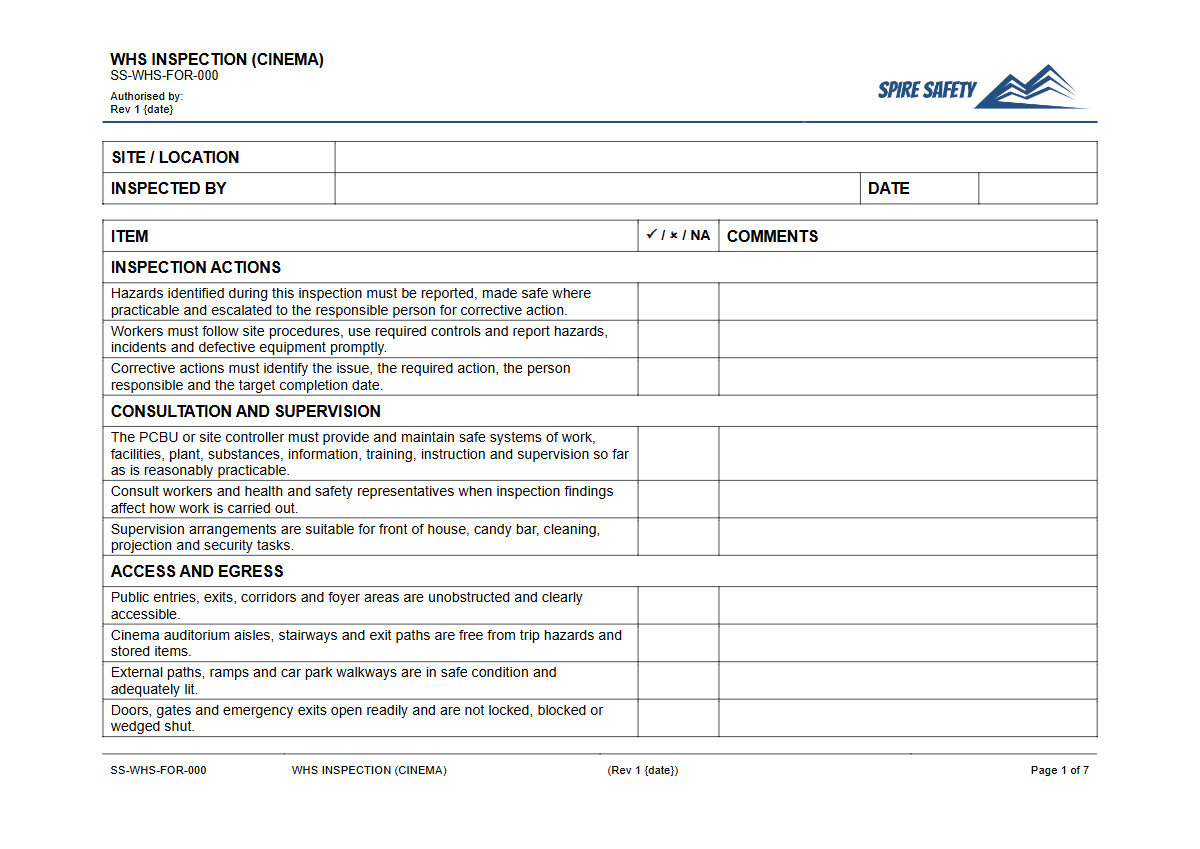
A systematic approach to safety is essential in the dynamic environment of a cinema. This Free WHS Inspection (Cinema) Template provides a structured starting point for identifying and managing hazards across your venue, from the public foyer to the projection room.
This resource helps formalise your safety checks, ensuring a consistent process for protecting staff, contractors, and patrons.
This template is designed to guide a thorough safety Inspection of a cinema environment. It prompts users to assess common hazards and verify that control measures are in place and effective. Key areas covered include:
- Public Areas: Checking foyers, hallways, and theatres for slip, trip, and fall hazards like worn carpets, spills, and poor lighting. It also covers seating integrity and clear access to exits.
- Staff and Back-of-House Areas: Inspecting candy bars, kitchens, projection booths, and storage rooms for risks related to electrical equipment, manual handling, and chemical storage. For specific equipment like blenders, using our Free Pre-Start Checklist (Blender) Template can supplement this broader inspection.
- Emergency Systems: Verifying that fire extinguishers, emergency lighting, exit signs, and evacuation paths are unobstructed and operational.
- General Amenities: Ensuring staff and public amenities are clean, safe, and well-maintained.
Video walkthrough
How to use the Free WHS Inspection (Cinema) Template
Download the template in your preferred format (DOCX for easy editing or PDF). Before use, it is critical that you adapt it to your specific workplace.
Customisation is essential
We provide a comprehensive baseline, but every cinema is different. You must review the checklist and add, remove, or modify items to reflect your venue’s unique layout, equipment, staffing, and operational procedures.
This might include specific checks for 3D glasses sanitation, automated ticketing kiosks, or unique architectural features.
Integrate into your processes
A checklist is most effective when it’s part of your broader safety framework. Incorporating regular inspections into your operational routine demonstrates a commitment to proactive WHS management. For organisations looking to formalise this, Spire Safety offers support in developing comprehensive WHS management systems.
When to use it
The frequency of inspections should be determined by a risk assessment. A practical schedule might include:
- Daily Pre-Opening Checks: A quick walkthrough focusing on high-risk public areas to ensure they are safe before patrons arrive. This includes checking for spills, cleaning up rubbish, and ensuring clear paths.
- Weekly Inspections: A more detailed inspection covering both front-of-house and back-of-house areas, including equipment checks. For instance, if your cinema has a car park, checks could incorporate the functionality of access control using a tool like the Free Pre-Start Checklist (Boom Gate) Template.
- Monthly Audits: A comprehensive review of all items on the checklist, including a review of past inspection records and corrective actions. Some organisations engage external experts for formal WHS compliance auditing to ensure objectivity and thoroughness.
- Post-Incident: Following any incident or near-miss, an inspection should be conducted to identify contributing factors and prevent recurrence.
Who should use it
This Inspection template is designed for use by individuals with responsibility for workplace safety. This typically includes:
- Cinema General Managers or Venue Managers
- Duty Managers or Shift Supervisors
- Health and Safety Representatives (HSRs)
- Designated WHS Officers
- Team leaders trained in hazard identification
It is crucial that anyone conducting an inspection is competent to do so. They should be familiar with the cinema's operations, understand the relevant hazards, and be trained in the inspection procedure and how to document and report findings.
Regular checks of key assets, such as walk-in cool rooms, can be formalised with specific tools like our Free Pre-Start Checklist (Freezer) Template to support the overall inspection process. For a wider range of checklists and forms, explore our free WHS resources library.
Common mistakes
Common mistakes to avoid
- Failing to inspect emergency lighting and exit pathways, especially during operating hours.
- Overlooking hazards in back-of-house areas like storage rooms, plant rooms, and staff kitchens.
- Using a generic checklist without customising it for the specific cinema layout and equipment.
- Not documenting or following up on corrective actions required to fix identified issues.
Legal references
Legal considerations
The following legal requirements may be relevant to this type of work.
- Work Health and Safety Act (Harmonised) — Provides the primary duties for protecting workers and other people from work health and safety risks.
- Work Health and Safety Regulations (Harmonised) — Sets out requirements supporting the management of workplace hazards and risks.
The following codes may be relevant to this type of work.
- Managing WHS Risks Code of Practice — Provides practical guidance on identifying hazards, assessing risks and applying effective controls.
- Work Health and Safety Consultation, Cooperation and Coordination Code of Practice — Provides practical guidance on consulting workers and coordinating with other duty holders.
- Managing the Work Environment and Facilities Code of Practice — Provides practical guidance on safe work environments, workplace facilities and related controls.
Did you know
Audience Safety
Slips, trips, and falls are among the most common causes of injury to the public in entertainment venues. They are often caused by poor lighting in aisles, spilled drinks, or uneven flooring.
Projection Room Hazards
Historically, projection rooms posed significant fire risks from hot arc lamps and highly flammable cellulose nitrate film. Modern digital projectors have reduced this specific risk, but electrical and heat hazards remain key considerations.
FAQ
Frequently asked questions
01What's the difference between a pre-start check and a general inspection?
02How often should a cinema conduct a WHS inspection?
03Is this template suitable for all types of cinemas?
04Who is legally responsible for WHS in a cinema?
Share this resource
Free WHS Inspection (Cinema) Template
Browse Categories
How To Use It
- 1Download and open in Word or PDF.
- 2Replace the placeholders with your business details.
- 3Get it reviewed by a WHS specialist before rollout.
Need it customised?
Our WHS consultants can adapt this template to your site, run a gap analysis, or audit what you already have in place.
Book a Free Consultation WHS consulting servicesor call 1300 156 382