
Free WHS Inspection (Commercial Kitchen) Template
Download our free WHS Inspection Template for Commercial Kitchens. A structured starting point to help you identify hazards and manage risks.
Free WHS Inspection (Commercial Kitchen) Template
DOCX • 127 KB + PDF
Updated Oct 2026
No signup required
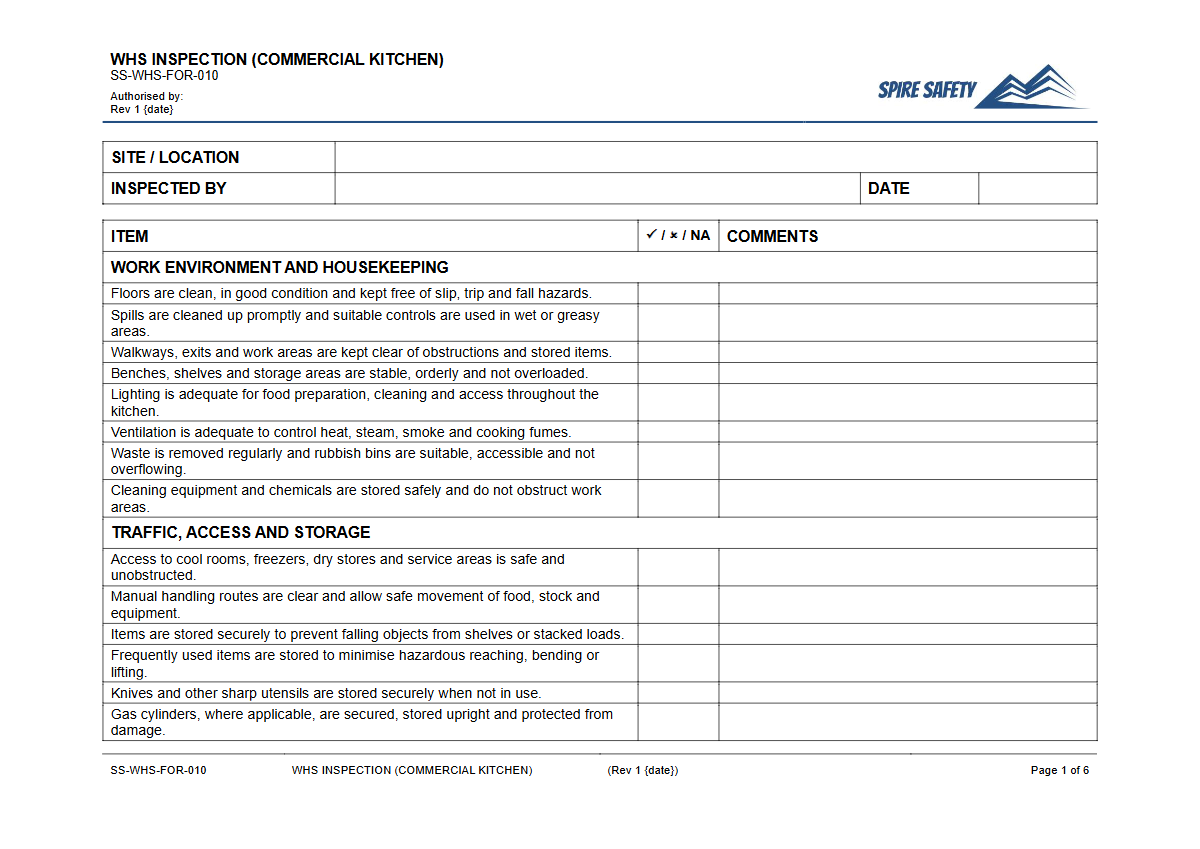
Purpose of the Free WHS Inspection (Commercial Kitchen) Template
A commercial kitchen is a high-risk environment with numerous hazards, from hot surfaces and sharp implements to wet floors and chemical agents. This Free WHS Inspection (Commercial Kitchen) Template provides a structured framework for systematically identifying these hazards before they cause an incident.
Regularly inspecting your workplace is a fundamental part of meeting your duties under Australian WHS laws. It helps create a safer working environment, reduces the likelihood of injuries, and demonstrates a proactive commitment to health and safety.
Using a formal template ensures that inspections are consistent, thorough, and documented. The findings from this Inspection can provide valuable data for your safety meetings, risk assessments, and continuous improvement initiatives.
Formalising this process is a key component of effective WHS management systems, helping to protect your workers and your business.
Video walkthrough
How to use the Free WHS Inspection (Commercial Kitchen) Template
This template is designed to be a practical starting point for your workplace inspections. It covers common areas of concern in a commercial kitchen, including fire safety, chemical storage, electrical equipment, manual handling, and general housekeeping.
To get started, download the template in your preferred format (DOCX or PDF).
For daily checks on specific appliances, you can supplement this inspection with our Free Pre-Start Checklist (Commercial Oven) Template. This allows for more focused, frequent verification of high-use equipment between your broader kitchen-wide inspections. Similarly, a tool like our Free Pre-Start Checklist (Blender) Template can be used by staff before each shift to quickly verify its condition.
IMPORTANT: This template provides a structured starting point. You must customise it to address the specific equipment, processes, and risks unique to your commercial kitchen.
We cannot guarantee its suitability for your specific circumstances without customisation. Walk through your kitchen and add or remove items to ensure the checklist accurately reflects your operational environment.
When to use this Inspection Template
The frequency of your kitchen inspections should be based on risk. For most commercial kitchens, conducting a thorough inspection on a weekly or monthly basis is a good starting point.
The schedule should be consistent and documented. You can also integrate more frequent checks, for which our Free Pre-Start Checklist (Freezer) Template helps formalise daily temperature and safety checks on critical cold storage units.
In addition to routine scheduling, a full kitchen inspection should be conducted:
- After a workplace incident or a near miss.
- When new equipment or substances are introduced.
- When kitchen layout or work processes change.
- Following concerns raised by workers during safety consultations.
- As part of onboarding new managers or supervisors.
Who should use this Inspection Template
This Inspection template is designed for use by anyone responsible for health and safety in a hospitality environment. This typically includes the Head Chef, Kitchen Manager, Venue Supervisor, or a designated Health and Safety Representative (HSR).
To be effective, the inspection should be a collaborative process. Involve the kitchen hands, cooks, and chefs who use the space every day—they often have the best insight into potential hazards and practical solutions.
The person conducting the inspection should be competent to identify hazards and understand the associated risks. The documented findings should be reported to management, and a clear plan for corrective actions must be established and tracked to completion.
This process is distinct from formal WHS compliance auditing, which is a more in-depth, systematic examination of your entire safety system. Explore our complete free WHS resources library for more tools to support your safety program.
Common mistakes
Common mistakes to avoid
- Using a generic checklist without customising it for specific kitchen equipment and layouts.
- Failing to document and track the corrective actions taken to address identified hazards.
- Conducting the inspection without consulting the kitchen staff who perform the day-to-day work.
- Treating the inspection as a 'tick and flick' exercise rather than a genuine risk management activity.
Legal references
Legal considerations
The following legal requirements may be relevant to this type of work.
- Work Health and Safety Act (Harmonised) — Provides the primary duties for protecting workers and other people from work health and safety risks.
- Work Health and Safety Regulations (Harmonised) — Sets out requirements supporting the management of workplace hazards and risks.
The following codes may be relevant to this type of work.
- Managing WHS Risks Code of Practice — Provides practical guidance on identifying hazards, assessing risks and applying effective controls.
- Work Health and Safety Consultation, Cooperation and Coordination Code of Practice — Provides practical guidance on consulting workers and coordinating with other duty holders.
- Managing the Work Environment and Facilities Code of Practice — Provides practical guidance on safe work environments, workplace facilities and related controls.
Did you know
Slips, Trips, and Falls
The accommodation and food services industry has one of the highest rates of serious workers' compensation claims, with slips, trips, and falls being a leading cause of injury.
Fire Risk
Cooking equipment is the number one cause of fires in eating and drinking establishments. Regular cleaning of grease buildup from filters and ductwork is a critical fire prevention control.
FAQ
Frequently asked questions
01What is the difference between an inspection and an audit in a commercial kitchen?
02How often should I conduct a WHS inspection in my kitchen?
03What are the most common hazards in a commercial kitchen?
04Does this template cover food safety requirements?
Share this resource
Free WHS Inspection (Commercial Kitchen) Template
Browse Categories
How To Use It
- 1Download and open in Word or PDF.
- 2Replace the placeholders with your business details.
- 3Get it reviewed by a WHS specialist before rollout.
Need it customised?
Our WHS consultants can adapt this template to your site, run a gap analysis, or audit what you already have in place.
Book a Free Consultation WHS consulting servicesor call 1300 156 382